Table of Contents (click to expand)
The only written account of its existence comes from the philosopher Plato. The location of this mythical city remains a mystery despite many proposed sites. Numerous locations have been suggested for Atlantis but have yet to be confirmed. The most recent claim indicates that the submerged city may be located north of Cadiz, Spain, but this claim has not been substantiated.
According to popular belief, there may have been a prosperous city over 11,000 years ago that was considered a utopia with abundant resources and wealth. It was inhabited by a powerful and noble race that held sway even over the islands of England and Africa. This city, renowned for its beauty and grandeur, is often called Atlantis.
Recommended Video for you:
History
According to Greek literature, when the land was divided by the gods and distributed among them, Atlantis was given to Poseidon (God of the sea, earthquakes, storms, and horses).
Is There Any Proof Of Its Existence?
Now, here’s the twist. There is no written record of the existence of Atlantis in the world except for its mention in the works of the great philosopher Plato. Even the location of this utopia is a mystery. People have worked through various hypotheses, giving the location they believed it should be. Surprisingly, many of the proposed sites were not in the Atlantic Ocean (as you would have guessed from its name, as though the “Atlantic” ocean was derived from this ancient culture). Many of the proposed sites corroborate some of the characteristics of the Atlantis story (water, catastrophic end, and a relevant period). Most of the historically proposed locations are in or near the Mediterranean Sea. Now, this story is getting good… let’s look at various locations that are claimed to be the most likely sites of Atlantis:
Azores
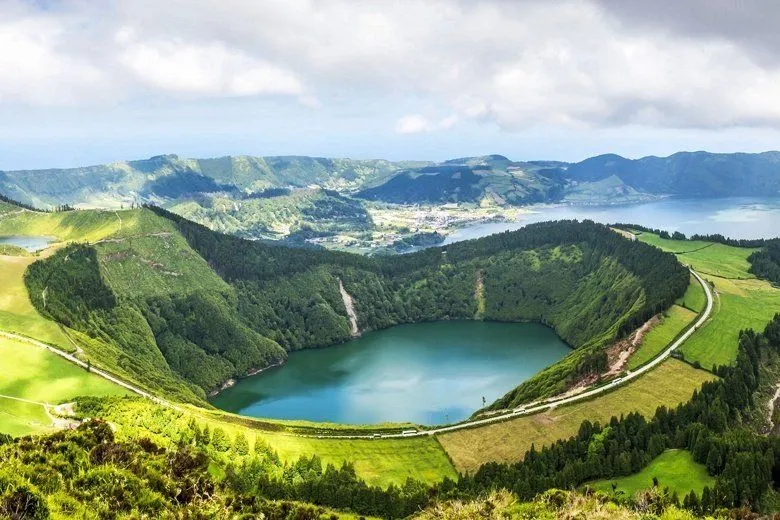
Plato quoted Egyptian Priests, who believed that Atlantis fought a war with the ancient Mediterraneans and then sank in 9,400 B.C. Because Atlantis was said to be a large island in the Atlantic Ocean that surrounds the continents, it was thought to be in the mid-Atlantic. Atlantis was said to have colonized much of the world and fought a war with Greece and the Eastern Mediterranean. The sinking of Atlantis left only a few scattered islands… islands such as the Azores, some believe.
The Sahara
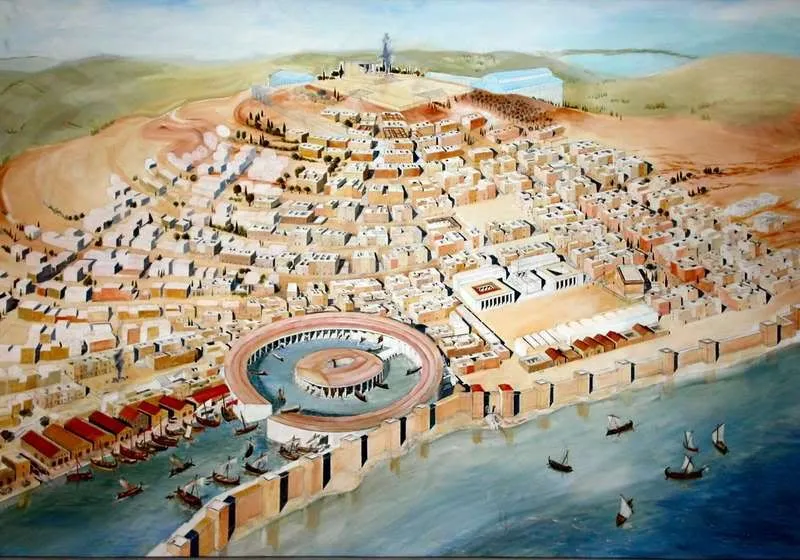
The Sahara Desert, and more specifically, the Tassili and Ahaggar Mountains in southern Algeria, Tunisia, or both, has been proposed as the actual site of Atlantis. When the French colonized North Africa, they soon discovered that a lost world existed in southern Algeria and that the ancient harbor of Carthage was an exact miniature of the capital of Atlantis described by the Egyptian priests.
Malta
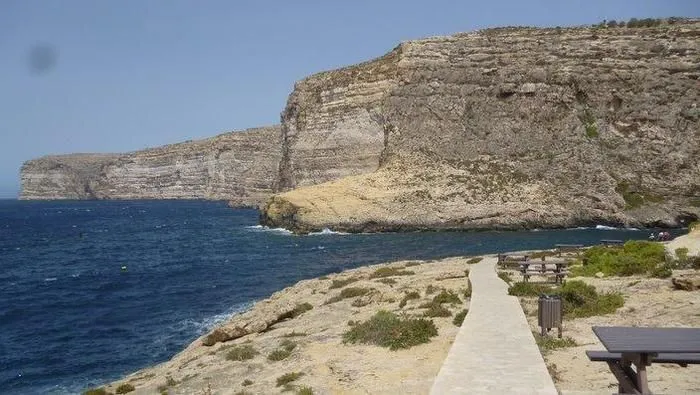
Malta has impressive megalithic temples, such as Ġgantija, dating to around 3600 BC — making them roughly 5,600 years old and among the oldest free-standing stone structures in the world (though Turkey's Göbekli Tepe, at roughly 11,500 years old, is significantly older). Malta is now a small rocky island, but it once had elephants and shows evidence of being affected by dramatic changes in sea level. The island is far too small to have been Atlantis, but it shows that the Mediterranean was very different thousands of years ago.
South America
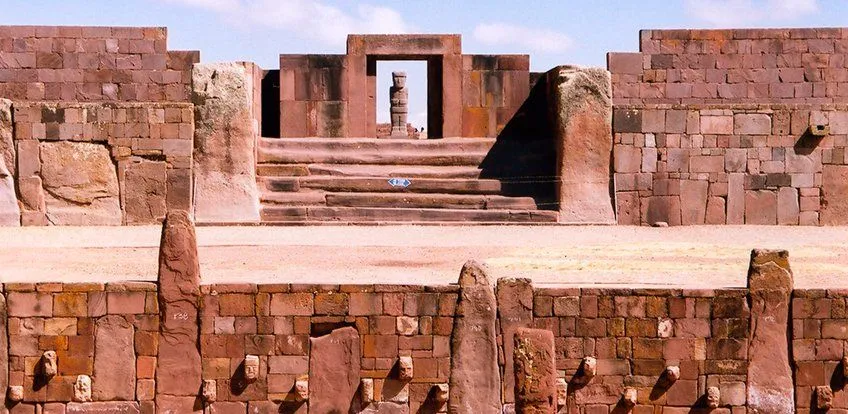
Due to the gigantic ruins in Peru and Bolivia, South America has been proposed as the site of Atlantis by some early writers. The ancient city of Tiwanaku (founded around AD 110) shows signs of violent destruction, though modern archaeology attributes its decline around AD 1000 to prolonged drought and social upheaval rather than a sudden natural cataclysm. South America does have huge ruins and is across the Atlantic, but it seems to have risen from sea level rather than sunk into the ocean.
North Sea
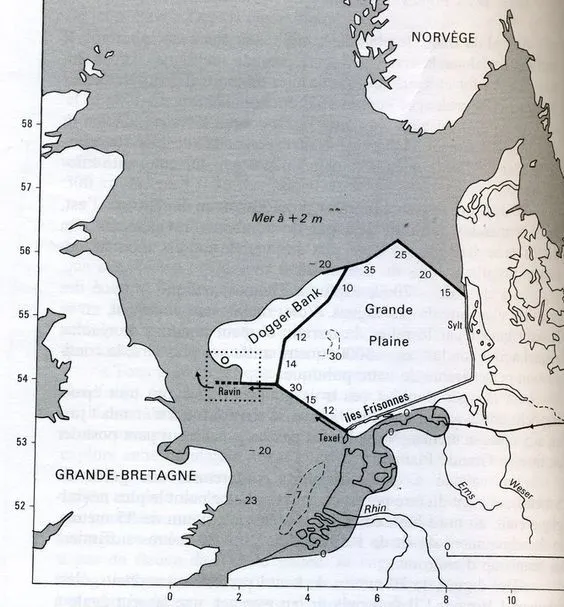
Recently, researcher Paul Dunbavin proposed that the citadel of Atlantis was located underwater between Wales and Ireland; this area is the “Plain of Atlantis,” as described by Plato. Major Dutch cities like Amsterdam (about 2 meters below sea level) and Rotterdam (about 4 meters below sea level) already depend on extensive dikes and pumping systems to stay dry. Without constant maintenance, they could become the sunken cities of the future.
The Richat Structure (Eye of the Sahara)
One of the most discussed Atlantis theories in recent years involves the Richat Structure in Mauritania — a striking 40-kilometer-wide circular geological formation in the western Sahara Desert. Its concentric ring pattern superficially resembles Plato's description of Atlantis as a city of alternating rings of water and land. However, mainstream scientists reject this identification. The Richat Structure is a natural geological dome formed by erosion, not a man-made city. It is located far inland in a desert, contradicting Plato's account of an island in the ocean, and no archaeological evidence of any ancient civilization — no artifacts, pottery, or building foundations — has been found at the site.
The location of Atlantis has remained a tantalizing mystery for thousands of years. In 2011, a U.S.-led research team claimed to have found evidence of an ancient settlement under the mud flats in southern Spain, possibly linked to Atlantis. The team, led by Professor Richard Freund of the University of Hartford, used satellite imagery and ground-penetrating radar in the Doñana marshlands just north of Cadiz. However, the findings remain speculative and have not been confirmed by mainstream archaeology. More recently, in 2025, archaeologist Michael Donnellan reported discovering submerged concentric circular wall structures off the coast of Cadiz using sonar and LiDAR technology, though these findings also await independent verification.
How Has Atlantis Been Incorporated Into Popular Culture?
Several notable figures from mythology are connected to Atlantis. Poseidon, god of the sea, was said to be its divine patron. His eldest son by the mortal woman Cleito was Atlas, the first king of Atlantis, after whom the island and the Atlantic Ocean were named. This Atlas is a different figure from Atlas the Titan, who was condemned by Zeus to hold up the celestial sphere. Many fictional characters have also been given Atlantis as their birthplace, such as the famous Aquaman of DC Comics. Atlantis was considered the most powerful and technologically advanced city of its time.
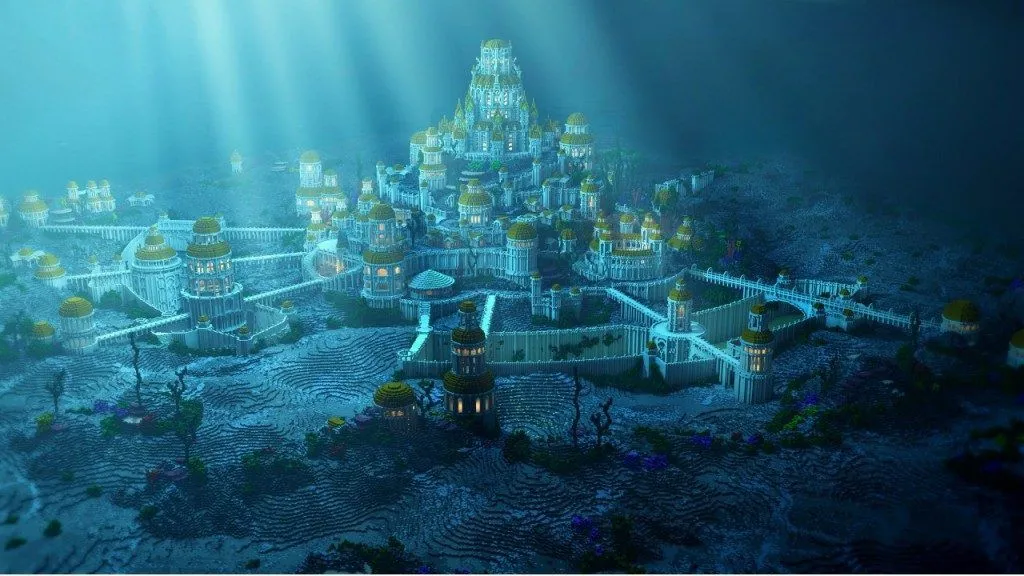
Where is this city? As of now, we don’t know for sure. We’re not sure if this utopia even existed or if it was the dream of an old man who wanted to believe that paradise existed. However, if it existed, it would have been the most beautiful place to live, with the added advantage of Aquaman being its tourism ambassador!
Last Updated By: Abhishek Jain
References (click to expand)
- Gill, C. (1977, October). The Genre of the Atlantis Story. Classical Philology. University of Chicago Press.
- Billingsley, D. B. (1982). The Credibility of Atlantis. The Georgia Review, 36(4), 791–802. http://www.jstor.org/stable/41399110
- Naddaf, G. (1994). The Atlantis Myth: An Introduction to Plato's Later Philosophy of History. Phoenix. JSTOR.
- López-Ruiz, C. (2022). Not exactly Atlantis: Some lessons from ancient Mediterranean Myths. In Historical Earthquakes, Tsunamis and Archaeology in the Iberian Peninsula (pp. 19-36). Singapore: Springer Nature Singapore.