Table of Contents (click to expand)
Too tired to read? Listen on Spotify:
How hungry one feels at a given point depends a lot on the concentration of sugar in one’s blood. The human body enters the fasting state as soon as digestion is finished, and when that happens, the liver maintains the concentration of sugar in the blood by releasing small quantities of glucose from the glycogen it stores within itself. This is why you don’t feel as hungry upon waking up as you were before going to bed.
If you apply some crude logic, it seems weird that going to bed without eating anything for an hour or two before would make you feel less hungry in the morning. But, interestingly enough, that’s what happens to a lot of people. Why is that?
Recommended Video for you:
Fasting State Of The Human Body
Fasting refers to the partial or complete abstinence from some or all food, drinks or both for a set period of time. In other words, you are said to be fasting when you don’t consume any food or beverages (or both, in some cases) for a certain amount of time.
Fasting can come in different forms, including dry fasting (or absolute fasting), wherein a person doesn’t eat or drink anything for a fixed duration, as well as water fasting, wherein the person practicing it only consumes water, but no food.
Some fasts are continuous, while others are intermittent in nature.
People fast for a variety of reasons; some folks fast for purely biological purposes (intermittent fasting can contribute towards weight loss), some do it for religious reasons, while other people fast to protest, bring awareness and support to a cause, or to make a political statement.
Interestingly, you don’t have to fast for even a day before your body enters the fasting state. From a purely physiological standpoint, the term ‘fasting’ is used to refer to the metabolic status of an individual who hasn’t eaten for a few hours. In other words, the human body enters the fasting state as soon as the process of digestion is complete.
As it is, your body usually enters the fasting state when you sleep at night, or nearly 3 to 4 hours after having your last meal (provided you don’t snack during those three hours).
Quite right!
Understanding the fasting state is one part of the answer to our original question, so let’s move on to the other one…
Liver Storage Of Glycogen
Our ‘big meals’ usually contain a lot of carbohydrates. In a way, this is good, as carbohydrates are our main source of energy. In fact, the brain runs almost exclusively on glucose — it consumes around 130 grams every day, even though it makes up only about 2% of your body weight — and working muscles also reach for carbohydrates first during sustained effort.

However, our bodies need only so much carbs to go about doing our daily physical activities. Therefore, in people with no metabolic disorders, these excess carbs are converted into complex chains of glucose called glycogen and then stored in the liver and muscle cells.
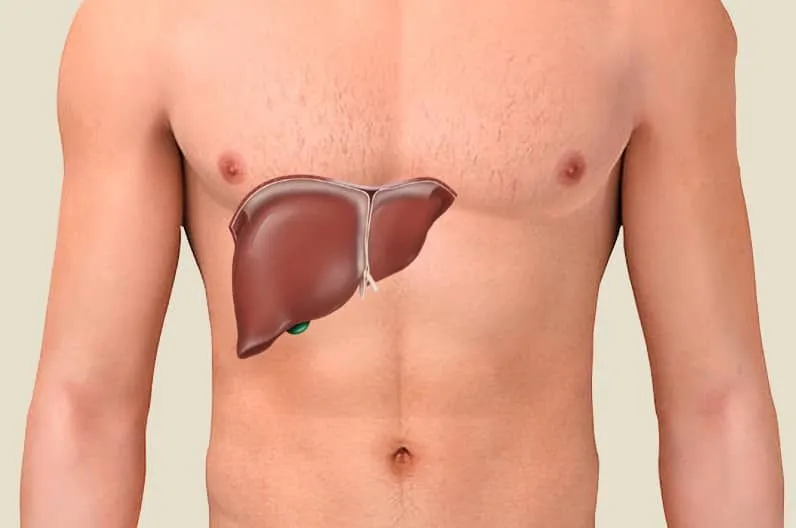
When you haven’t eaten in a while, your blood glucose levels drop slightly. In order to cater to the energy requirements of the body, the liver breaks down this stored glycogen and supplies energy to the cells of the body so that they can continue performing their duties.
When You Go To Bed Hungry, You Feel Less Hungry When You Wake Up
The primary reason behind this is that in a healthy individual (i.e., one who does not suffer from diabetes or related ailments), the carbs that they consume during a meal are slowly used up as they go about performing their everyday physical activities. As a result, if there’s a considerable time gap between dinner and bed time (say, 3-4 hours), then they will start feeling hungry as their blood glucose levels drop in that time gap.
However, once those levels get too low, the pancreas releases a hormone called glucagon, which signals the liver to break down its stored glycogen and steadily trickle glucose back into your bloodstream. A healthy liver holds roughly 100 to 120 grams of glycogen, and overnight fasting typically depletes 60 to 80 percent of that reserve. That’s why you don’t feel hungry while you sleep — your liver is quietly feeding your brain and tissues all night long.
When you wake up, you feel less hungry because the liver has maintained the blood glucose levels in your blood during your nap. Furthermore, there’s practically no physical activity during sleep, so your energy expenditure is also minimal. That’s another reason why you don’t feel as hungry.
Another possible reason can be attributed to two primary hormones, called leptin and ghrelin, which promote the appetite. As it turns out, the levels of both of these hormones are affected by the duration and quality of sleep, which makes one less hungry when they wake up.
Sometimes People Feel More Hungry When They Wake Up
This usually happens when you have a high-carb meal (think bread, potatoes and ice cream) before bed. As mentioned earlier, in healthy individuals, the high amount of dietary carbohydrates will trigger a spike in blood sugar and insulin (a hormone produced by the pancreas to keep rising blood sugar in check).

Insulin works hard to bring the blood sugar level back to normal while you sleep. Obviously, you don’t feel its effects while you’re napping, but as soon as you wake up and start moving around, BOOM! You start feeling super hungry, since the amount of glucose in your blood has gotten too low. This is why one should avoid consuming a high-carb diet just before going to bed.
Is It Bad To Go To Sleep Hungry?
For a healthy adult, occasionally going to bed slightly hungry is not dangerous. Your liver can keep your blood sugar steady for hours, and once glycogen runs low (after roughly 12 to 24 hours), your body simply switches to burning fat. That’s the mechanism behind intermittent fasting protocols.
Going to bed truly hungry every single night, however, isn’t a great long-term strategy. Strong hunger pangs can fragment sleep, increase nighttime awakenings, and elevate cortisol. Over weeks and months, chronic under-eating can also push the body to break down muscle protein during the night, since amino acids are recruited for gluconeogenesis once glycogen is gone. Sleep restriction itself nudges the appetite hormones in the wrong direction — several studies have linked short sleep with elevated ghrelin (which stimulates appetite) and reduced leptin (which signals fullness), which is why poor sleep often translates into bigger meals the next day.
How To Sleep When You’re Hungry
If hunger is genuinely keeping you awake, ignoring it is rarely the best move. A small, balanced snack — ideally under 200 calories and eaten about an hour before lights out — will quiet the hunger signal without flooding your system with insulin. Look for combinations of protein, fiber and slow-digesting carbs:
- A small bowl of plain Greek yogurt with berries
- A banana with a teaspoon of peanut or almond butter
- A hard-boiled egg and a few whole-grain crackers
- A small bowl of oatmeal (oats contain magnesium and a little melatonin)
- A handful of almonds or walnuts
Skip foods that famously sabotage sleep: anything sugary, deep-fried, very spicy, very salty, or caffeinated. The general rule of thumb is to finish your last full meal about three hours before bed, and reserve any genuine hunger snacks for the hour before you sleep.