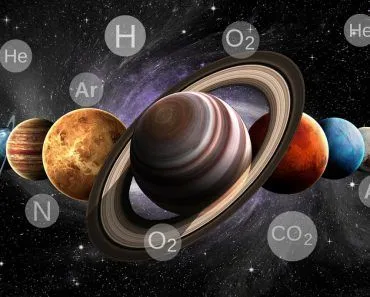
The brightest planets — chiefly Venus (apparent magnitude up to −4.9) and Jupiter (up to −2.9) — outshine every star in the night sky because they are millions of times closer than the nearest stars and have highly reflective surfaces or clouds. They don’t produce their own light; they reflect sunlight. Dimmer planets like Uranus and Neptune, however, are actually fainter than thousands of naked-eye stars.
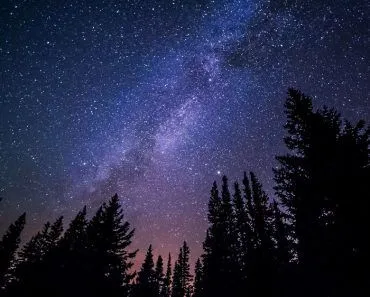
There are days when you just want to lie beneath the vast night sky and wonder at its beauty, seeking humility and peace with yourself. Those seemingly tiny diamonds embedded against a dark backdrop are fascinating, but have you ever asked yourself why some heavenly bodies appear brighter than others? More importantly, how do you even distinguish between a planet and a star?
Let’s find out!
Recommended Video for you:
What Is A Planet?
This question sounds simple, but the answer isn’t. The parameters that a celestial body must satisfy to be regarded as a planet have undergone quite a few revisions throughout history.
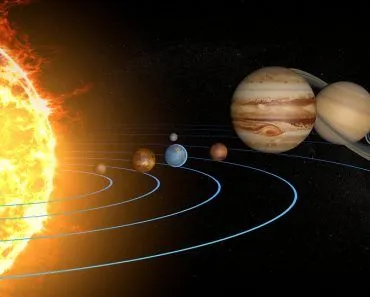
The most recent definition adopted in 2006 by the International Astronomical Union is: (a) it orbits a star, (b) it must be big enough for its self-gravity to hold it in a nearly spherical shape, and (c) its gravity must be strong enough to clear its neighborhood around the orbit.
Any celestial body that satisfies the above conditions is considered a planet. Nevertheless, the debate is ongoing concerning the accurate definition of a planet.
What Is A Star?
A star is a humongous celestial body composed of gases, such as hydrogen and helium, that is held together by self-gravity. A star produces its own heat and light from the nuclear fusion reactions taking place in its core, due to extreme atmospheric conditions.
The formation of a star is itself a topic of discussion, but to put it simply: stars were formed millions of years ago when gas and dust accumulated and began collapsing as a result of their own gravity.
How Can You Spot The Difference Between A Planet And A Star?
It’s quite an easy task to distinguish between a planet and a star if you have a keen eye for detail. Both appear like tiny dots, but they have a slightly different optical appearance.
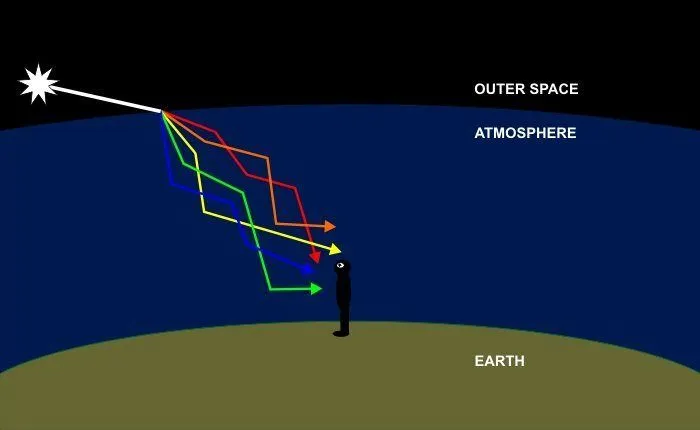
Firstly, stars twinkle, but planets don’t. Earth’s atmosphere is full of turbulent pockets of air at slightly different temperatures and densities, which bend (refract) starlight along zig-zagging paths — the scintillation we see as twinkling. Stars are so far away they appear as true point sources, so every wobble shows. Planets, by contrast, are close enough to appear as tiny disks rather than points; light from one edge of the disk gets refracted one way while light from the opposite edge zigs the other way, and the random shifts average out. So planets shine steadily. (When a planet sits low on the horizon, where its light passes through more atmosphere, it can twinkle slightly too.)
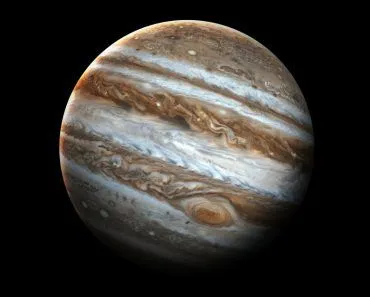
Secondly, the brightest planets appear brighter than every star in our sky — although it’s an overstatement to say all planets do. Venus and Jupiter outshine even Sirius (apparent magnitude −1.46), the brightest star in our night sky; Mars at opposition can match it; but Uranus (mag ~+5.7) and Neptune (~+7.8) are fainter than thousands of naked-eye stars. Stars including our Sun produce their own light through nuclear fusion. Planets do not — they shine purely by reflecting sunlight.
Why Do Planets Appear Brighter Than The Stars?
The primary answer to this question is the apparent distance of the planets and the stars from Earth.
According to the inverse-square law, the intensity of perceived light reflecting from an object is inversely proportional to the square of the distance between the observer and the object. Since the planets are closer to Earth, the perceived intensity is much higher than that of stars, which are much farther from Earth.
As the brightness is directly proportional to the intensity of light, the planets appear brighter than the stars.
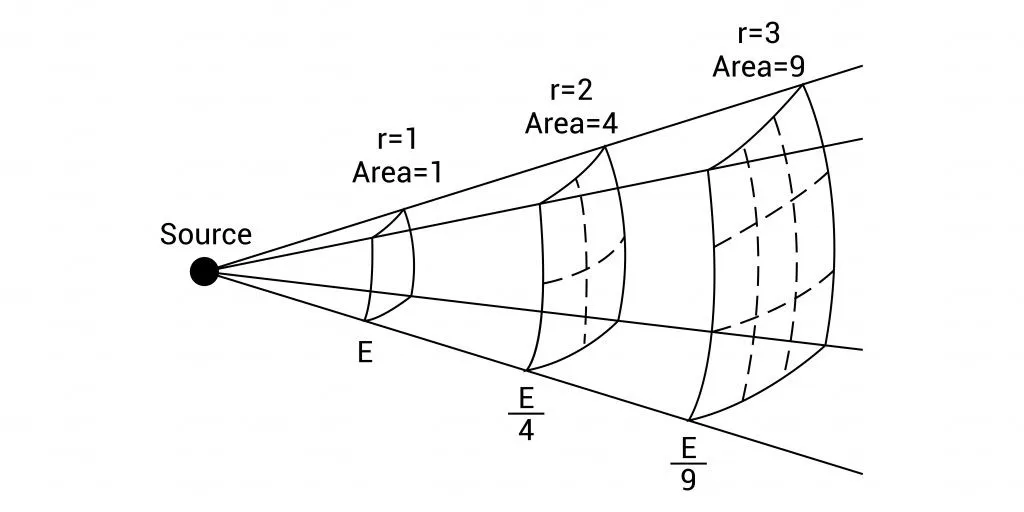
The distance of the planet from the Sun, whose light it reflects, also plays an important role in determining the brightness level of the planet. This is also governed by the inverse-square law. As the distance of the planet from the Sun increases, the light that reaches the planet decreases. Hence, the light reflected from it also decreases, resulting in less brightness.
Other factors, such as the reflectivity or albedo of the planet (how much light can its atmosphere and surface reflect), as well as the size of the planet, also influence its brightness.
Which Planet Is The Brightest Among The Planets In Our Solar System?
From the above paragraphs, we can conclude that different planets have different brightness levels, depending on the factors mentioned.
At times, Mars or Jupiter might appear quite bright, but Venus owns the title for being the brightest planet in the Solar System. This is primarily because Venus has the highest albedo of any planet. Its thick sulphuric-acid clouds reflect roughly 75% of the sunlight that strikes the planet (Bond albedo of about 0.77).
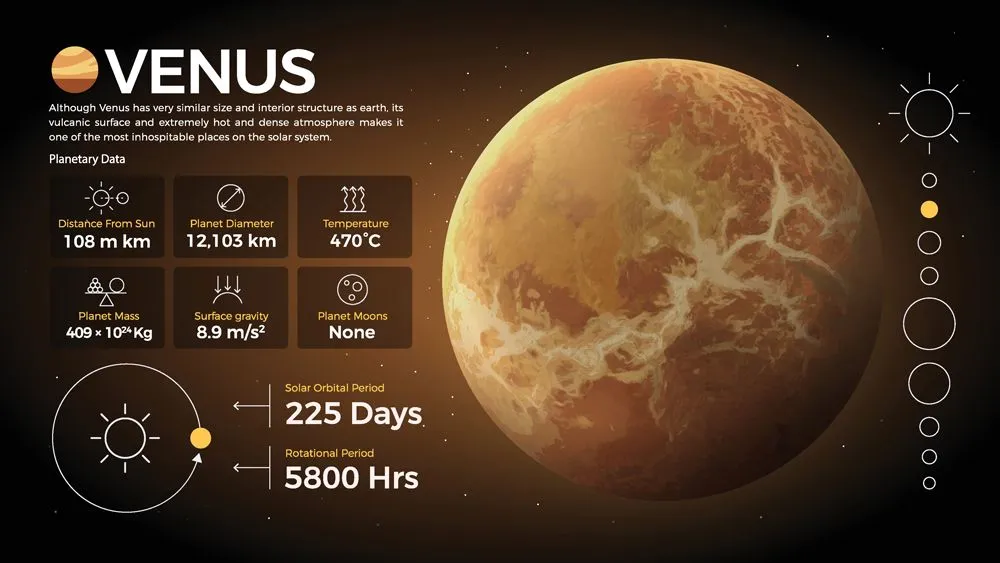
Venus is also closer to the Sun than most of the planets in the Solar System. At inferior conjunction Venus comes within about 38 million kilometres of Earth — the closest approach of any planet — although when averaged over time, Mercury is actually our closest planetary neighbour, because it never strays far from the Sun (Stockman, Lancaster & Helffrich, Physics Today, 2019). Venus and Earth are also similar in size, with Venus’s radius about 95% of Earth’s.
Conclusion
Now is the best time to go out on the roof and witness the blazing night sky. Go out and spot the planets and the stars… it could even be a fun game to play with your friends at the next bonfire!

And who knows… maybe you will discover a whole new planet or star as a result of your careful observations. Happy sky-gazing!
References (click to expand)
- Why do planets shine brighter than stars? – BioSidmartin - www.sidmartinbio.org
- Why do some of the planets in our solar system appear to be .... Socratic
- Why is Venus so bright? - EarthSky. earthsky.org
- Our Planets - NASA Science Solar System Exploration
- What Is a Star? | Types of Stars - Sky & Telescope. Sky & Telescope