Table of Contents (click to expand)
We can see galaxies millions of light-years away because they are enormous (often 100,000 light-years across) and contain hundreds of billions of stars whose combined light reaches us. We can’t see exoplanets in nearby star systems with the naked eye because planets are vanishingly small by comparison and only reflect light — so astronomers detect them indirectly, through transits, radial-velocity wobble and direct imaging with telescopes like JWST.
A galaxy, as you may already know, is a massive collection (in the billions) of stars, planets, dust and gas. We live on planet Earth, which is in one of the many solar systems located in a galaxy called the Milky Way. Just like our home galaxy, there are many other galaxies out there in the universe.
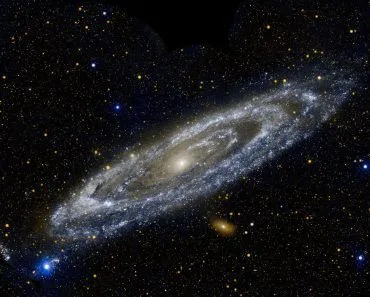
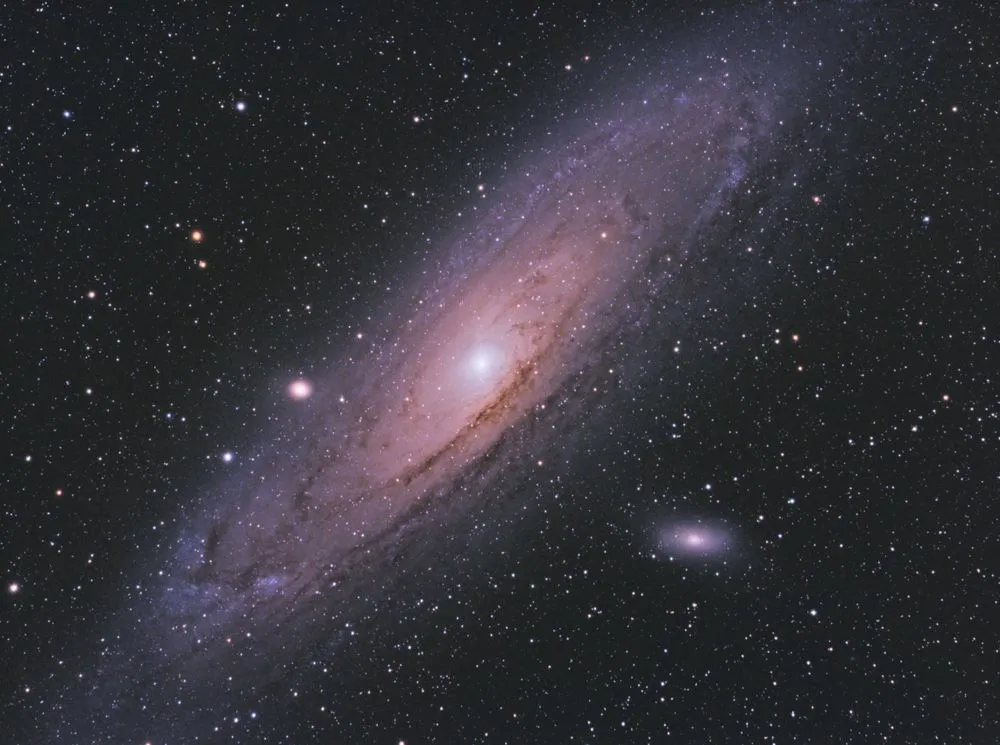
The Andromeda Galaxy, for example, is the closest major galaxy to our home galaxy. Despite being a whopping 2.5 million light-years away, it is so big that it counts among the most distant objects humans can see with the naked eye — only the Triangulum Galaxy (M33), at about 2.7–2.8 million light-years, lies even further out for the keenest dark-sky observers.
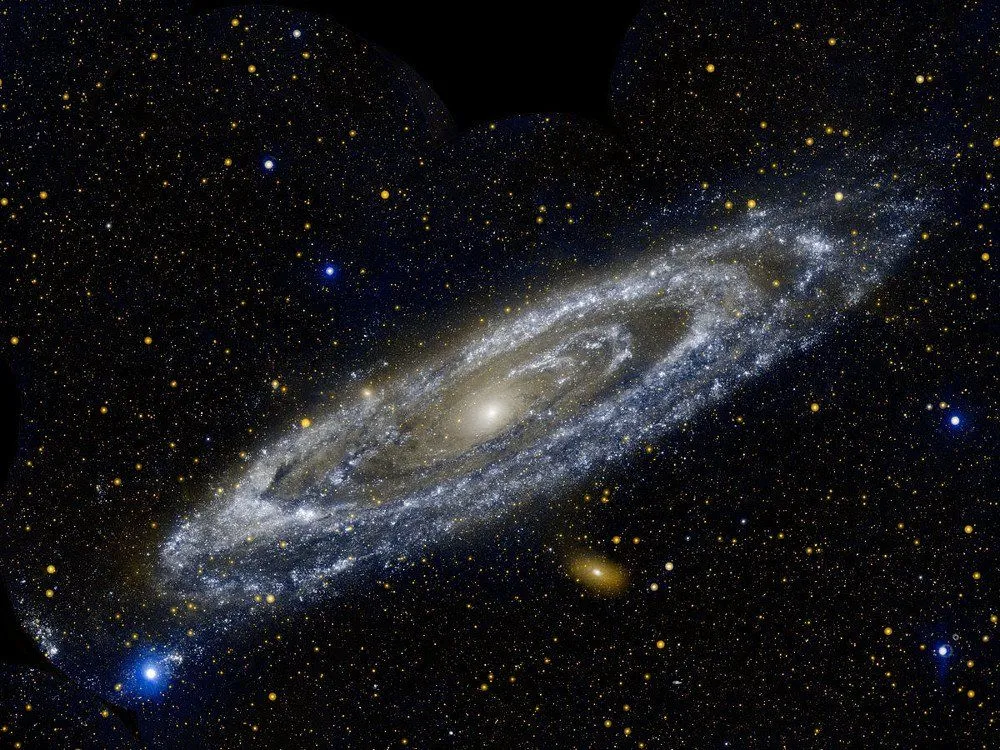
Note that Andromeda is NOT the closest galaxy to us; there are actually several minor galaxies that lie much closer to us than the Andromeda Galaxy, but the latter is the closest large spiral galaxy.
Now, think about this for a moment—Andromeda is 2.5 million light-years away from us. For those who don’t know, a light-year is the total distance light can travel in 1 year. And we all know how fast light moves—300,000,000 meters per second, or 186,282 miles per second! This may give you a rough estimate of how mind-bogglingly far away the Andromeda Galaxy truly is.
Despite that mammoth distance, we are able to see it in the night sky (provided you’re at exactly the right place at just the right time).
Given that, it seems odd that we can’t see planets that are just a few light-years away from Earth. In fact, we can barely see planets in our own solar system!
Recommended Video for you:
Why Can We See Distant Galaxies?
We can see far-off galaxies, despite how far away they are, for two main reasons:
1 – Galaxies are huge
2 – Galaxies are bright
Although galaxies are really far away from our planet (and solar system), they are undeniably massive. Our Milky Way probably consists of 100 to 400 billion stars, and is about 100,000 light-years across (Source).
Andromeda, however, is way bigger—a whopping 220,000 light-years wide!
The Canis Major Overdensity at about 25,000 light-years was once called the closest galaxy to us, but its galactic status is now disputed — many astronomers now treat it as a stellar overdensity or a warped feature of the Milky Way disk, not a true galaxy in its own right. The closest confirmed satellite galaxy is the Sagittarius Dwarf Spheroidal Galaxy at roughly 70,000 light-years (about 662,000,000,000,000,000 km!) from the Sun.
So, as you can imagine, galaxies are very big, which is why we can see them from Earth.
In addition to being massive, galaxies are also extremely bright, thanks to the billions upon billions of stars they contain. This is why they’re so bright and shiny, which helps us to see them in our night sky.
Why Can’t We See Planets If We Can See Distant Galaxies?
One thing we often tend to overlook while talking about planets and galaxies together is how ridiculously small planets are in comparison to galaxies.
If a galaxy were a basketball, then a planet would be a million times smaller than a single speck of dust clinging to that basketball; in fact, it would be even smaller than that.
We cannot see exoplanets (planets outside our solar system) with the naked eye, even those just a few light-years away, because planets are simply too small to be observed from such a distance. In addition to that, planets are not bright. They simply reflect light that falls on their surface, and that light is too dim to be picked out next to the glare of their parent star.
That said, “invisible” doesn’t mean “undetectable.” As of 2025, astronomers have confirmed more than 6,000 exoplanets — almost all of them found indirectly. The transit method watches for the tiny dip in a star’s brightness when a planet crosses in front of it; the radial-velocity method watches for the subtle wobble a planet’s gravity gives its star. A small but growing number of giant exoplanets have also been imaged directly. In June 2025, JWST captured TWA 7 b, a Saturn-mass world about 111 light-years away — its first directly imaged exoplanet, and ten times lighter than any previously imaged.
Think of it this way: you can easily see a hill that looms 10-15 kilometers away from your house, but can you see a grain of sugar lying just a few meters away from your eyes?
Probably not.
In much the same way, a distant galaxy is visible to us with the naked eye, but a nearby planet isn’t visible at all, since the latter is far too tiny and much too dim to be observed from Earth.
Note that we can see planets much closer to home, for example those in our own solar system. These planets are visible at different times of the year and in different locations of the sky depending on where on Earth you live. For instance, Venus is almost always found in the sky, and looks like a large, silvery star.
This NASA webpage provides details of planets that you can see in a given month alongwith some nifty sky-watching tips.