Table of Contents (click to expand)
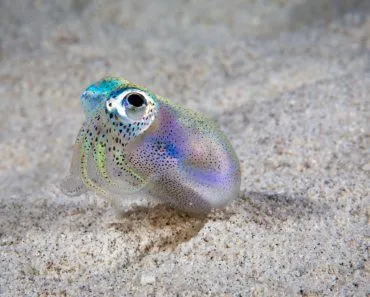
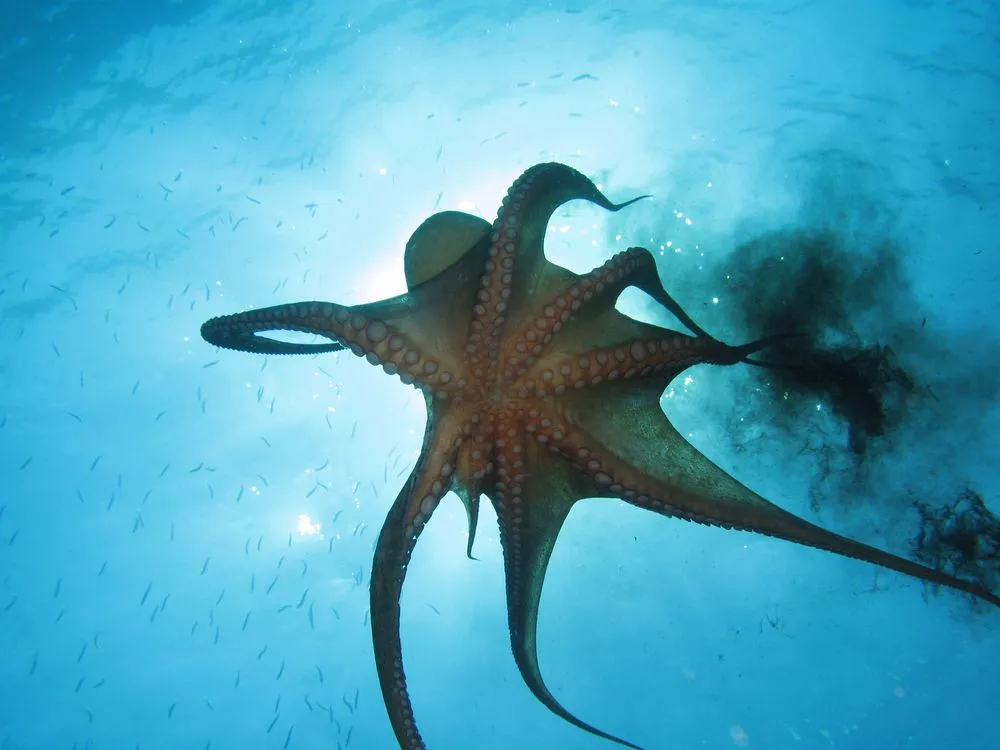
Octopuses and squids will squirt ink when they sense danger approaching. The squid squirts the ink, which not only allows it to escape, but can also act as a visual alarm cue for other members of the same species.
Octopuses and squids belong to the phylum Mollusca — a large group of soft-bodied animals that includes snails, oysters, scallops, and over 85,000 described species. Generally, this class of animals is slow moving and easy to digest, which makes them a go-to meal target, placing them at the top of a predator’s hit list.
However, most relatives of octopuses and squids have a protective shell that helps them immediately retract themselves to the safety of their home. This feature is greatly reduced and mostly absent in octopod species, so what does a squishy shell-less octopus do when it feels threatened? What escape mechanisms does it have up its many sleeves?
Recommended Video for you:
Octopus Escapades
If you didn’t know any better, octopuses and squids may seem like easy prey to voracious carnivores of the sea. Their soft exterior, vibrant color, and slow locomotive action of creeping and crawling on the ocean floor all make them far too vulnerable to the lurking threats in both the deep and shallow seas.
In order to stay safe from predators, and give themselves time to escape, octopuses have evolved some absolute wonders.
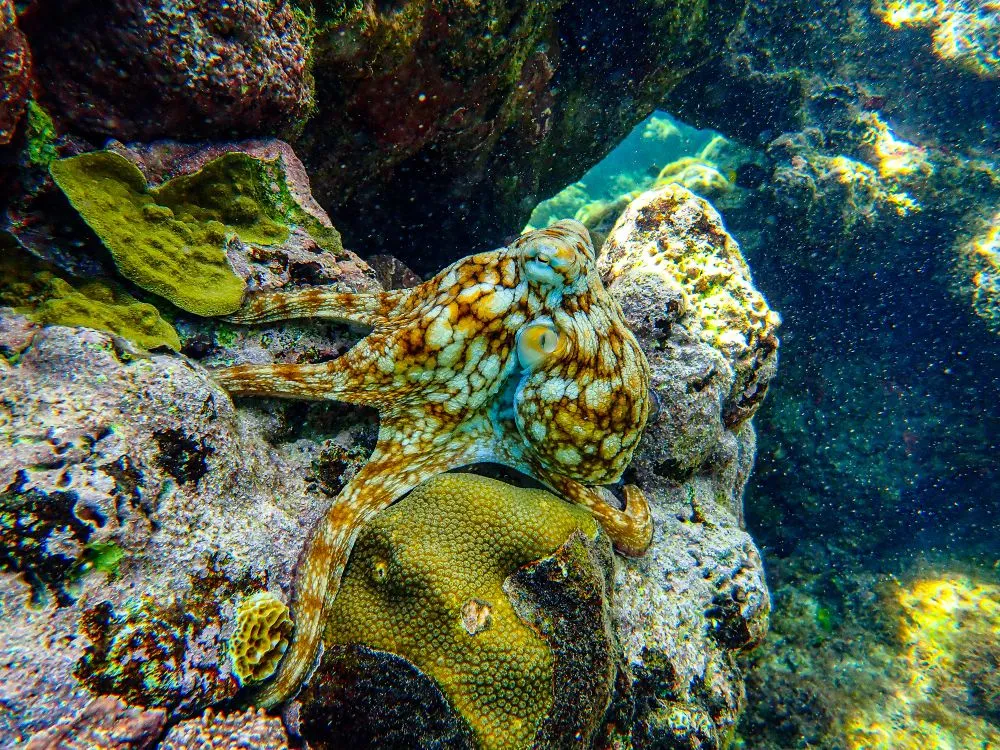
They can shape-shift (thanks to their soft, pliable bodies) to hide in rock, or coral crevices, then seamlessly camouflaging against their backgrounds by changing color. Importantly, they can confuse their predators with dark misleading illusions by squirting ink!
This ability to create an ink smokescreen was so captivating that it even intrigued Aristotle way back in 350 B.C.E. He believed that cephalopods, like cuttlefish, octopuses and squids, produce ink out of fear. In Aristotle’s book — Parts of Animals. Movement of Animals. Progression of Animals — he notes, “When the Sepia [a cuttlefish] is frightened and in terror, it produces this blackness and muddiness in the water, as it were a shield held in front of the body.”
The Ink Screen
Octopuses and squids will squirt ink when they sense danger approaching them. In fact, we’ve tested the defensive power of the ink. The squid squirts the ink, which not only allows it to escape, but (in some octopus species) it also acts like a visual alarm cue for other members of the same species. The ink released contains a melanin-producing compound called tyrosinase. This helps octopuses impair visual cues by causing irritation in the predator’s eyes. At that point, the octopus or squid can propel themselves to safety.
Some squids, like the Caribbean reef squid, release ink that renders them unappetizing to predators. These ‘deterrents’ are believed to be combined with melanin (the colored component of ink) to ensure that the predators no longer find the squid to be something they’d want to eat!
Some squid species are masters of deceit. They can leave behind a trail of ink that resembles their own shape and size, even as they swim away from predators. These ink trails are called pseudomorphs.
Several marine organisms, both big and small, tend to keep away from the long poisonous stinging tentacles of animals called siphonophores. By releasing ink with a string and bead-like appearance, some squids can deceptively keep predators at bay.
Sometimes, however, the released ink can adversely affect the octopus too. If an octopus were to linger in its own ink for prolonged periods of time, it could potentially die.
What’s In The Ink?
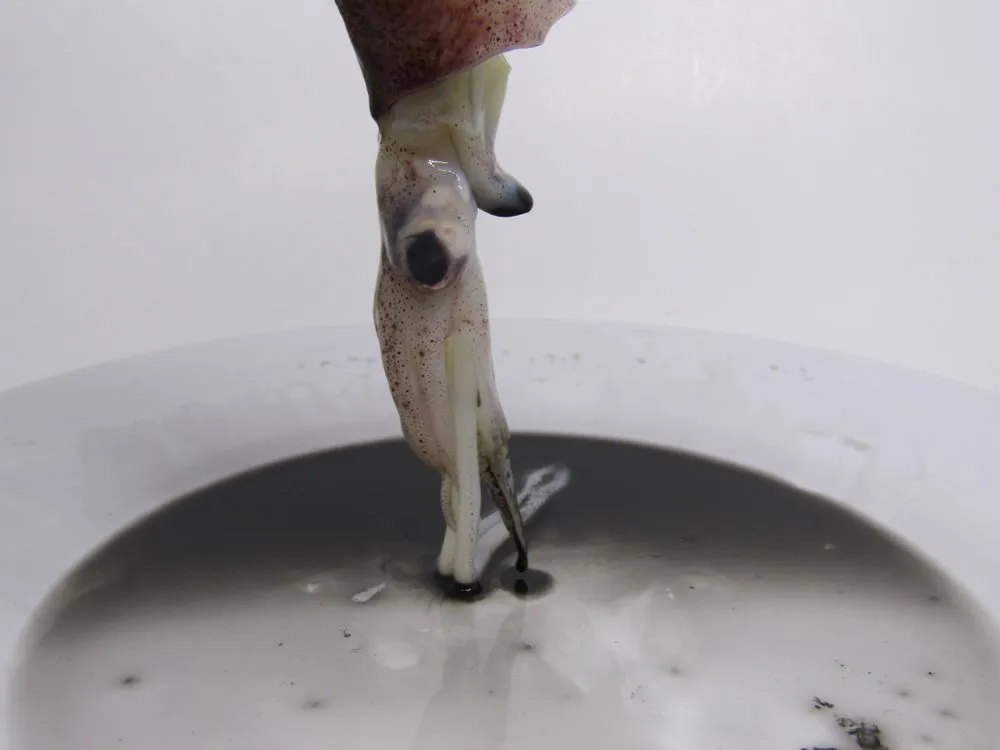
Scientists wanted to know what made the ink so dark and viscous, so they collected some ink from the ink sac of octopuses and tested it to identify its components.
Melanin—a pigment that gives human skin its color—is what gives the ink its characteristic black color. In fact, 15 of every 100 milliliters of octopus ink is melanin. Although the ink is mostly black, it may also have a red, blue or reddish tinge to it, depending on the species. Many other proteins constitute less than 10% of the ink. Some metals, like lead, copper and cadmium, are also present.
The primary function of the ink might be to ward off predators, but surprisingly enough, octopus ink is usually non-toxic.
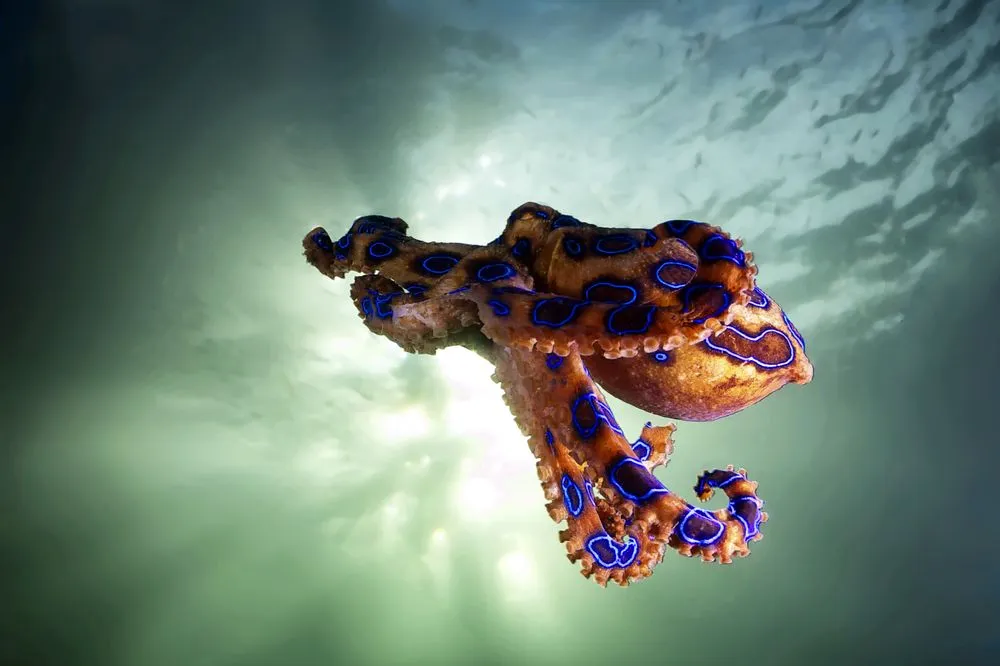
Contrary to popular belief, ink sac secretions are non-poisonous to humans. They are often mistaken for venomous glands, but that is a completely different organ in the octopus. That said, some species, such as the blue-ringed octopus, produce extremely lethal toxins that can kill a human with a single bite.
The octopus’s brain and neural connections are responsible for, and will decide when, and in which circumstances, the ink is released.
How Is The Ink Produced?
If you were to cut open an octopus, you couldn’t miss the dark black, bag-like organ called an ink sac. Beneath this ink sac lies an ink gland, which is responsible for secreting ink. Ink sacs are present in newly hatched young as well.
Yes, that’s right, octopus babies are also capable of squirting ink!
The ink gland produces and releases the ink into the ink sac, where it is stored until needed. When the octopus deploys it, the stored ink travels through a duct that empties into the rectum, mixes with mucus from the funnel organ, and is then forcefully expelled through the funnel (or siphon) — the same muscular tube the octopus uses for jet-propelled swimming.
Muscular ring-like structures called sphincters control the release, while the funnel organ supplies the mucus that gives the ink its viscosity and helps the cloud hold its shape in the water.
The ink is typically ejected together with a powerful jet of water, which both disperses the cloud and propels the octopus away from the threat.
A Final Word
Of the roughly 800 living cephalopod species, the vast majority — including most octopuses, squids and cuttlefish — can produce ink. The two notable exceptions are the chambered nautiluses, which never had an ink sac, and the cirrate (deep-sea) octopuses, which lost it. The Dumbo octopus, a cirrate species that lives thousands of metres below the surface, has no ink sac at all — likely because it has very few predators in the deep. The bobtail squid Heteroteuthis dispar is unusual in another way: it ejects a glowing, bioluminescent ink that lights up the deep ocean to confuse predators.
Octopus ink is undoubtedly an important defense mechanism used by these creatures to protect themselves. Dolphins, however, being brilliant, have been observed removing the ink gland of their cuttlefish prey before they capture them.
Humans have learnt to commercially exploit octopus, squid and cuttlefish ink. In the pharmaceutical industry, the various components of octopus ink are in high demand due to their use in anti-cancer, anti-inflammatory and anti-bacterial drugs. Its commercial value as ‘food ink’, used as an edible food coloring, is also gaining popularity in the gastronomy industry.
References (click to expand)
- Derby, C. (2014, May 12). Cephalopod Ink: Production, Chemistry, Functions and Applications. Marine Drugs. MDPI AG.
- Asakawa, Matsumoto, Umezaki, Kaneko, Yu, Gomez-Delan, … Ohtsuka. (2019, April 29). Toxicity and Toxin Composition of the Greater Blue-Ringed Octopus Hapalochlaena lunulata from Ishigaki Island, Okinawa Prefecture, Japan. Toxins. MDPI AG.
- Seagle, B.-L. L., Gasyna, E. M., Mieler, W. F., & Norris, J. R., Jr. (2006, November 7). Photoprotection of human retinal pigment epithelium cells against blue light-induced apoptosis by melanin free radicals from Sepia officinalis. Proceedings of the National Academy of Sciences. Proceedings of the National Academy of Sciences.
- Schmitt, C. B. (1965). Aristotle as a Cuttlefish: the Origin and Development of a Renaissance Image. Studies in the Renaissance. Cambridge University Press (CUP).
- Wood, J. B., Pennoyer, K. E., & Derby, C. D. (2008, November). Ink is a conspecific alarm cue in the Caribbean reef squid, Sepioteuthis sepioidea. Journal of Experimental Marine Biology and Ecology. Elsevier BV.
- Prota, G., Ortonne, J. P., Voulot, C., Khatchadourian, C., Nardi, G., & Palumbo, A. (1981, January). Occurrence and properties of tyrosinase in the ejected ink of cephalopods. Comparative Biochemistry and Physiology Part B: Comparative Biochemistry. Elsevier BV.
- Cephalopod Ink — Pseudomorphs. Wikipedia.
- Finn, J., Tregenza, T., & Norman, M. (2009, January 21). Preparing the Perfect Cuttlefish Meal: Complex Prey Handling by Dolphins. (S. F. Brosnan, Ed.), PLoS ONE. Public Library of Science (PLoS).
- Dilly, P. N., & Herring, P. J. (1978, September). The light organ and ink sac of Heteroteuthis dispar (Mollusca: Cephalopoda). Journal of Zoology. Wiley.
- Abidin, F., Sulmartiwi, L., & Saputra, E. (2021, February 1). Characteristics physicochemical of melanin from squid ink (loligo sp.) extracted by ethanol. IOP Conference Series: Earth and Environmental Science. IOP Publishing.
- Boletzky, S. v . (2003). Biology of Early Life Stages in Cephalopod Molluscs. Advances in Marine Biology. Elsevier.
- Dumbo Octopus - Oceana. Oceana, inc.
- (2011) Intramantle Inking: A Stress Behavior in Octopus bimaculoides .... The National Center for Biotechnology Information