Table of Contents (click to expand)
The first successful animal cloning experiment was conducted in 1996. Ian Wilmut’s cloned sheep was named Dolly. Wilmut and his colleagues took the egg of a Scottish blackface ewe and enucleated it. Since then, numerous scientists have created animal clones of pigs, mice, and monkeys.
Imagine having a super busy day… finishing up a presentation that is due in the evening, attending a PTA meeting, hopping over to your best friends’ birthday party, and taking a DMV test at some point before any of that…the list goes on and on. At times, the tons of things you have to accomplish in a given day that require your presence seem insurmountable, often leaving you wondering what life would be life if there was another you who could help with these tasks.
The desire to have a clone is totally justified. We all know that cloning is a reality, but these procedures have only been successfully conducted in animals. Ethical issues are the major roadblock to the process being tested on humans. The question is, how was cloning accomplished in the first place, even in animals?

Remember ‘The 6th Day” where they cloned Arnold Schwarzenegger by reading his DNA data through retinal scans? The artificially anonymous human body was then imprinted with his DNA and all his physical and mental characteristics were transferred to a fully grown human body (something that is not possible). We accepted that in the movie, but does cloning really work that way in real life?
Definitely not! Let’s break this down a bit further. You might be able to engineer one cell, but a fully grown human body? The number of cells would be incredibly large, so even if we do come up with technology that can isolate each cell of the body, imagine the amount of time it would take to imprint it with the right DNA!
Recommended Video for you:
The Mechanism Of Cloning
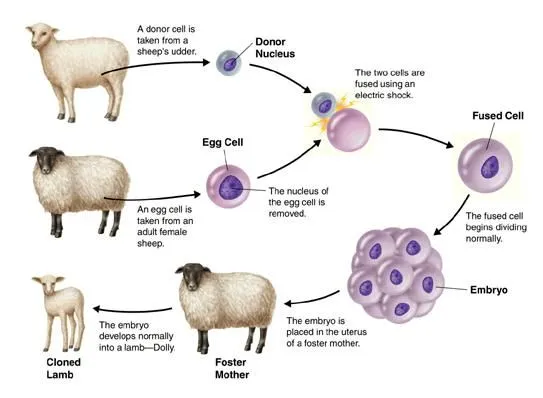
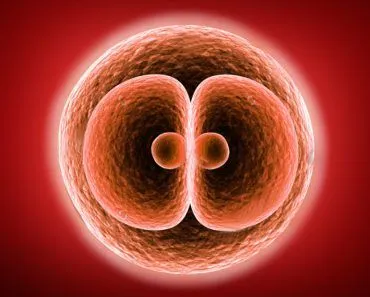
The first cloned vertebrates were actually frogs — Robert Briggs and Thomas King transferred frog embryo nuclei into enucleated frog eggs back in 1952, and in the 1960s John Gurdon famously cloned tadpoles from the nuclei of intestinal cells of an adult frog (work that won him the 2012 Nobel Prize in Medicine). The huge breakthrough came in 1996, when Ian Wilmut’s team at the Roslin Institute in Edinburgh used the same trick to clone a mammal from an adult body cell for the first time. Wilmut and his colleagues took an unfertilised egg from a Scottish Blackface ewe and enucleated it — stripped out its DNA-containing nucleus. They transplanted in the nucleus from a mammary-gland cell of a Finn-Dorset sheep, fused the two with a brief electric pulse, and watched the cell start dividing as if it were an early embryo. The young embryo was implanted into the uterus of another Blackface ewe acting as surrogate. The lamb that was born, named Dolly, was a clone of the Finn-Dorset sheep — and her white face gave it away, despite the black-faced surrogate mother.
Since Dolly, the list of cloned mammals has grown rapidly: mice (1997), cattle (1998), pigs (2000), the cat CC (2001), the horse Prometea (2003), the Afghan hound Snuppy (2005), and — a 21-year holy grail — the macaque monkeys Zhong Zhong and Hua Hua in 2018, the first primates cloned from non-embryonic cells. In 2020, the U.S. cloned its first endangered species when scientists produced a black-footed ferret named Elizabeth Ann from cells frozen in 1988, opening up cloning as a tool for conservation and de-extinction projects.
Are Human Clones More Difficult To Make?

Apart from the ethical issues involved in cloning humans, there are technological limitations as well. The process of cloning as it exists today is not foolproof. Every enucleated egg that is transplanted with a nucleus from a donor does not survive the transplantation and multiply. It can take multiple tries to make the procedure succeed. A resource of 100 ovaries can yield up to 1000 eggs, but scientists must be able to convince that many women to donate their ovaries. That is one major problem with respect to human cloning. Apart from the availability of willing hosts, other problems could easily crop up.
For example, it is hard to clone birds because extracting the nucleus from bird eggs has proved to be difficult, since it is surrounded by the dense yolk.
The human cloning process may involve these or many other issues that will only be known once attempts have been made. The other obstacle for attempting human cloning is an ethical one, as mentioned. Would it be right to clone humans, given the concerns of identity and privacy that are involved.
Could Cloning Bring Us Closer To Immortality?
This question is more philosophical, involving an unresolved debate about what one considers the ‘Self’. The debate involves ‘Ship of Theseus’ considerations. Basically, if you take a ship and replace all of its parts one at a time, would the rebuilt ship be considered the old ship or a new ship? If one answers new ship, then how can you say your clone is you? And if you answer old ship, then that goes against our colloquial logic that helps us differentiate between old and new.
From a psychological perspective, will your clone have the same likes, interests, thoughts and feelings as you? Even identical twins, which are the best examples of natural cloning, show differences in these domains. Therefore, can immortality truly be achieved?
Considering all this information, let’s just say that for now, you should learn to plan better to get through an insanely busy day, rather than counting on a clone anytime soon. For all we know, clones could be worse versions of ourselves, irresponsible, identity-stealing robots that lead to humanity’s ultimate destruction. In other words, we should give the idea a bit more thought before churning out human copies!