Table of Contents (click to expand)
Numerical analysis is the branch of mathematics that uses arithmetic algorithms — addition, subtraction, multiplication, division — to find approximate, yet highly accurate, solutions to problems that cannot be solved exactly. Modern applications include weather prediction, car crash simulations, drug delivery models, spacecraft trajectories and the optimization algorithms behind machine learning.
The word ‘analysis’ generally means to solve a problem through a set of equations and further reduce these equations using the methodologies of algebra, partial differential equations, calculus and other related fields of mathematics.
On similar grounds, numerical analysis implements arithmetic algorithms: addition, subtraction, multiplication, division and comparison to obtain numerical solutions.
A computer precisely performs these operations, meaning that numerical analysis and computers are intimately related.
The problem of continuous mathematics generally arises throughout the natural sciences, business management, engineering, astronomy and medicine. It is always more practical to carry out the tedious arithmetic operations using a computer.
Before the mid-20th century, until the advent of modern computers, all these repetitive operations had to be performed by manual interpolation. The overall agenda of numerical analysis is to give an approximate, but accurate solution to the advanced problem. The necessity for accuracy, is, of course, determined by the variety of applications.

Recommended Video for you:
Historical Background
Numerical algorithms predate the invention of modern and digital computers and are almost as old as human civilization itself. Many renowned mathematicians of the past were engrossed in numerical analysis. Archimedes of Syracuse (c. 287–212 BC), the most famous Greek mathematician, physicist, engineer and inventor, refined the ‘method of exhaustion‘ (originally developed by Eudoxus of Cnidus) to compute the area and volume of various geometric figures.
A famous document, The Rhind Papyrus (c. 1650 BC), copied by the scribe Ahmes from an earlier Egyptian Middle Kingdom source, bears a root-finding method to solve simple equations.
To facilitate computational solutions, Newton and Leibniz invented integral and differential calculus. Various accurate mathematical models were developed, but they couldn’t be solved explicitly.
To simplify this, several numerical methods were created by Isaac Newton. Following his work on root finding and interpolations, many other legendary mathematicians like Euler, Lagrange, and Gauss contributed to the field of numerical analysis. Another important aspect was the invention of logarithms by John Napier (1614), replacing the tedious calculations of multiplication, division and exponentiation.
Different Methods And Areas Under Numerical Analysis
Direct methods lead us to the exact solution in a finite number of steps. For example, Gauss elimination is used to find the roots of the linear simultaneous equations immediately. On the contrary, iterative methods are most commonly used and are not expected to finish off in a certain number of steps. These are approximate methods starting from an initial guess and converging to an exact solution. The Jacobi method and Gauss–Seidel method are iterative techniques used to solve systems of equations with a large number of unknowns.
According to the problem to be solved, the field of numerical analysis is divided into various disciplines.
- Interpolation constructs a new set of data points within the range of the given function (or problem). This can be obtained through curve-fitting, and some examples include the Gaussian process, linear interpolation and polynomial interpolation.
- Extrapolation is identical to interpolation, but it has a higher risk of producing meaningless results. It is the process of roughly evaluating the value of the problem outside its range.
- Regression is a statistical process that helps in understanding the relationship between dependent and independent variables. It is widely used for forecasting and predicting in the field of machine learning.
- Solving differential and integral equations: Most mathematical models (particularly in engineering) are based on the solutions obtained by partial differential equations, ordinary differential equations and integral equations. Some popular techniques are Monte Carlo integration and the Newton-Cotes formula.
Modern Applications Of Numerical Analysis
Sophisticated numerical analysis software has become indispensable in modern life. People are able to perform mathematical modeling even if they are unaware of the simulations involved. This can only be achieved through reliable, high-end and efficient software. Some of the major applications of numerical analysis are intriguing, yet easy to understand.
- Car safety enhancements: Car makers around the globe use numerical simulations to evaluate and enhance car safety. Pedestrian protection is also kept in mind while investigating car crash tests. The algorithms involved are partial differential equations and fed to the advanced computers to unravel optimal results.

- Airflow patterns in the Respiratory Tract: It is quite common for patients in ICUs to undergo respiratory failure. Mechanical ventilation is a treatment that helps in the sufficient exchange of oxygen and carbon dioxide for the normal functioning of the lungs. Various mathematical models use differential equations and computational algorithms to develop laminar airflow in the lungs using ventilators.
- Onset and Progression of tumor cells: Cancer is characterized by the accumulation of pre-malignant cells and tumor growth. In recent years, cost-effective statistical and probability models have been developed to detect cancer in the body. This allows for the computing of several parameters, such as population size, lifetime and mutations of the cancer cells.
- Financial industry: Modern businessmen make use of numerical techniques to allocate their resources efficiently. Some of the problems addressed by such applications are manufacturing, storage, scheduling, investment and others. Quantitative analysts have expertise in this area, and use the algorithms in risk management and interest calculation.
- Transportation of chemicals in the body: Our body is constantly being exposed to various chemicals (or drugs). Not all are beneficial and the body must excrete them out into the environment. The diffusion and transport of such chemicals is studied with the help of ordinary and partial differential equations.
- High hydrostatic pressure (HHP) processing: This is a non-thermal process in which food and biotechnological substances are compressed under very high pressure of up to 1000 MPa to inactivate certain enzymes and micro-organisms. The treatment of fluid food is analyzed by means of numerical simulations. The enzyme is inactivated with the help of numerical equations.
- Weather predictions: Numerical weather prediction (NWP) is based on a coupled system of nonlinear partial differential equations known as the primitive equations — combining the Navier–Stokes equations of fluid flow with thermodynamic and moisture equations. Powerful supercomputers process this bulk data and extract the information in the form of forecast charts.
- Spacecraft Dynamics: Increases in the size and complexity of spacecraft have demanded a complex mathematical model of its dynamics. To reduce the inconvenience and plan a smooth trajectory for the spacecraft, various open loop models are created because the dynamics in space behave very differently than they do on Earth.

- Price estimation by airlines: Nowadays, airline ticket prices vary significantly, even for nearby seats within the same cabin. Airlines use computational techniques to increase their revenue, keeping a check on fuel, payroll, crew assignments and many other activities.
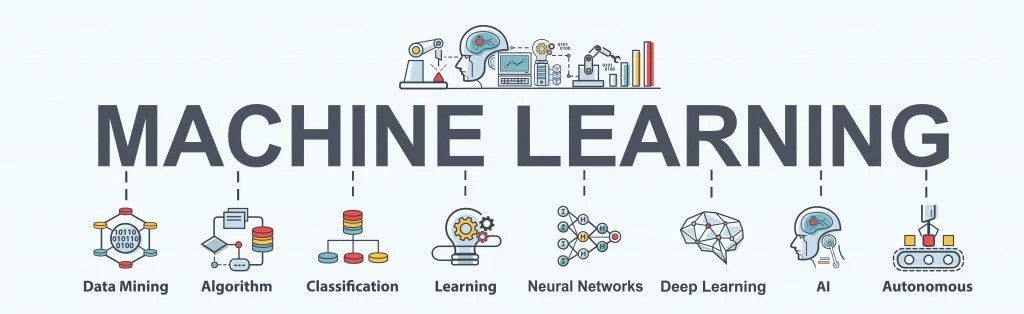
- Machine learning: Numerical optimization algorithms — including Newton’s method, stochastic gradient descent and Nesterov’s accelerated gradient method — power the training of modern neural networks. Artificial intelligence systems, from large language models to image classifiers, rely on numerical analysis to fit billions of parameters to data.
Conclusion
Numerical analysis is the branch of modern computation that finds applications in the field of engineering, life sciences and even arts. It has a remarkable ability to predict the world around us. The calculations are mostly performed on computers using software such as MATLAB, Python (with NumPy and SciPy), Julia and modern Fortran, all designed to minimize numerical errors. Clearly, numerical analysis has proved itself as a boon to humankind, from ancient times all the way to today, and they will surely help us move forward into the future!
References (click to expand)
- Atkinson, K. E. An Introduction to Numerical Analysis (2nd ed.). Chiang Mai University.
- Monahan J. F. (2001). Numerical Methods of Statistics. Cambridge University Press
- Higham, N. J. (2002). Accuracy and Stability of Numerical Algorithms (2nd ed.). SIAM.
- Atkinson, K. & Han, W. (2009). Theoretical Numerical Analysis: A Functional Analysis Framework (3rd ed.). Springer.
- Strandberg, J. R., & Humphreys, K. (2019, December). Statistical models of tumour onset and growth for modern breast cancer screening cohorts. Mathematical Biosciences. Elsevier BV.
- Plant, N. (2010, December 9). Modeling Transport Processes and Their Implications for Chemical Disposition and Action. Understanding the Dynamics of Biological Systems. Springer New York.