Table of Contents (click to expand)
“Twin telepathy” is a popular name for the uncanny experience of finishing each other’s sentences, ordering the same meal or knowing when a twin is in trouble. Controlled studies, including Susan Blackmore’s classic 1993 experiments, have never found evidence of actual mind-to-mind information transfer. The real explanation is shared genes, shared upbringing and the statistics of comparing two very similar people — twins’ brains process the world similarly, so they often arrive at the same thought independently.
In the case of twins, similar genes produce similar brains, which in turn process similar thoughts, feelings and sometimes even similar dreams at night. It’s almost like sharing your brain with someone else — though, as we’ll see, that’s not the same as actually reading each other’s minds.
I am a twin myself. To be more precise, I am a monozygotic identical twin. This means that I have extremely similar DNA to my sister. We share a very different relationship than most siblings… I guess it’s a twin thing! We look alike, think alike, say the same things at the same time, and complete each other’s sentences, but do we have the same dreams? Actually, yes! Why does it happen? And more importantly, how does it happen? Does it have anything to do with twin telepathy?
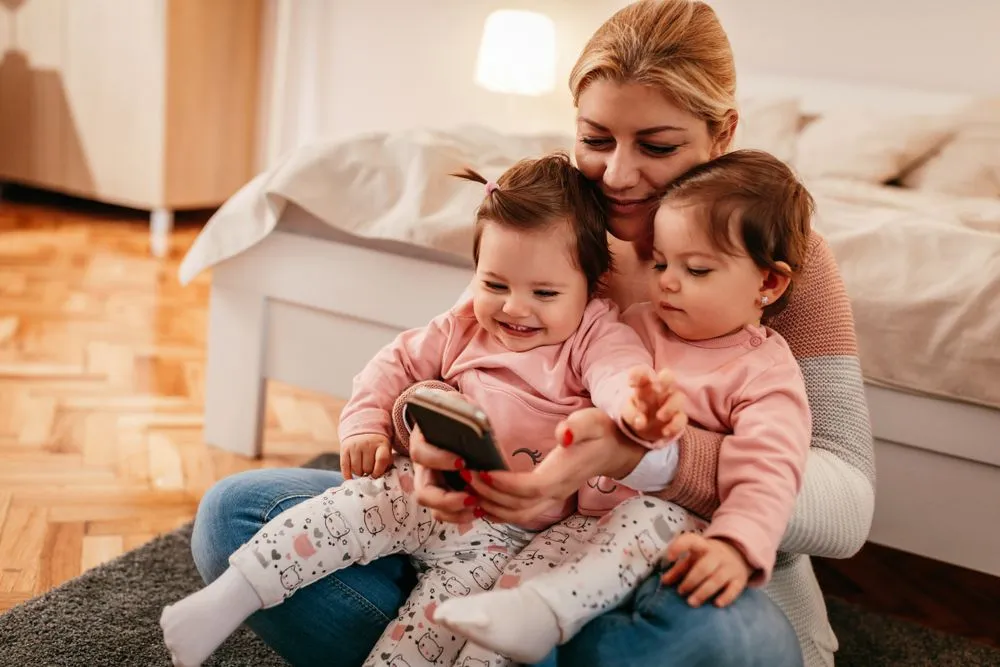
To be honest, I was confused about this for a very long time, until I decided to find an answer. This phenomenon is sometimes nicknamed “Same Dream, Two People”. Unfortunately, the rigorous evidence linking these shared-dream reports to anything paranormal is thin to non-existent — dream researcher Patrick McNamara has pointed out there has never been an objective controlled study of synchronous twin dreams.
The most logical answer is that similar genetic links between twins result in the formation of similar brain structures, which consequently produce similar thoughts and feelings. Thus, the probability of the twins having similar thoughts, feelings and even similar dreams (in rare cases) is higher than any other person on this planet! This probability is even higher in the case of identical twins than it is in fraternal twins.
Recommended Video for you:
Twins Who Look Alike And Twins Who Don’t
To better comprehend this, you need to understand the two types of twins: identical and fraternal.
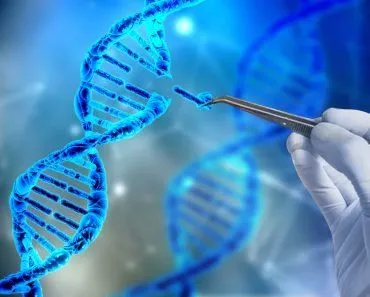
Identical twins (also called monozygotic) are formed when a single fertilized zygote divides as normal, but at some point in the first 1–13 days the developing cell mass splits in two, with each half going on to form its own embryo. Both embryos therefore start from the same genetic blueprint and share nearly identical DNA — though not quite exactly the same. Recent sequencing studies have shown that identical twins average around five early developmental mutations that differ between them, on top of accumulating epigenetic differences over a lifetime.

Fraternal twins (also called dizygotic), on the other hand, are a consequence of two separate egg cells being fertilized by two separate sperm cells, which leads to the formation of two separate zygotes with different sets of DNA (genome), thus making them non-identical! These individuals are more like regular siblings, except that they share the same birthday.
The Mechanics Behind Twin Telepathy
At times, twins have been known to complete each other’s sentences, they can feel the same emotions even when placed in contrasting situations (such as guilt, anger, happiness), and they occasionally do the same thing at the same time. This can range from something very simple, such as saying the exact same thing at the exact same time to ordering the same food at a restaurant or making the exact same mistakes on a test (without copying!).
This phenomenon has long made me wonder whether the twin telepathy hypothesis is backed up by any substantial scientific evidence. The short answer: not as actual telepathy. A US National Research Council review of 130 years of paranormal research found no scientific justification for telepathy, and Susan Blackmore’s 1993 study of twins specifically (“ESP and Thought Concordance in Twins”) traced their high concordance to similar thought patterns, not psi. What twins describe is something gentler and more interesting than ESP — a deep behavioural synchrony that grows out of having essentially the same operating system. It’s almost like a sixth sense exists between twins, even though it isn’t.
In March 2009, 15-year-old Gemma Houghton got a strong feeling that her twin sister Leanne was in trouble. She rushed to look for her sister, only to find her submerged in the bathtub, unconscious and turning blue. Leanne is epileptic and had suffered a seizure in the tub. Luckily, Gemma got to her twin in time to save her. The story made news around the world as proof of “twin telepathy” — but the more grounded reading is that Gemma already knew Leanne was alone in the bath, knew she was prone to seizures, and grew worried at the wrong kind of silence. There are many accounts of the “psychic connection” said to exist between twins, especially identical ones, but none have survived controlled testing as anything beyond shared context.

Identical twins do report “twin telepathy” experiences more often than fraternal twins. The reason isn’t a hidden communication channel — it’s biology. They share an almost identical genetic framework, which produces near-identical brains, and EEG studies of monozygotic twins find brain-wave patterns with heritability estimates of around 76–91% across various frequency bands (compared with much lower correlations in fraternal twins). Two brains wired so similarly will reach the same conclusion from the same input more often than chance — but that is parallel processing, not telepathy.
The Story Of The Jim Twins
Surprisingly, the famous Minnesota Study of Twins Reared Apart (Bouchard et al., 1990) found that identical twins separated at birth grow up to be about as similar to each other as identical twins raised together — on personality, interests, IQ and attitudes. Wait… shouldn’t separation make them more different?
This bizarre phenomenon is due to the fact that when twins are raised together, they often feel the need to be unique and stand out from their twin, thus causing them to develop a different personality. This can cause them to act or do something different than their twin simply because the twin does it a certain way.
The popular “Jim Twins” story is the classic illustration. They were identical twins separated at birth and grew up about 45 miles from each other in Ohio, yet ended up living strikingly parallel lives. (It’s worth noting that critics like Leon Kamin have argued the eye-popping coincidence lists are partly an artefact of comparing many traits at once — any two strangers will share a surprising number of overlaps if you look hard enough.)
Their adoptive parents ended up naming both of them James (Jim). Both of them had childhood dogs named Toy. As schoolchildren, both had a proclivity for math and woodworking, but were rather poor when it came to spelling.
During their early adulthood, both Jims had gotten married twice. The first time, they both married women named Linda, but they ended up getting divorced, before meeting and marrying women named Betty. Both Jim’s had sons and—I bet you saw this coming—both of them ended up naming their son James. Both Jims were heavy smokers, drove the same car (a Chevrolet) and worked in the security sector.
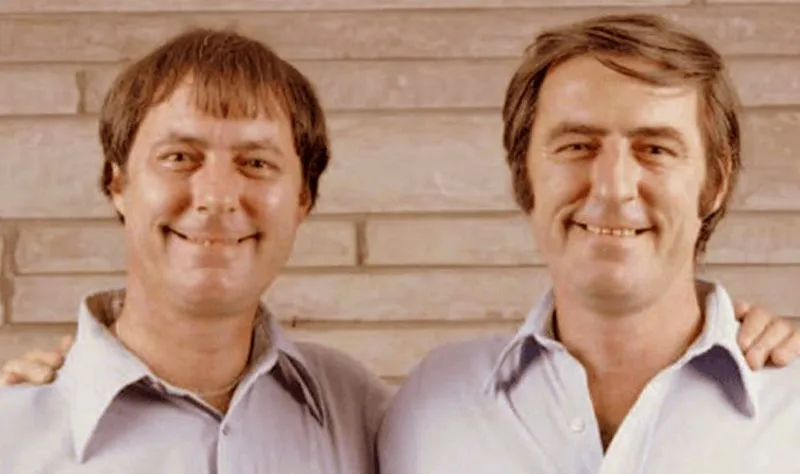
At 39 years of age, Jim Lewis called the probate court, which had a record of his adoption, and contacted Jim Springer’s family in Piqua.
“I came home one day,” Lewis recounted, “and had this message to call ‘Jim Springer’.”
He called, and before he could help himself, blurted out an almost comedic: “Are you my brother?”
Four days later, they met in person, at which point they discovered that they both suffered from tension headaches and were prone to nail-biting. The pair found that they smoked the same brand of cigarettes and vacationed on the same Florida beach. They still continue to look incredibly similar!
Twins Sharing Dreams… But How?
Although there is no concrete explanation as to how or even why some twins share the same dreams, the probable hypothesis always boils down to having a similar genetic makeup and brain structures.
Having the same dreams has become a common experience for my twin and me. We generally dream about the same person or location, or we say or do the same things in our dreams. Many twins have reported experiencing similar dreams, and some even share the same nightmares. There are also anecdotal accounts — though no controlled study has confirmed them — of identical twins waking from the same nightmare at the same time in separate rooms.
For now, those stories are best read as evidence of how alike identical twins are biologically, not as proof of a secret channel between them. Whether or not science eventually finds something more, what is already documented — two people raised from the same genetic blueprint, processing the world with nearly identical brains — is remarkable enough on its own.