Table of Contents (click to expand)
A shock wave is a thin, fast-moving disturbance — typically produced when an object travels faster than the speed of sound — that causes sudden jumps in the pressure, temperature, and density of the surrounding medium. Sonic booms from supersonic jets, the crack of a bullet or a whip, and the blast wave from an explosion are all everyday shock waves.
When you hear the word shockwave, several images come to mind. The effect of a bomb going off is perhaps the most prominent one. We often say that big events, like an election, caused “shock waves” throughout the country, but those are only figurative shock waves. You might even be thinking about the Decepticon villain of the same name from the Transformers, but now we’re getting off topic…
Let’s explore what shock waves mean in physics and how exactly they’re created.
Recommended Video for you:
What Is A Shock Wave?
A shock wave, like any wave, is a disturbance moving through a medium. They are thin wavefronts that cause sudden changes in the pressure, temperature, and density of the medium.
Shock waves are caused in supersonic flows. This is when something is traveling at a speed faster than the speed of sound in the medium. When a bullet travels at a speed greater than the speed of sound in air, we get shock waves.
To visualize shock waves, we need special imaging techniques like Schlieren imaging to capture them.
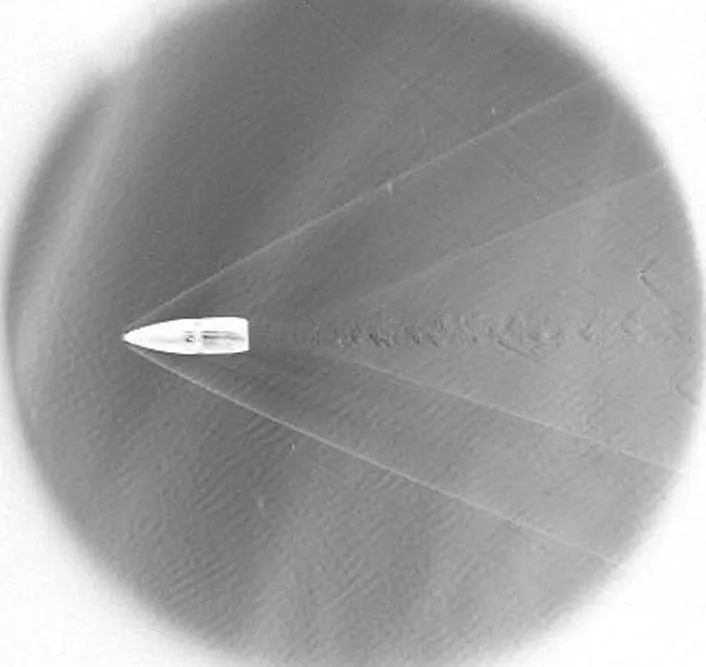
If the shock wave is produced in a direction perpendicular to the direction of flow, they are called normal shocks. If they occur at an angle, they are called oblique shock waves.
How Are Shock Waves Formed?
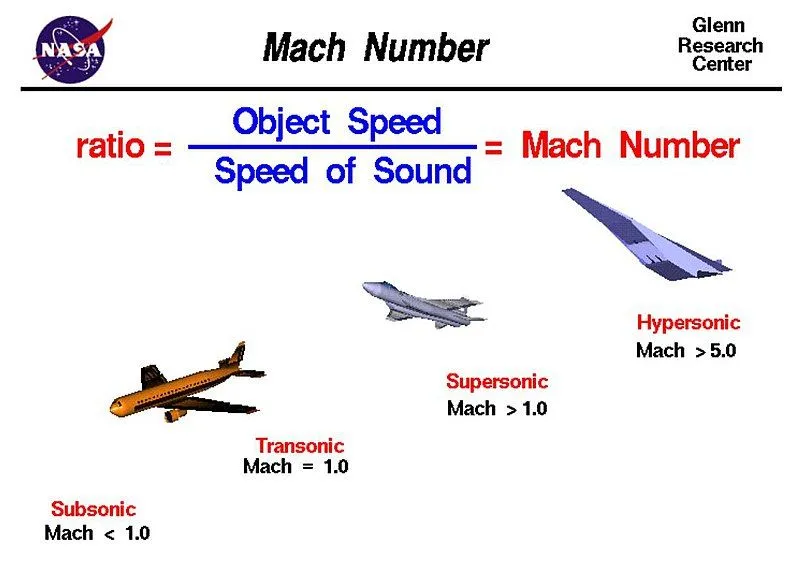
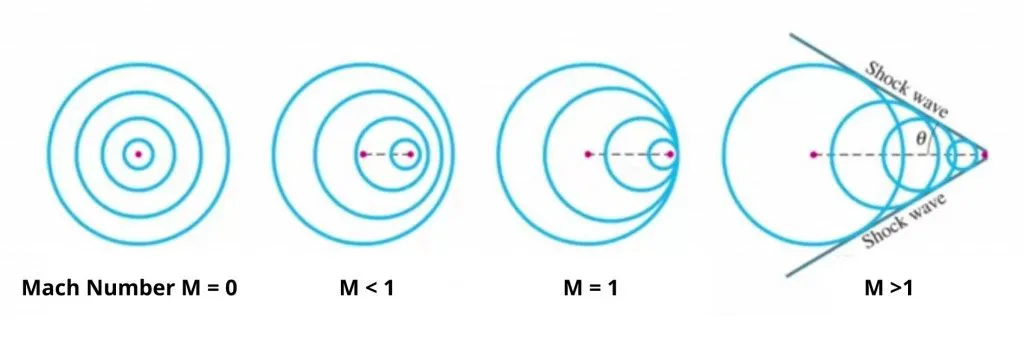
Before we get to the how, let’s look at the Mach number. This is the ratio of the speed of an object moving through a medium to the speed of sound in that medium. Mach 1, then, is when an object is moving exactly at the speed of sound — the sonic point. The narrow regime around Mach 1 (roughly Mach 0.8 to 1.2), where the flow around the object is partly subsonic and partly already supersonic, is called transonic.
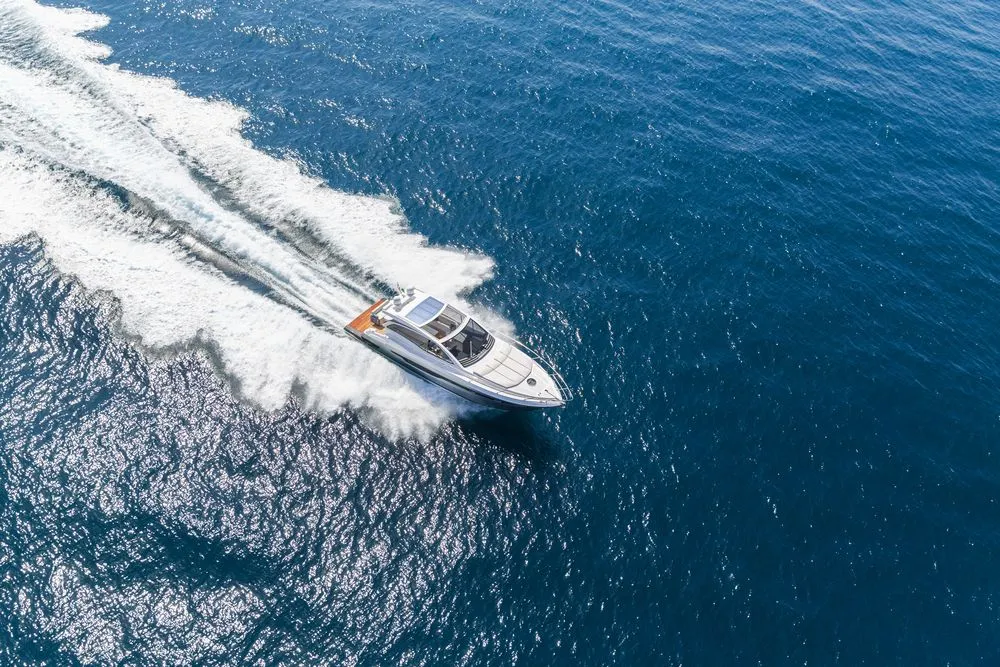
Consider a boat moving through water. The boat is moving at a speed faster than the speed of waves in the water, so the waves have to move out of the way. This results in the wake that we see.
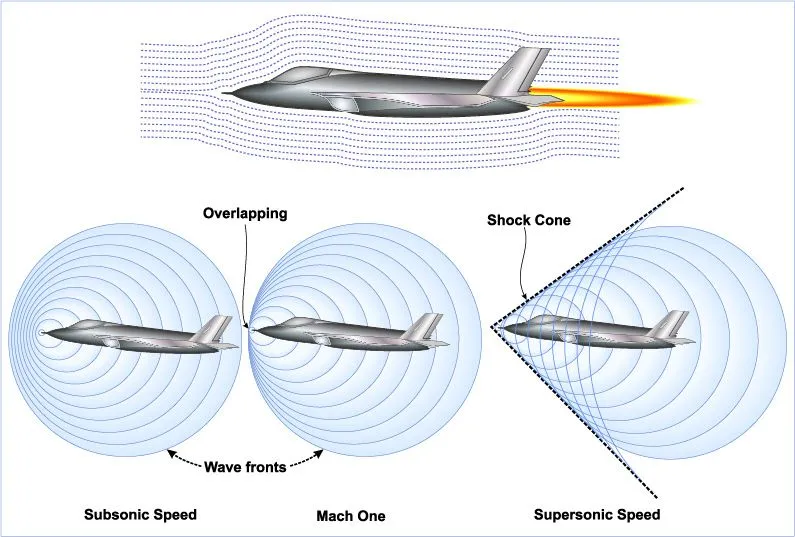
When an object moves through a medium at a low speed, the mach number is less than one. In this case, the waves in the medium moving outward from it will be symmetrical or almost symmetrical in all directions.
When it picks up speed, the waves in front of it will get compressed. They will have more frequency and the waves behind it will have less frequency. The waves in front tighten up the faster the object moves, until we reach the speed of sound.
At the speed of sound, the mach number is equal to one, at which point waves will be tightening and overlapping at the front of the object.
So what happens once the moving object exceeds the speed of sound? The waves are unable to adjust or catch up and are left behind, so to speak. The trailing waves create the shape of an expanding cone.
Shock Waves Around Us
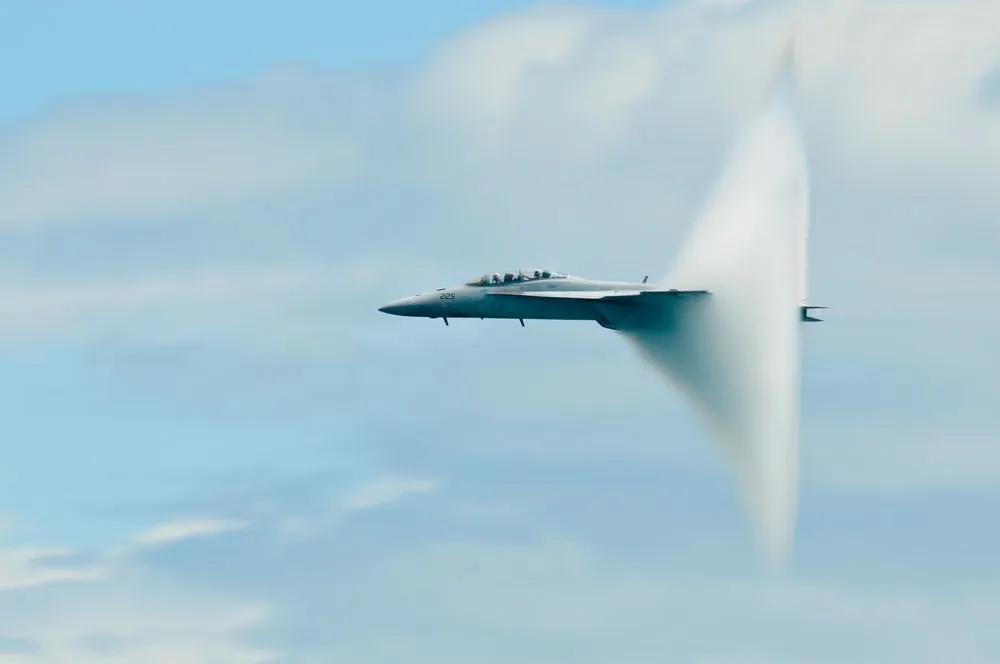
What creates shockwaves? Supersonic aircraft are an obvious answer, as they often travel at speeds above Mach 1. In the image below, you can see a fighter jet with a vapor cone. These cones tend to appear in the transonic regime — near the speed of sound — when local drops in pressure and temperature cause moisture in the air to condense, given the right humidity. When an aircraft does exceed the speed of sound, the resulting shock waves reach us as the sonic boom that we associate with jets passing by.
The illustration below shows how the waves behave in subsonic, mach one, and supersonic conditions.
Bullets traveling at supersonic speeds generate shock waves. This is what causes the ‘crack’ of the bullet that can be heard as it passes by someone. In the awesome video below, you can see such waves being captured with schlieren imaging and then analyzed.
The sound heard when cracking a whip is the result of weak shock waves being produced by the fast-moving tip. Yes, that’s right. The tip of a whip travels faster than the speed of sound to create that crack!

The sound of thunder is also a shock wave phenomenon. The bursting of firecrackers is the result of shock waves. Bomb explosions create similar, but bigger spherical shock waves, which can knock over buildings if the explosion is strong enough. A meteorite impact would also cause such waves.
Beyond Aircrafts And Bombs
Shock waves are caused in supersonic flows. Talking about shock waves with examples like aircraft can sometimes limit our visualizations. Here we are thinking of objects moving at supersonic speeds, but we can also be thinking about a fluid flowing at supersonic speeds through a pipe that is faced by a change in something—a variation in the shape or dimensions of the pipe, for instance. In such a case, shock waves would also be created!
It’s also worth knowing that the sonic boom isn’t a fixed sentence for supersonic flight. NASA’s X-59, which took its first flight in October 2025 and went supersonic during testing in 2026, is shaped specifically to soften the shock waves it produces, replacing the loud “boom” with a much quieter “thump” that researchers compare to a car door slamming far away. The hope is that quieter shock signatures could one day allow supersonic flights over land again.
References (click to expand)
- LANDAU, L. D., & LIFSHITZ, E. M. (1987). Shock Waves. Fluid Mechanics. Elsevier.
- Fluid Mechanics: Fundamentals and Applications | Request PDF. ResearchGate
- Settles, G. (2006). High-speed Imaging of Shock Waves, Explosions and Gunshots. American Scientist. Sigma Xi.
- (2021) Shock Waves - The Physics Hypertextbook. physics.info