Table of Contents (click to expand)
Tapeworms, also called taenids, are flat and ribbon-like parasitic worms belonging to the flatworm phylum known as Platyhelminthes.
Tapeworm infections remain a significant global health concern — the WHO classifies taeniasis as a neglected tropical disease, endemic in Africa, Asia, and Latin America, particularly in communities with poor sanitation.
These parasites choose the human body to live out their adult lives, making humans the definitive host of tapeworms. The definitive host of a parasite is the place where the parasite reproduces. When adult tapeworms enter the human body and cause infections, the condition is known as taeniasis.
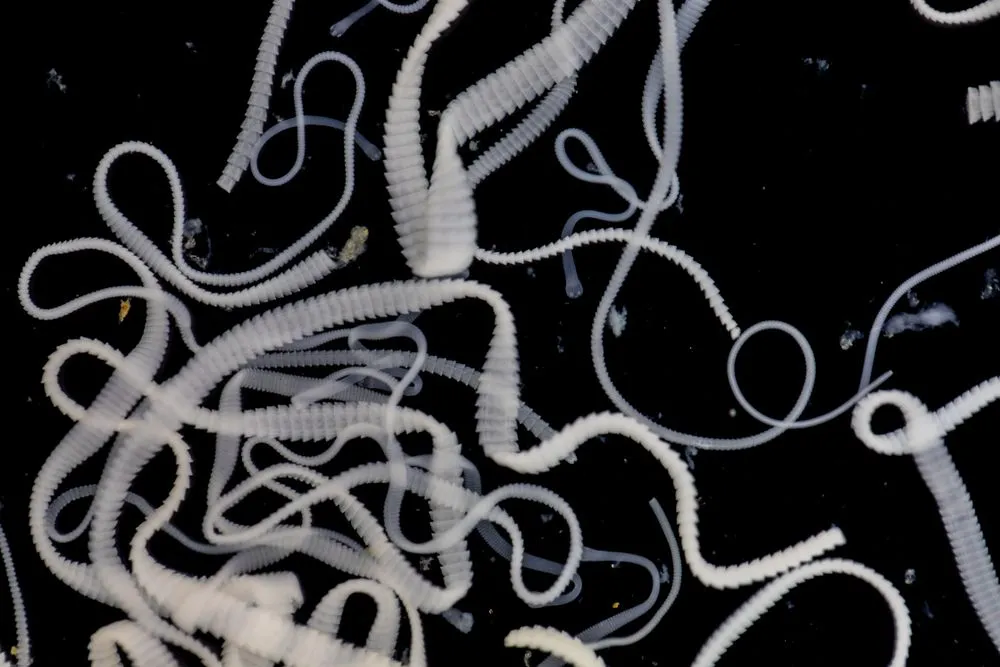
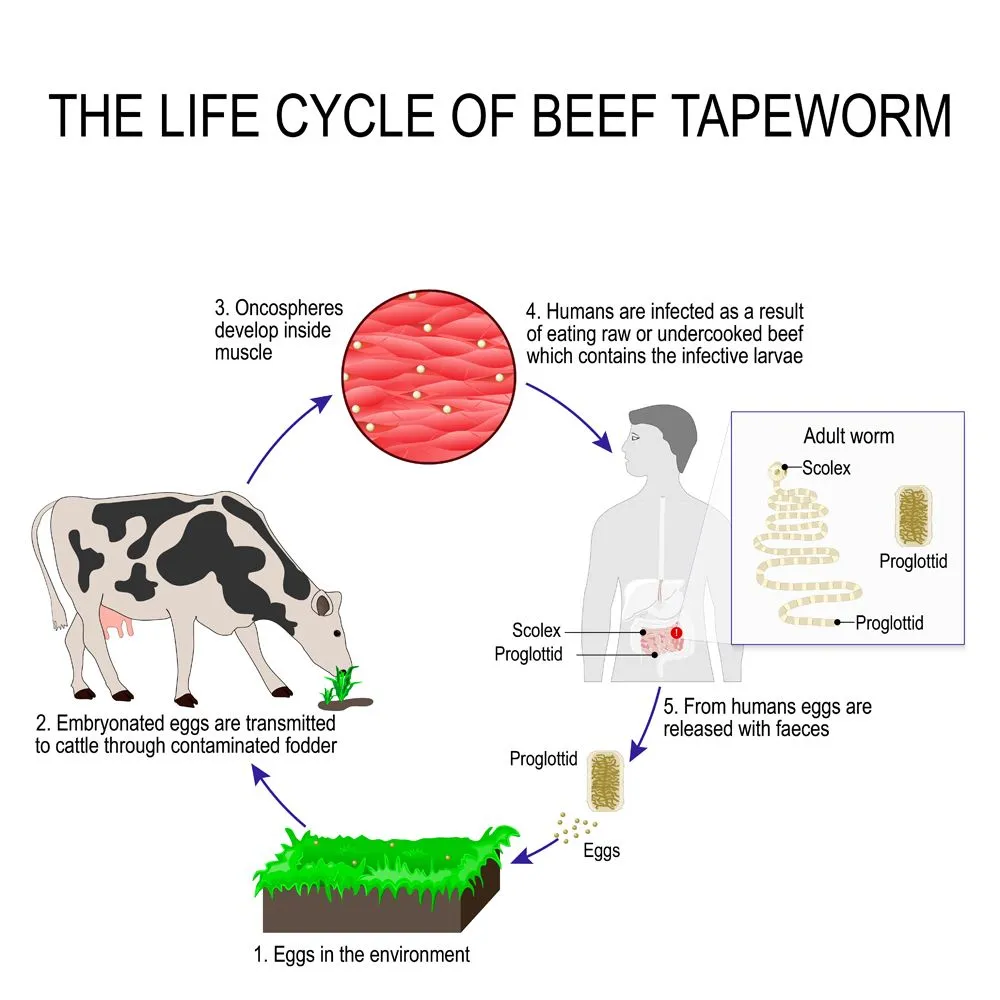
To understand how tapeworms make their way into the human intestine, it is imperative to understand the life cycle of these worms.
Recommended Video for you:
The Life Cycle Of Tapeworms
The life cycle of an organism includes its birth, growing stage, reproduction, and ultimately death.
Humans contract taeniasis through consuming raw beef or pork. The kind of infection is slightly different depending on the source of the tapeworms.
The tapeworms contracted from beef are known as Taenia saginata, while those from pork are called Taenia solium. Taenia is the genus name, followed by the species name, saginata or solium. A third important species is the fish tapeworm, Diphyllobothrium latum, contracted from raw or undercooked fish. It is the longest tapeworm known to infect humans, reaching up to 25 meters in length with over 3,000 proglottids, and can survive in the human intestine for decades.
The life cycle of taenids begins when cows or pigs feed on vegetation contaminated with tapeworm eggs. These eggs, called oncospheres, go straight down the animals’ intestines and hatch, revealing tapeworm larvae, known as cysticerci. The infection of these animals by cysticerci is known as cysticercosis.
The larvae burrow through the stomach wall of the animals and permeate the muscle tissues. When humans eat raw or improperly cooked meat from infected animals, these larvae enter the human intestine and grow into their eventual adult sizes, which can be quite formidable.
These cysticerci can remain in the muscle tissues of the infected animals for a good few years. Once inside the human intestine, it takes about two months for the larvae to morph into the characteristic elongated, flat tapeworms.
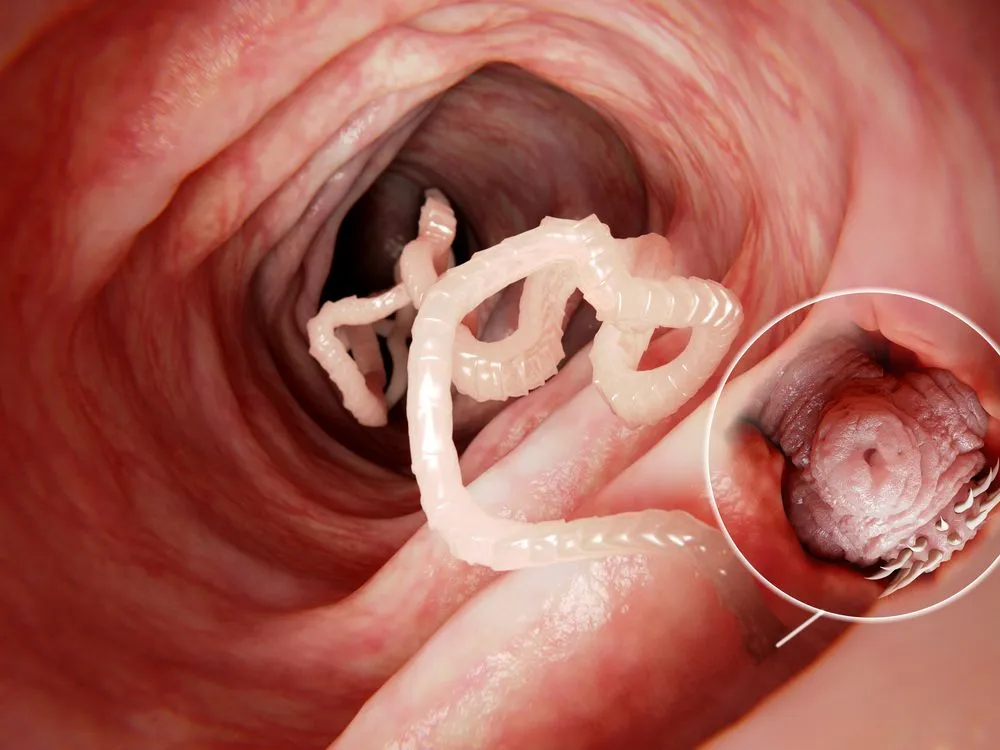
Tapeworms Inside The Human Intestine
The tapeworm larvae lodge themselves in the human small intestine, wherein they ultimately grow into adults. Tapeworms have a typical worm-type body comprised of a head region known as the scolex, and a body segmented into what are known as proglottids.
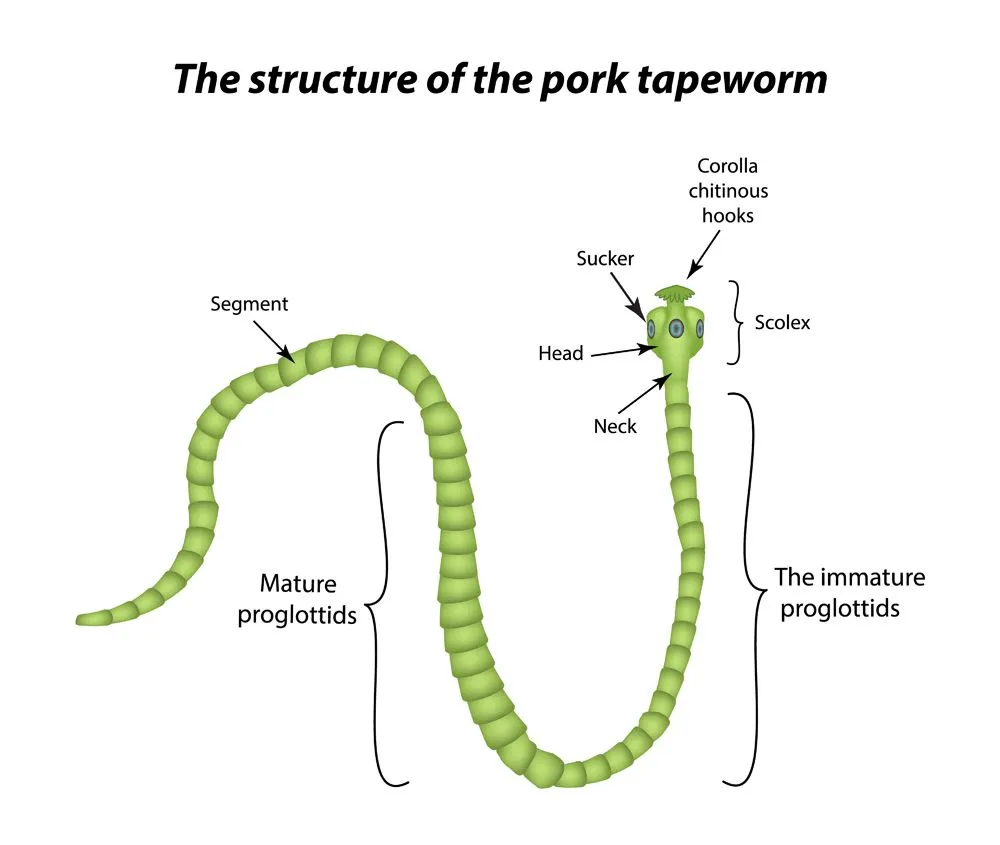
The scolex enables the tapeworm to attach firmly to the intestinal wall. T. solium has both suckers and hooks (earning it the name "armed tapeworm"), while T. saginata has only four suckers and no hooks ("unarmed tapeworm"). It then continues to grow for what can sometimes be 25-30 years—or even the entire lifespan of the infected person.
But how do they continue to grow if their head is hooked to the walls of our intestine? They do so by absorbing the nutrients (that we ingest) through the surface of their body.
Another peculiar feature of most tapeworms is that they are hermaphroditic, which means that they have reproductive characteristics of both sexes. Hence, they can self-fertilize, along with reproducing via cross-fertilization.
Self-fertilization occurs between the male and female gonads of the same tapeworm, which leads to the formation of the eggs (embryos). Cross-fertilization, on the other hand, happens when the male and female gonads of two different tapeworms fertilize to create eggs.
These eggs are present on each of the segments of the tapeworms, the proglottids. As the tapeworms lengthen in size, these egg-containing proglottids detach from the worm’s body and are gradually released, along with the expelled feces of the infected person.
A single segment of a Taenia saginata contains about 100,000 eggs, while that of Taenia solium contains almost 50,000 eggs.
When animals consume these eggs, the life cycle of the tapeworms has come full circle.
Conclusion
Tapeworms are notorious for growing into mind-boggling sizes. The average length of Taenia saginata is more than five meters, while that of Taenia solium is between two and seven meters!
Broadly, parasitic tapeworm infections either occur through their larval form (cysticercosis) or adult form (taeniasis).
Infections brought about by adult worms are mostly asymptomatic, with mild abdominal pain and a loss of appetite being the primary signs. However, when T. solium larvae migrate beyond the intestine and lodge in the brain, the condition is called neurocysticercosis — the most common preventable cause of epilepsy in developing countries, according to the WHO. This occurs when a person accidentally ingests T. solium eggs (rather than larvae), and the larvae form cysts in brain tissue.
The most common way of becoming aware of a tapeworm infection is when the long worms are observed when pieces are passed along with a person’s feces.
References (click to expand)
- CDC - Taeniasis - Biology. The Centers for Disease Control and Prevention
- (2021) Tapeworm - StatPearls - NCBI Bookshelf. The National Center for Biotechnology Information
- (1996) Cestodes - Medical Microbiology - NCBI Bookshelf. National Center for Biotechnology Information
- Cox, F. E. G. (2002, October). History of Human Parasitology. Clinical Microbiology Reviews. American Society for Microbiology.
- Taeniasis/cysticercosis. World Health Organization.
- About Diphyllobothrium (Fish Tapeworm). CDC.
- Taenia saginata - Wikipedia.