Most objects in space don’t merge into one giant clump because gravity weakens rapidly with distance, orbital motion keeps bodies in stable paths instead of pulling them together, and on the largest cosmic scales the expansion of the universe carries galaxies apart faster than gravity can drag them in.
In the roughly 65 years since the dawn of spaceflight, humans have launched thousands of rockets into orbit — a record 263 orbital launch attempts took place in 2024 alone, a 17% jump from the previous year. The natural cosmos, meanwhile, is packed with rocks, dust, planets, stars, and galaxies, all tugging on each other through gravity. So why doesn’t everything slowly fuse into one giant ball? It turns out the answer is much the same whether you’re asking about a cloud of broken satellites or a cluster of distant galaxies.
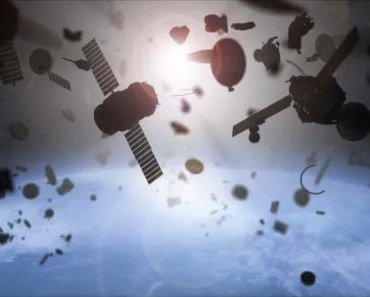
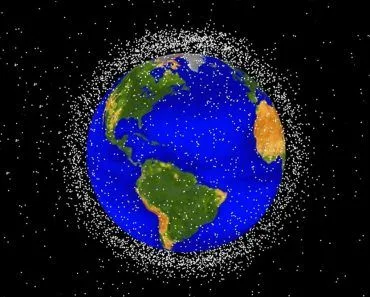
Whenever a rocket is launched, there is a certain amount of material that is cast off, such as the rocket casings once the fuel is expended. Furthermore, as satellites are retired, break down or collide with other debris, this generates even more “space debris”. At the start of the Space Age, people didn’t give much thought to the slow accumulation of debris in Low Earth Orbit, but this is definitely becoming a problem now—or rather, about 500,000 problems.
 However, as you may remember from your science or physics classes, gravitational force exists between any two objects that have mass; with that in mind, some people wonder why all that space debris doesn’t coalesce into a giant clump, something akin to a mini-moon of space junk. While it’s a good question, some basic physics and a step back for a larger perspective will help make the answer clear.
Recommended Video for you:
Gravity: A Review
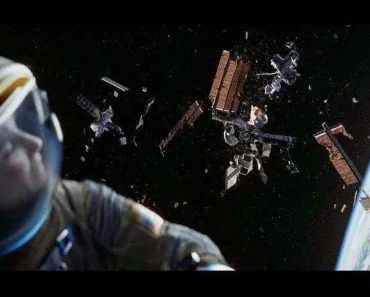
Gravity is not only the name of a movie about space debris causing absolute chaos for a satellite and its crew, but also the force underpinning our entire universe. As Newton pointed out and proved, there is a gravitational force between any objects that have mass, even on opposite sides of the galaxy, but the intensity of that gravitational attraction depends on proximity and the mass of the objects.
In our solar system, for example, the Sun exerts an incredibly large gravitational force on the planets, so large, in fact, that the planets’ gravitational pull on each other is nearly negligible. In some cases, when the orbits of planets cross or come near to one another, a slight alteration in their orbit is seen, but this is temporary and very small in nature. When our planet formed from a swirling ring of debris circling the sun, it coalesced into a planet due to the density of those materials, and maintained that orbital energy around the Sun. Thus, while the Earth is being perpetually pulled in towards the Sun, a better way to describe it is perpetually falling.
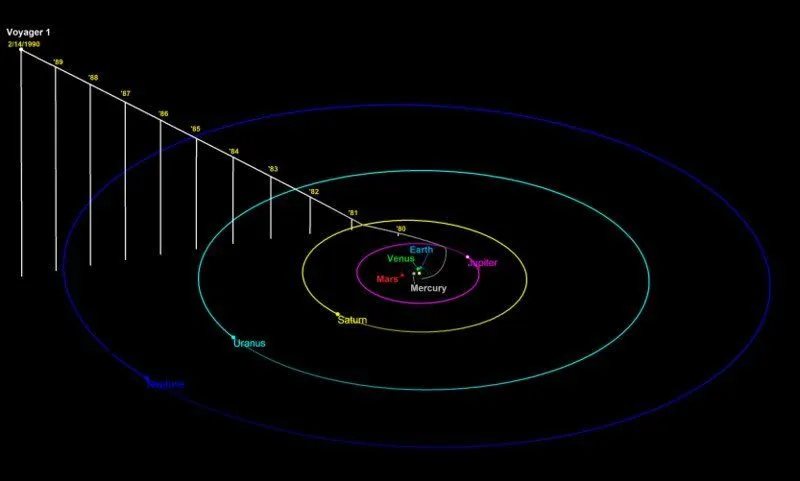
The Sun is moving at about 43,000 miles per hour, while Earth’s orbital speed is roughly 67,000 miles per hour. That generates a lot of orbital momentum, and while the Sun exerts enough force to prevent the Earth from flying off and out of the solar system, it isn’t able to draw the Earth into its fiery embrace. If the Sun and the Earth both stopped moving, the Earth would be rapidly drawn into our star and destroyed; fortunately for us, there is no “time out” when it comes to celestial movements.
Why Don’t Planets, Stars, And Galaxies All Merge Together?
If gravity is universal, why hasn’t the entire universe collapsed into a single object after 13.8 billion years? Two big effects work against runaway coalescence at every scale.
1. Orbital motion. Real cosmic objects almost never sit still relative to each other. They move sideways, and that sideways momentum is what keeps the Earth from falling into the Sun, the Moon from falling into the Earth, and stars from falling into the centers of their galaxies. As long as an object is moving fast enough perpendicular to the gravitational pull, it just keeps falling around its companion in a stable orbit instead of crashing into it.
2. Distance dilutes gravity very quickly. Gravitational force drops off with the square of the distance, so doubling the gap between two objects cuts the pull by a factor of four. Stars in the same galaxy are typically a few light-years apart, and galaxies themselves are separated by millions of light-years. At those distances, the gravitational tug between most pairs is too weak to overcome the random motions they already have.
That said, coalescence does happen — just locally. Our own Solar System formed about 4.6 billion years ago when a slowly rotating cloud of gas and dust collapsed under gravity into the Sun and the planets. Galaxies regularly cannibalize smaller neighbors, and our own Milky Way is on a collision course with the Andromeda Galaxy, with a merger expected in roughly 4–5 billion years.
On the very largest scales, however, gravity is losing the tug-of-war. The universe is expanding, and dark energy — which makes up about 68% of the cosmos — is accelerating that expansion. New DESI survey results released in 2024 and 2025 even suggest that dark energy may be evolving over time. Either way, the result is that distant galaxy clusters are being carried apart faster than their mutual gravity can pull them together. Locally bound systems — our Solar System, the Milky Way, the Local Group of galaxies — are immune to this stretching, but everything beyond that is drifting away.
Space Debris And The Clumping Question
That review of gravity relates directly to the issue of space debris in Low Earth Orbit. In the brutal conditions of empty space, materials tend to break down and begin to disintegrate, particularly if they were left behind as the result of an accident, explosion etc. Over time, big pieces become medium pieces, and medium pieces become small pieces. According to the European Space Agency’s 2025 Space Environment Report, there are now an estimated 1.2 million debris objects larger than 1 cm in orbit and more than 50,000 larger than 10 cm. About 40,000 of the largest objects are tracked and catalogued by space surveillance networks, including roughly 11,000 active payloads, and each tracked piece is monitored from the ground to flag potential impacts with working satellites.
With each passing years, there are hundreds more pieces of debris left behind in space, and given how fast many of those pieces move, it can pose a real threat to future launch missions. Some of that space trash is moving upwards of 24,000 miles per hour through orbit, so even a minor collision can wreak havoc. Launches are becoming more difficult, as launch windows are narrowing, and the problem only seems to be getting worse.
 If all of that space debris did clump together, it would be greatly appreciated by space agencies on Earth, but that isn’t in the cards. As noted above, the vast majority of those million-plus pieces are smaller than 10 cm, meaning that they have very little mass. Earth’s orbital region is also enormous: even Low Earth Orbit alone is a three-dimensional shell of space hundreds of kilometres thick wrapped around a planet roughly 12,700 km across. With low mass and huge distances between pieces, the gravitational pull between any two debris fragments is essentially negligible — they are far more strongly held in orbit by Earth’s gravity than by each other.
Solving The Space Debris Problem
Although tens of thousands of satellites and rocket bodies share orbit with more than a million debris fragments, full-on satellite-versus-satellite smashes have been rare. The first accidental collision of two intact satellites — Iridium 33 and the defunct Russian Cosmos 2251 — happened in February 2009, producing more than 2,000 catalogued pieces of debris. Deliberate breakups have been worse: China’s 2007 anti-satellite test on Fengyun-1C generated over 3,000 trackable fragments, and Russia’s November 2021 ASAT test on Cosmos 1408 forced ISS astronauts to shelter in their escape capsules and produced more than 1,500 trackable shards. Avoiding these events is largely thanks to the preventive work of space agencies, but the problem needs to be solved, not perpetually mitigated. Some of the more inventive proposals include using huge magnetic nets in Low Earth orbit to corral debris and then drag it down so it burns up during re-entry. This would be something akin to a vacuum cleaner in space, helping to unclog our traffic lanes to the stars. ESA’s upcoming ClearSpace-1 mission aims to be the first to actually rendezvous with and remove a defunct satellite from orbit, demonstrating the technology in practice rather than just on paper.
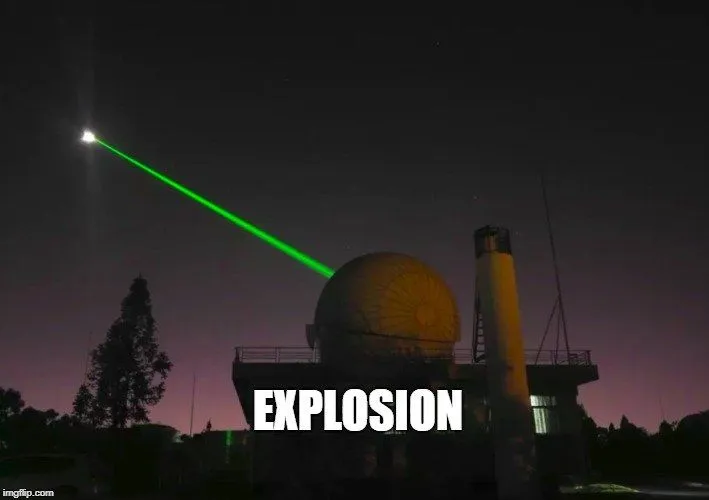
There have also been ideas involving giant robotic claws that could collect the debris like a futuristic garbageman, as well as recycling old rockets and debris and repurpose them, either on the ground or at a “workshop” in space. Firing lasers at the debris has also been suggested, and has been met with a wary response.
 A solution that seems somewhat more likely is a “tow truck” for satellites; instead of letting old satellites remain in orbit, increasing the risk of breaking down or colliding with something else, they could be towed back to Earth, or at least out of their orbit, so they could re-enter out atmosphere and burn up. Most satellites are well monitored and completely safe, but with hundreds of companies, thousands of satellites and economic instability, removing unused satellites from the equation is the surest way to prevent a catastrophe.
A Final Word
So why don’t objects in space coalesce into a big chunk? Because gravity, despite being universal, isn’t a steady inward suction that overrides everything else. At small scales like Low Earth Orbit, the masses involved are tiny and the distances are vast compared to those masses, so debris simply doesn’t pull itself together. At planetary and stellar scales, sideways orbital motion turns gravitational attraction into stable orbits rather than crashes. And at the largest cosmic scales, the expansion of space itself — driven by dark energy — is carrying galaxies apart faster than gravity can drag them back. Gravity wins locally, often in spectacular ways, but it doesn’t win everywhere.
References (click to expand)
- Space debris - Wikipedia. Wikipedia
- Chronology of Space Launches. space.skyrocket.de
- Active Debris Removal - European Space Agency (ESA)
- Klinkrad, H. (2010, December 15). Space Debris. Encyclopedia of Aerospace Engineering. John Wiley & Sons, Ltd.
- ESA Space Environment Report 2025 - European Space Agency
- Nishida, S.-I., Kawamoto, S., Okawa, Y., Terui, F., & Kitamura, S. (2009, July). Space debris removal system using a small satellite. Acta Astronautica. Elsevier BV.