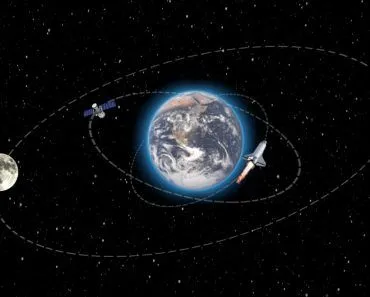
Rockets are launched to the ISS by matching the velocity of the ISS. This is possible because the ISS is in a low Earth orbit, so the relative velocities aren’t that different from each other.
Have you ever heard of the book Around the World in 80 Days? It begins with two men making an itinerary, planning a route to go all around the world in, well, 80 days. If the same two men were alive today, 154 years later, they could go around the world 15.54 times per day. So in 80 days, they could’ve gone around the world 1,243.2 times!

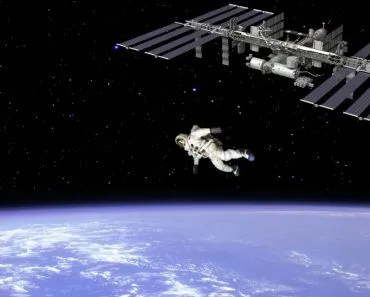
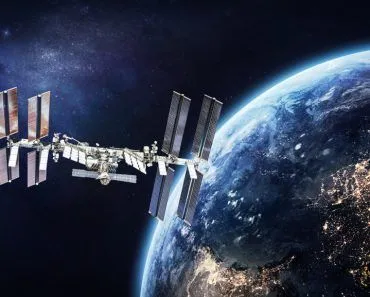
How, you ask? Well, all they would have to do is study really hard for at least 20 years, get excellent grades, get into a top-tier space research organization like NASA, train for God-knows-how-many years, take a rocket ride to intersect the International Space Station as it moves around the Earth at a speed of 27,724 km/hr, dock the rocket into the ISS and then make themselves comfortable as they move around the planet at that speed for 80 days.

As impossible as all this sounds, as of 2026 the ISS has hosted more than 70 long-duration expeditions and over 270 individual visitors from more than 20 countries, has been continuously inhabited since November 2000, and is now also a regular destination for SpaceX Crew Dragon missions and even private space-tourism flights!

Recommended Video for you:
So Why Is The ISS Moving? And Why So Fast?
Isn’t it surprising that a space station is capable of moving at a speed of about 17,000 mph, while the aircrafts on Earth move at a speed of only around 1600 mph?This is because when an aircraft moves through the Earth’s atmosphere, using fuel for energy as it constantly moves against air resistance, a space station is basically just moving under the influence of the gravitational force of the Earth in the Low Earth Orbit, with its motion being dependent only on orbital mechanics, which results in much higher velocities.
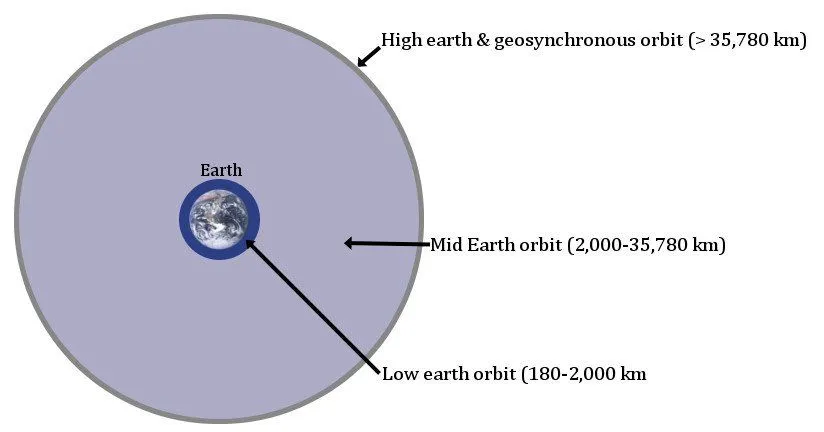
As there is no air resistance in space, and in accordance with Newton’s First Law (A body remains in the state of rest or in the state of motion at the same speed unless acted upon by an external unbalanced force), the space station has to utilize no energy to keep moving while under the influence of gravitational force. The only time the space station uses fuel for motion is when it must move against this gravitational force to change its course of motion or orbit. Therefore, to keep the space station at a particular height, it must keep moving under the influence of Earth’s gravitational field.
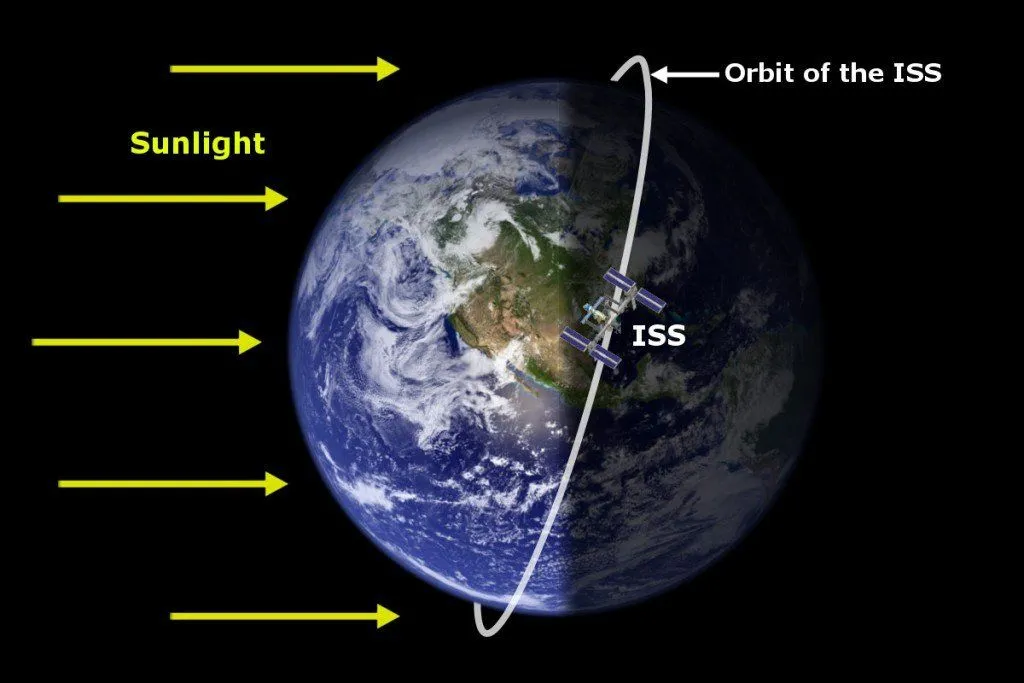
With everything moving so fast, how is it possible to get a rocket, spaceship or any other module to dock itself to the ISS?
How Are Rockets Launched To The ISS When The Space Station Is Not Stationary?
The velocity of the space station depends on the gravitational force, which in turn depends on the mass of the station, the mass of the Earth and the distance between them. Obviously, the mass of the station is much less than the mass of the Earth, so the main determinant of the velocity of the station is the distance between them, that is, the height of the station from Earth’s surface. Any spaceship or rocket that must be docked to the ISS will have a velocity similar to that of the space station at the same height. So, although the docking process is very complicated, it is possible because the relative velocities aren’t that different from each other.

That being said, the process is anything but easy. It takes about 2 days to travel to the altitude where the space station sits (about 250 miles (~408 km) above the Earth’s surface). The shuttle then chases the space station from below, and as it nears the space station, it does a somersault! As cool as that might seem, they don’t do it for style, not when 100 billion dollars is on the line.
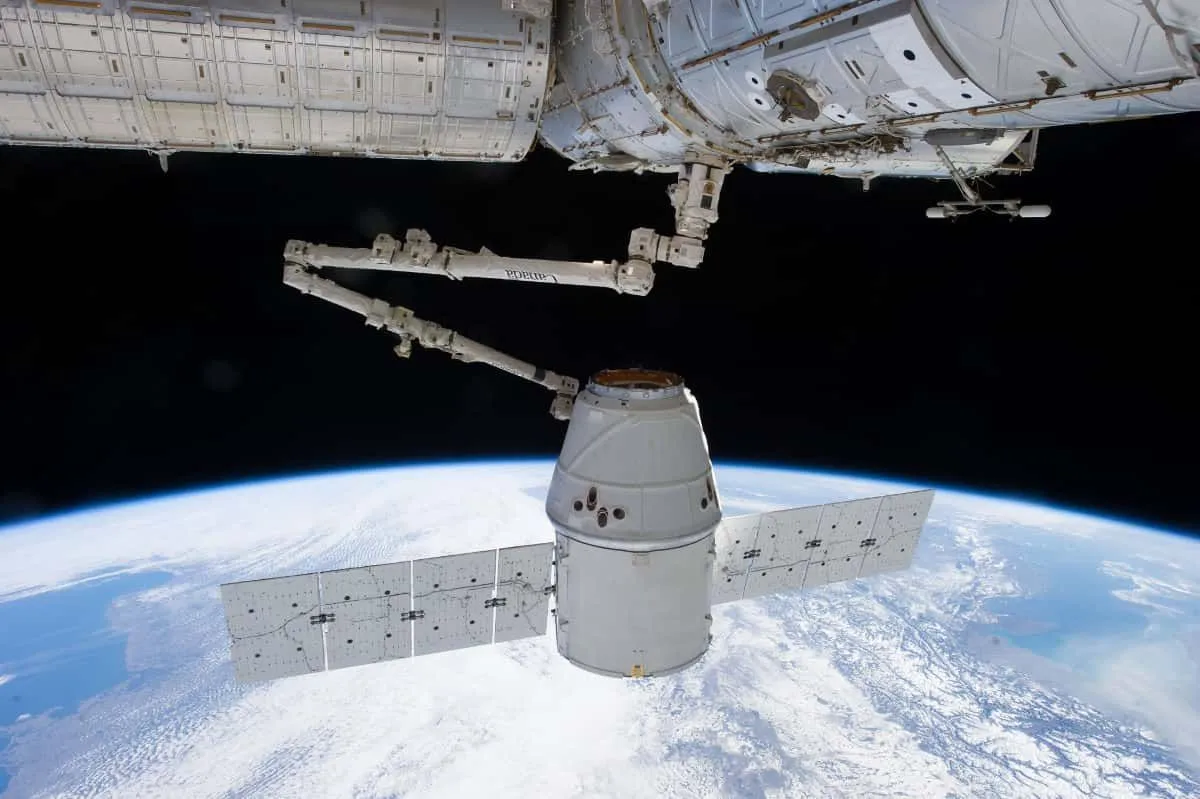
The shuttle somersaults so the station crew gets a chance to click about 400 pictures of the underbelly of the shuttle, which are then sent to NASA on Earth, in order to check for cracks and holes. It’s still pretty stylish, if you ask me.
But How Do Humans Survive At That Speed When Docked With The ISS?
When a car is moving really fast, you feel it because the car – of which you are a part – is moving really fast with respect to the surroundings. However, you don’t feel the Earth rotating at a speed of 1600 km/hr or the Earth’s revolution at the speed of 108,000 km/hr! This is because you are moving along with it, so your velocity relative to the Earth is zero. Similarly, for those aboard the ISS, although they are moving at a speed of 27,724km/hr, they do not feel it, as their velocity with respect to the station is zero.
The first component of the ISS, the Russian Zarya module, was launched in November 1998 — more than 25 years ago, and now, after multiple modules being docked with it, along with many manned and unmanned missions, it is the largest man-made object in the low Earth orbit and can even be seen with the naked eye! Of course, we can only see a streak, but that’s still pretty great!
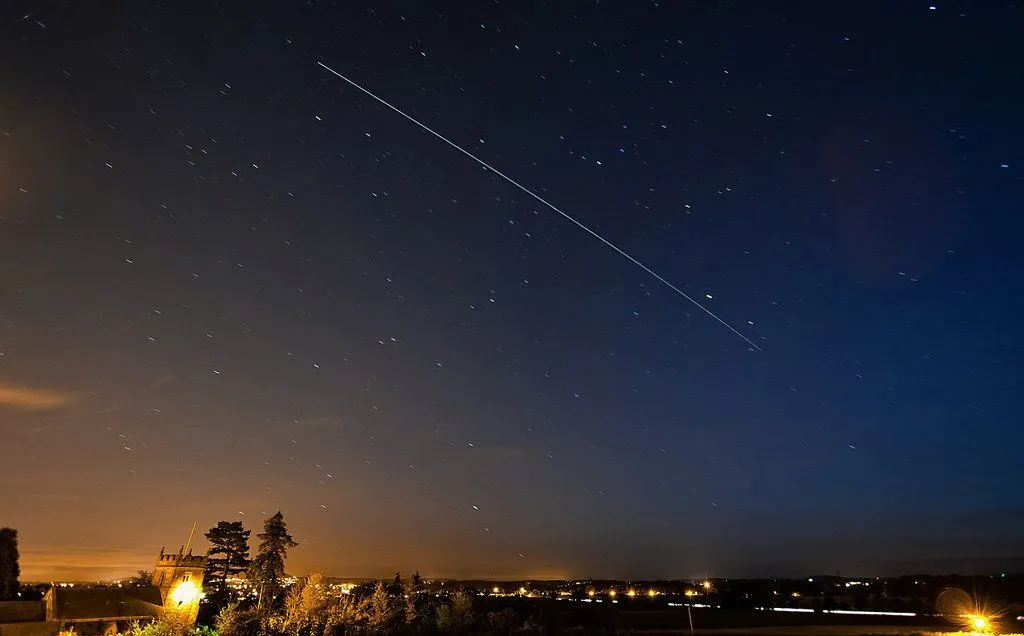
The ISS dimensions are now 109 meters * 73 meters, which is slightly bigger than a football field. It weighs 450 tons, or the same as the weight of 450 average-sized cars! The ISS is considered structurally complete; new modules continue to arrive periodically, including Russia's Nauka multipurpose lab (2021) and the privately-built Axiom commercial modules, which are scheduled to begin attaching later this decade.
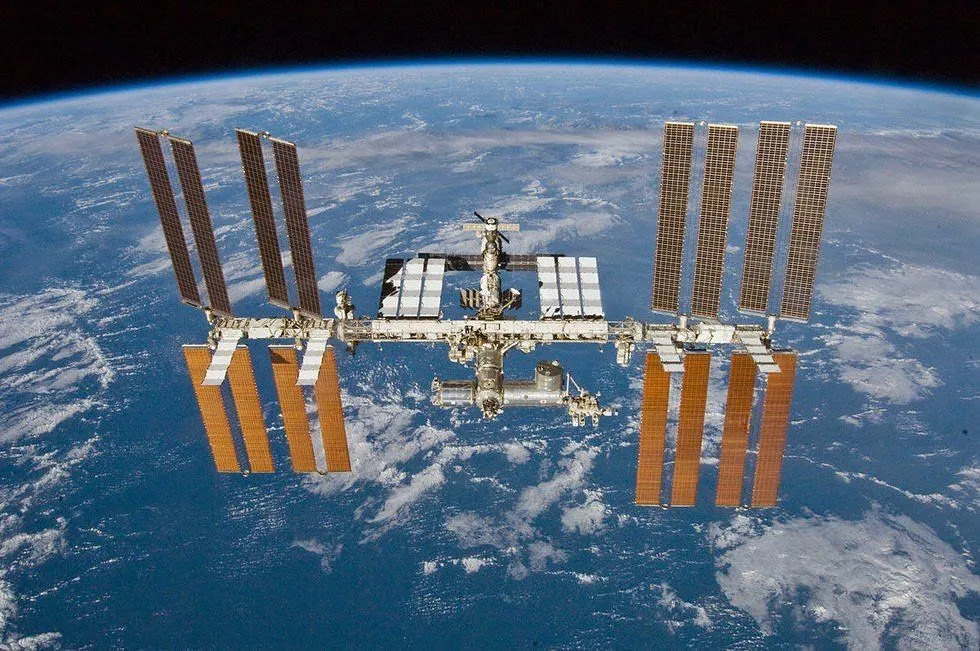
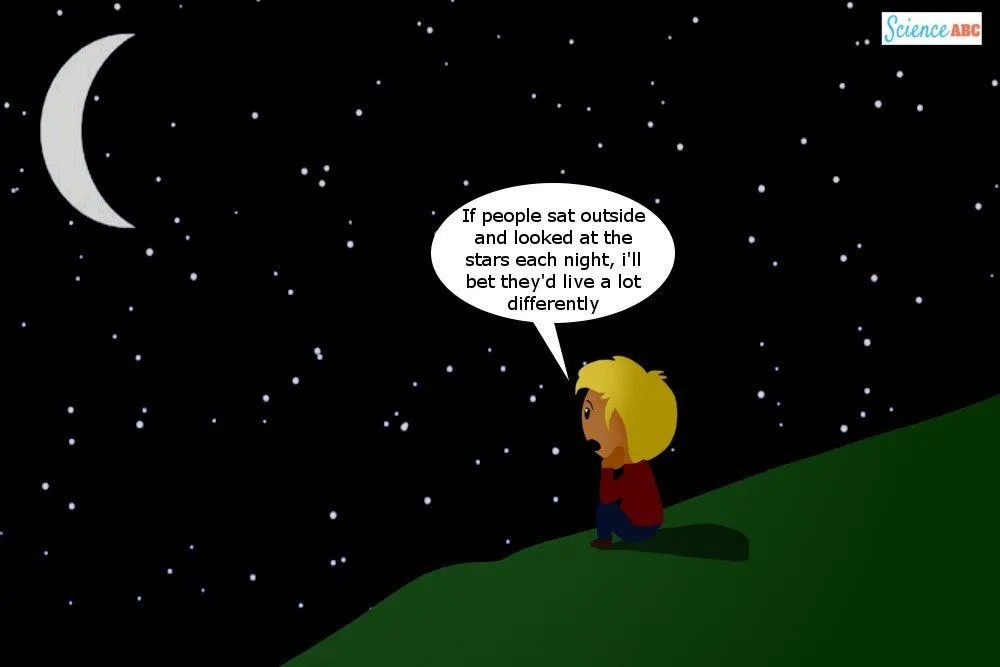
The Universe has many things yet to be discovered, probably too many to ever be fully understood. Even so, isn’t it great to see how much progress we’ve made? If you ever want to spot the ISS, you can look up possible sightings in your part of the world. Every few days, the ISS is usually visible to the naked eye for one or two minutes. In conclusion, here’s some wisdom from a very intelligent 6-year-old.