Table of Contents (click to expand)
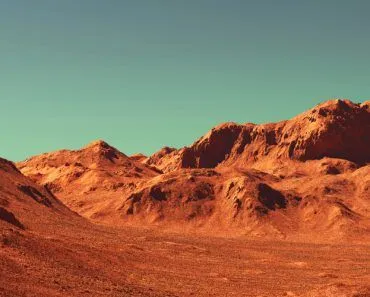
Sitting on the Tharsis volcanic bulge of the Martian landscape, Olympus Mons is a sprawling giant of a shield volcano, rising about 22 km (13.6 mi) above the Martian datum and roughly 26 km (16 mi) from base to summit—around 600 km (374 mi) across.
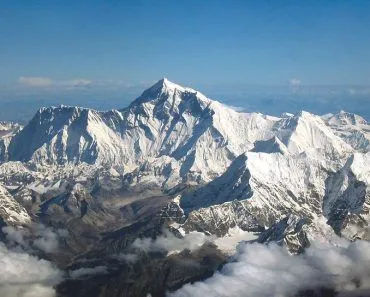
Whether you consider yourself a mountaineer, or simply love going out in nature to marvel at scenic vistas, then you’ve heard the name Mt. Everest. Famed for being the tallest mountain on Earth, Mt. Everest sits just over 29,000 feet in height, meaning that it is roughly 8.8km tall! Towering majestically above the Himalayas, it is hard to imagine another mountain overshadowing it, but our cosmic neighbor, Mars, boasts a volcanic mountain that makes Mt. Everest look like a molehill!
Yes, Mars is not only the newest obsession for astronomers and explorers on Earth, but it is also home to the largest mountain in the solar system—Olympus Mons!
Recommended Video for you:
What Is Olympus Mons?
Sitting on the northwest edge of the Tharsis volcanic bulge of the Martian landscape, Olympus Mons is a sprawling giant of a shield volcano. According to NASA's Mars Orbiter Laser Altimeter (MOLA), it rises about 22 km (13.6 mi or roughly 72,000 ft) above the Martian datum—the Red Planet's equivalent of sea level—and approximately 26 km (16 mi) from the surrounding plains to its summit.
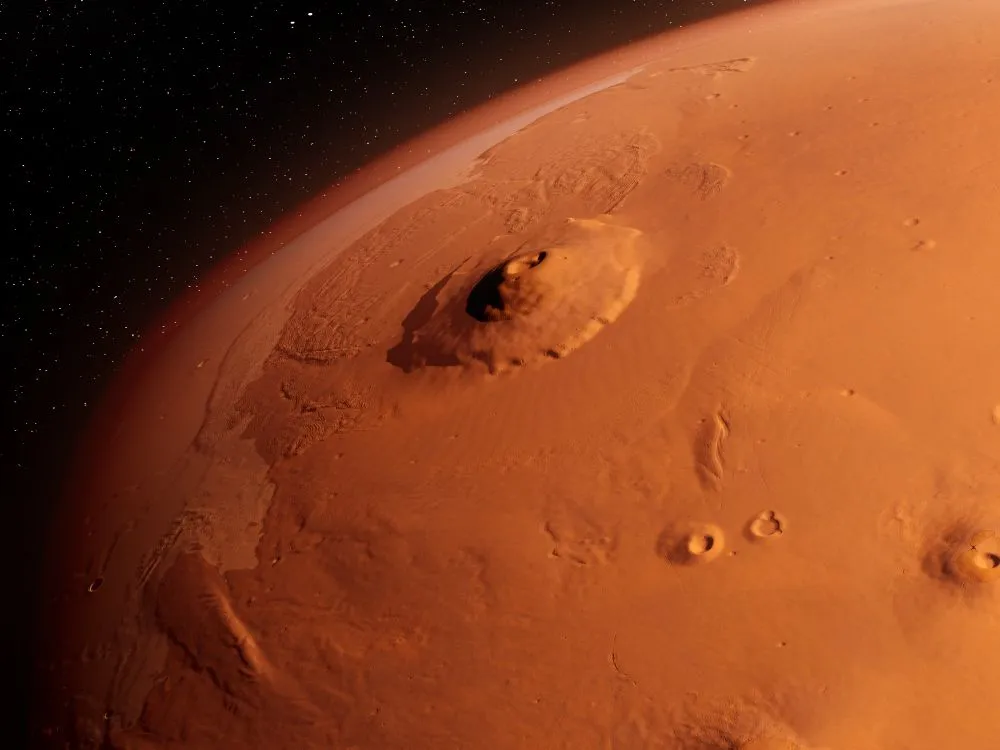
For reference, that is roughly 2.5 times the elevation of Mount Everest above sea level, and that isn’t even the most impressive part! Because Olympus Mons is a shield volcano, its lava flowed out slowly to form a gentle, gradual ascent to the volcanic center. The result is a colossal footprint—about 600 km (374 mi) across, comparable in area to the state of Arizona or the country of Italy.

Surrounding this incredible peak is a drop-off rim, or basal scarp, which plunges roughly 6 km (3–4 miles) down to the Martian surface. In terms of volume, Olympus Mons is about 100 times greater than Mauna Loa, Earth's largest active volcano. In that particular region of Mars, however, Olympus Mons is hardly alone.
Three other massive volcanoes (all larger than any found on Earth) keep it company on the Tharsis bulge—Pavonis Mons, Arsia Mons and Ascraeus Mons, collectively known as the Tharsis Montes. Italian astronomer Giovanni Schiaparelli first spotted the feature from Earth in 1879 and, seeing only a bright albedo patch through his telescope, named it Nix Olympica (“Snows of Olympus”). It was only after NASA's Mariner 9 spacecraft mapped Mars in 1971 that we recognized this snowy patch was actually the tallest volcano in the solar system, and it was renamed Olympus Mons.
Now, you may be asking yourself why a volcano can grow to that size on Mars when the volcanoes on our planet seem to be so much smaller. What makes Mars so special that they were able to claim the title for the four tallest mountains in the solar system?
The Martian Landscape
Aside from the obvious differences between our planet and our red neighbor, such as the color of the planet and the presence of an atmosphere, a huge variation lies in plate tectonics. Whereas on Earth, the tectonic plates “float” on the magma core of the planet, there is very little (if any) plate tectonics present on Mars.
This means that the Martian surface doesn’t change very often, so the location of volcanic breakthroughs in the crust remains in one position.
That being said, there is magma beneath the crust of the planet, so at those places where volcanic activity occurs, it may happen for millions—or even billions—of years! Olympus Mons itself is thought to have begun forming around 3.5 billion years ago, but crater-counting on lava flows imaged by ESA's Mars Express orbiter shows that some flows on its northwestern flank are between roughly 2 and 115 million years young—remarkably recent in geological terms.
Two million years isn’t that old in astronomical time, and considering that other volcanoes on Mars have been shown to be more than two billion years old, Olympus Mons may not be entirely done. Several studies suggest the magma plumbing beneath the Tharsis region is likely still active, even if no eruption has been observed during the space age.
On Earth, since tectonic plates are always moving (albeit gradually), a volcano is active for a given period and then goes extinct, as the tectonic plates shift away from areas of volcanic activity. This can create volcanic chains, such as the Hawaiian islands, rather than one massive volcano, like Olympus Mons.
This is the primary reason for the size of Olympus Mons; it simply has had a lot of time to grow, and may still be active to this day!

I only say primary because there are some other experts who believe the extraordinary size to be the result of Mars’ lower gravity than Earth. In other words, since Mars is smaller and has a weaker gravitational force, it may allow a volcanic mountain to grow taller than would be possible on Earth. The massive weight of Olympus Mons does push it down into the crust, yet it still is able to peek above the gigantic dust storms that often envelop sections of the Red Planet.
Why Is Olympus Mons Important?
There are a few reasons why understanding Olympus Mons—and eventually exploring it—is so important. Since the volcano is a shield volcano, rather than a stratovolcano, its eruptions have been less violent and destructive, thus preserving earlier layer beneath it. At some point in the future, when we’re exploring Mars, this preserved record of Martian eruptions could prove very informative.
Additionally, while scientists already know that there was water on Mars at one point, due to the discovery of ice beneath the surface, there may also be water sequestered away beneath Olympus Mons. In fact, if liquid water was ever captured or trapped beneath the volcanic flows of Olympus Mons, there is the possibility that life could flourish.
Some have argued that the conditions present near geothermal vents at the bottom of the ocean (a suspected origin of life on this planet) would be similar to the subterranean conditions near a Martian volcano. While this is all speculation until we have the tools and resources on Mars to make these investigations more formally, it is an exciting prospect that the largest mountain in the solar system may also harbor the secrets of extraterrestrial life!
Recent observations from ESA's Mars Express and ExoMars Trace Gas Orbiter, reported in Nature Geoscience in June 2024, even revealed a thin layer of water frost forming inside the calderas of Olympus Mons and other Tharsis volcanoes during cold Martian mornings. This was the first time water frost had been detected so close to the Martian equator, and researchers estimate enough frost cycles in and out of the atmosphere there each day to fill 60 Olympic-sized swimming pools—an exciting clue about how water moves in the Martian climate system.
A Final Word
Human beings love a good superlative, so it’s only natural that the tallest or largest “anything” in our solar system would be a source of interest and pleasure. However, in the case of Olympus Mons, we might also be able to glean some old secrets about the history of Mars.
If the volcano remains active, it could provide us with the first real-time look at the Martian landscape evolving yet again, stacking yet another layer of volcanic lava on top of its shield dome, pushing it out towards the edges where it can tumble off the edge to the mysterious Martian terrain below!
References (click to expand)
- 11. Olympus Mons (20°N,135°W).
- Isherwood, R. J., Jozwiak, L. M., Jansen, J. C., & Andrews-Hanna, J. C. (2013, February). The volcanic history of Olympus Mons from paleo-topography and flexural modeling. Earth and Planetary Science Letters. Elsevier BV.
- Olympus Mons, Mars.
- Images with olympus mons as a feature name.
- Olympus Mons is a shield volcano - Mars - NASA.