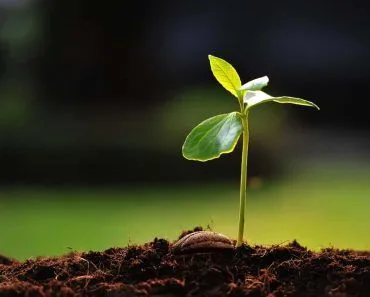
A seed grows into a plant through germination. With enough water, oxygen, and a suitable temperature, the seed absorbs water, swells, and splits its coat. A tiny root (the radicle) emerges first and anchors the seedling, then a shoot pushes upward. Most seeds do not need sunlight to germinate — only after leaves unfurl does the young plant start making its own food.
Isn’t it amazing that a tree as tall as a building can emerge from just a tiny seed? Just as a human embryo contains all the genetic material that determines our development into full-grown adults, the embryo in a seed does the same!
Mother Nature is brilliant and knows exactly when the seed is ready to grow; when the time is not right, it holds back its development during seed dormancy. A seed is formed by the plant after sexual reproduction, but let us find out what happens afterward!
Recommended Video for you:
Anatomy Of A Seed
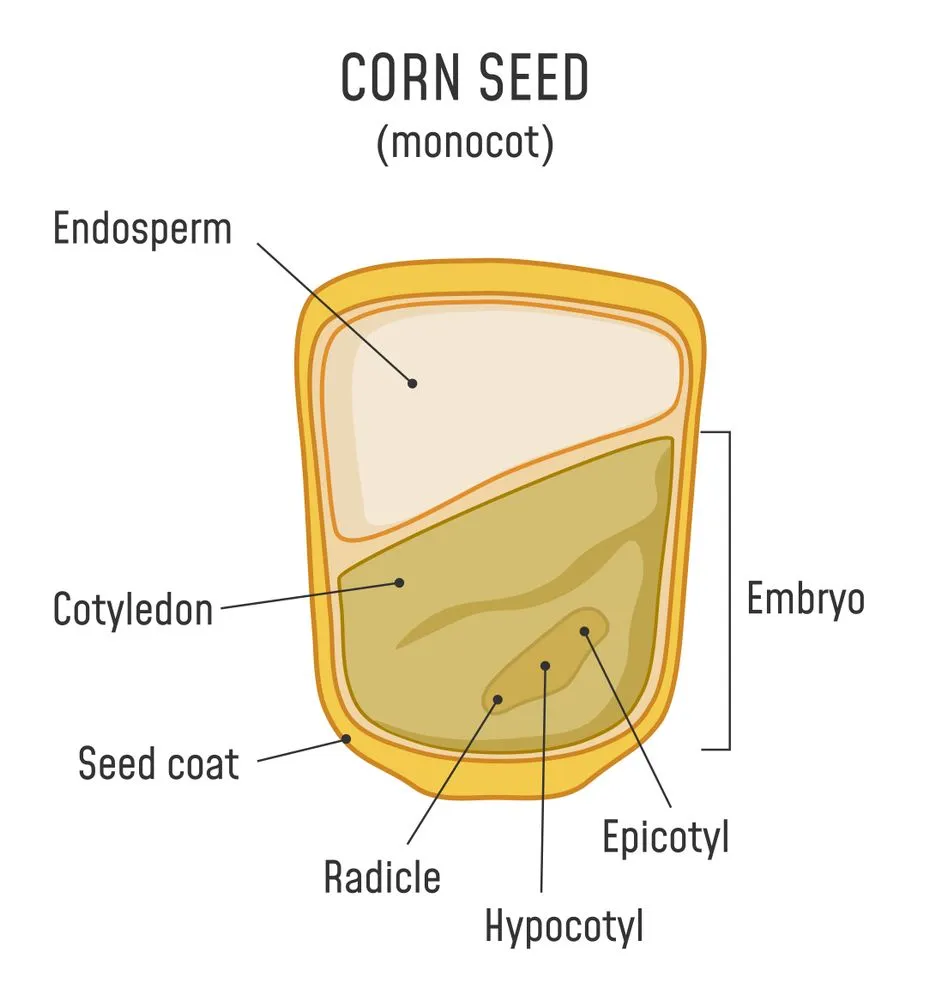
The seed is made up of three parts:
- The Embryo – gives rise to the new plant.
- The Endosperm – the food store packed around the embryo. In many monocots (like corn and wheat) the endosperm sticks around to feed the seedling; in most dicots (like beans and peas), it gets absorbed into the cotyledons before the seed even matures.
- The Seed Coat – the protective outer covering. Some seeds have famously tough, water-resistant coats (morning glory, lotus, and many beans), which is why gardeners often nick or soak them before planting; others have thin, soft coats (tomatoes, peppers, lettuce).
Germination And Its Requirements
The process by which a seed transforms into a seedling is called germination, and contrary to what many of us were taught in school, it doesn’t actually need sunlight to begin. The three things every germinating seed needs are water, oxygen, and a suitable temperature. Light only matters for a few species — small-seeded plants like lettuce need it to germinate, while tomato and onion seeds actually germinate better in the dark. Most seeds simply don’t care, which is why a seed buried under an inch of soil sprouts perfectly well in pitch darkness.
Water and air enter the seed mainly through the micropyle — a tiny pore in the seed coat left over from when the ovule was fertilized — and through the hilum, the scar where the seed was attached to its parent fruit. Like any living thing, the seed needs oxygen and releases carbon dioxide as it respires; that respiration never stops, but once leaves develop, photosynthesis more than makes up for it and the plant becomes a net oxygen producer. The soil must be porous for water and air to reach the seed in the first place.
If the soil is not porous, carbon dioxide does not leave the seed, and it will suffocate. If the optimal conditions are met, the seed absorbs more and more water (imbibition), swells up, and bursts!
Once the seed coat bursts open, a primary root emerges, known as the radicle. In almost all plants, the root comes before the shoot. However, there are some exceptions; in coconuts, the plumule or the shoot emerges before the root. Once the root appears, it begins to absorb water and nutrients from the soil, a function previously performed by the seed coat.
How Does The Seed Get Food Before The Leaves Appear?
As we all know, plants are the primary producers in the food chain. The leaves contain chlorophyll, which helps in photosynthesis (making food).
Until those leaves arrive, though, the seedling has to live off packed lunches. In dicots like beans, peas, and sunflowers, that food is starch stored inside the cotyledons (the “seed leaves”). In monocots like corn and wheat, it stays in the endosperm, and a single cotyledon shuttles nutrients out of it. Either way, once the seed coat splits, the radicle and cotyledons are exposed, the coat is shed into the soil, and the seedling lives off these reserves until the first true leaves take over food production.
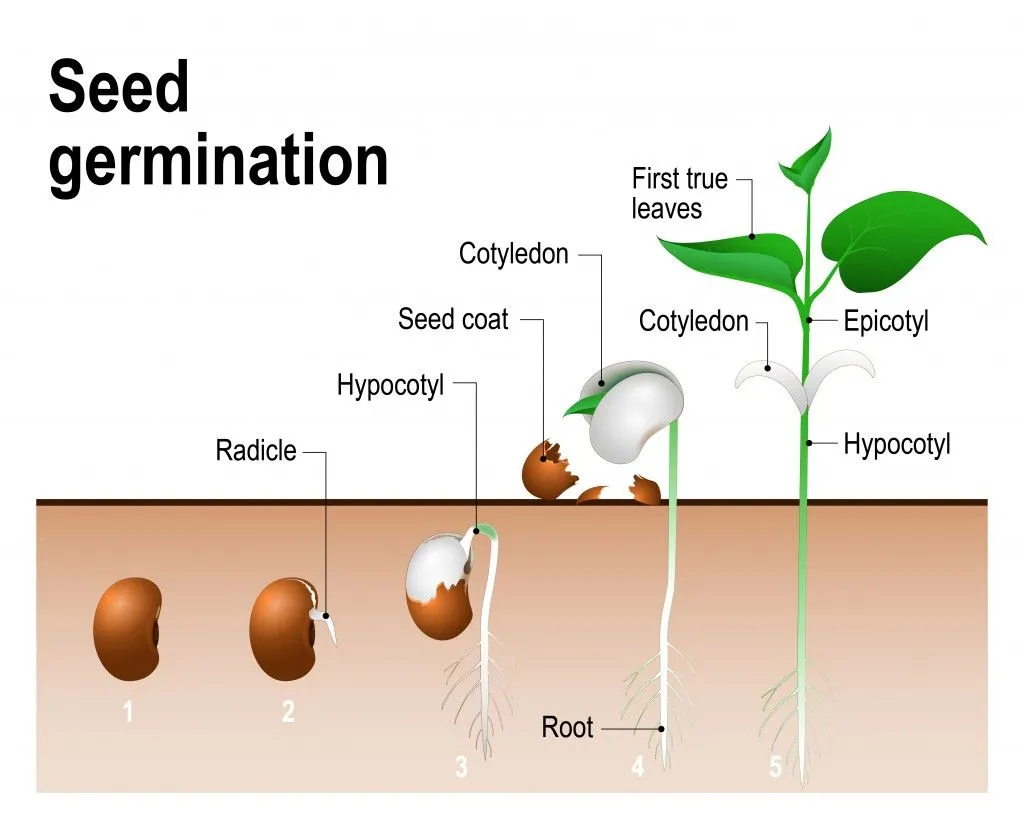
After the root anchors the seedling, the hypocotyl (in epigeal germinators like beans) or the epicotyl (in hypogeal germinators like peas) elongates upward to form the stem. The first true leaves come from the plumule — the embryonic shoot tip sitting at the top of the epicotyl, where the leaf primordia are tucked away. In epigeal germination, the cotyledons get hoisted above the soil and may briefly photosynthesize before withering once the true leaves take over; in hypogeal germination, the cotyledons stay below ground and let the plumule do the work directly. Either way, once the leaves are out and producing food, germination is officially over. Seeds come in many shapes and sizes and have different requirements for growth — some need more water than others, some have different temperature preferences, and a small fraction even need (or avoid) light to start.
Seed Dormancy
Seed dormancy is the sleeping period of the seed during which it refuses to germinate, even when the conditions look perfect. Evolution baked this in for a few good reasons: it lets seeds wait out an unfriendly winter and sprout in spring; it spreads a single year’s seeds across multiple growing seasons (a “bet-hedging” strategy that protects the lineage from one bad year); and it disperses offspring in time as well as space, so siblings don’t all crowd each other for light and water. A 2026 study in Nature Plants went a step further and found that mother plants actually transmit seasonal cues to their developing seeds via the hormone abscisic acid — without that maternal signal, seeds can’t induce dormancy properly at all.
Plants have hormones, just like we do! Our hormones kick in at certain stages (think puberty) to push us into adulthood. Plants run a similar tug-of-war: abscisic acid (ABA) keeps the seed dormant, while gibberellin (GA) overrides it and triggers germination. It’s really the ratio between the two — not their absolute levels — that decides whether a seed wakes up.
Why Do Some Seeds Take Longer Than Others To Germinate?
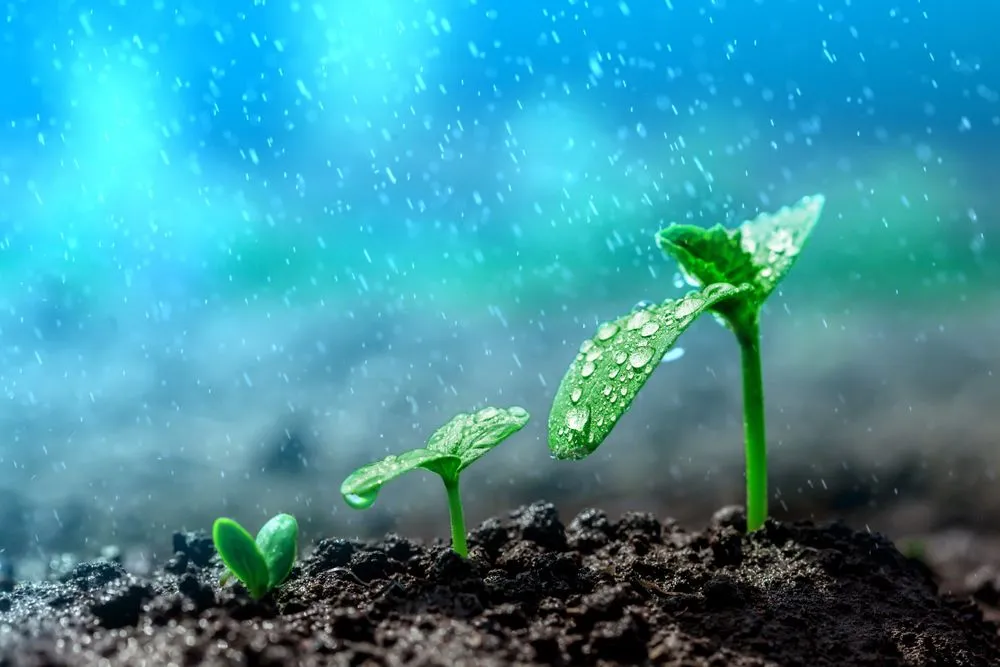
All seeds are not created equal; they differ in shape, size, color, and requirements for survival. Some seeds have a harder seed coat than others, which takes more time to soften before bursting open. Such seeds need to absorb more water to soften the seed coat, which slows germination.
In certain seasons, such as autumn and winter, when the soil is too cold, the seed goes into dormancy and germinates only when spring warms things up. If the seed is planted too deep, it consumes all the energy, and food stored in the cotyledon will be used up before the shoot can emerge from the soil. If the soil is not sufficiently watered, the seed will dehydrate and die. Finally, if there is too much water, it suffocates and dies due to a lack of oxygen.
Any condition outside this optimum range can lead to the death of the seed. Every seed has a massive responsibility to turn into a giant tree or life-giving plant, so all ideal conditions must be fulfilled. It looks like humans aren’t the only species that can be a bit high maintenance!