Too tired to read? Listen on Spotify:
To clone a dinosaur, we would need the remnants of its unique genetic information—its DNA. However, scientists highly doubt that sufficient DNA of dinosaurs could have survived to the present day. Since their DNA has been lost to time, it is practically impossible to revive these hulking ancient beasts.
Have you ever gone camping in the wild? Imagine camping in a dense forest, only to wake up in the middle of the night to find the shadow of a monstrous prehistoric reptile sniffing around your tent!
Welcome to Jurassic Park!
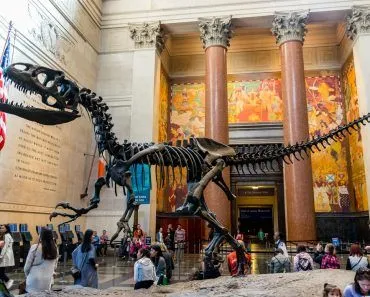
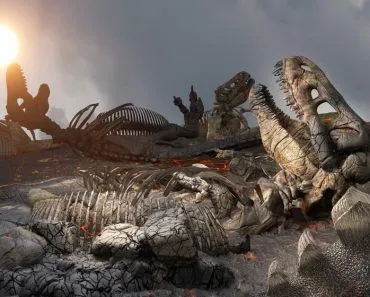
If you were like me as a kid, you probably loved dinosaurs, and tense sequences in the Jurassic Park (and later Jurassic World series) likely thrilled you to your bones. Dinos are like dragons, superheroes and fairies, except they actually existed on our planet. Non-avian dinosaurs last roamed Earth about 66 million years ago, before a roughly 10-km-wide asteroid struck the Yucatán peninsula, triggering the K–Pg mass extinction.
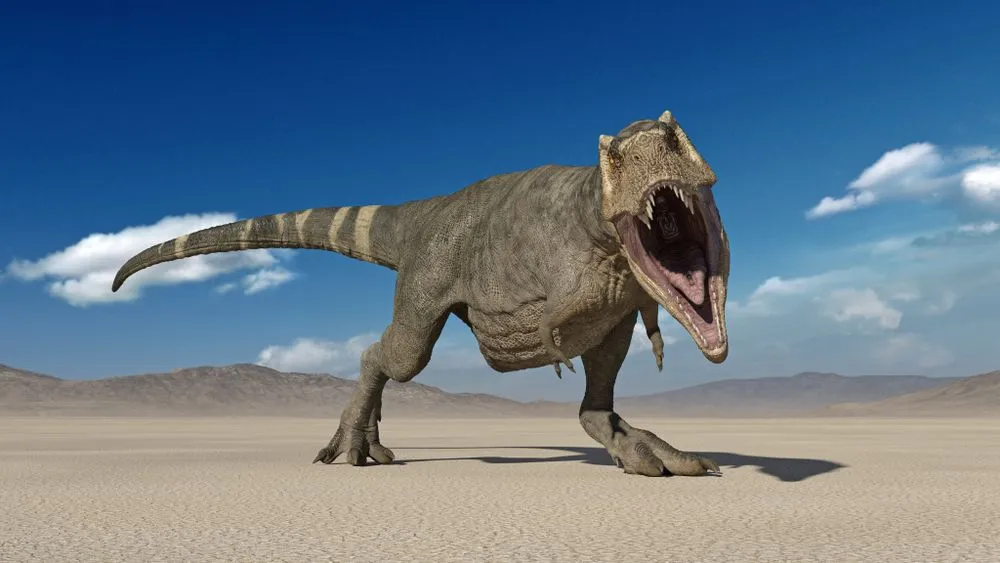
Thanks to the enormous efforts of director Steven Spielberg, we have witnessed a fantastic range of paleolithic creatures roaring back to life—at least on the big screen!
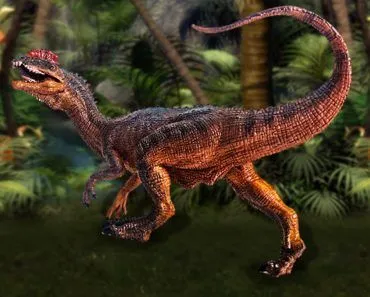
The scientists in the movies used DNA to bring back a menagerie of different kinds and sizes of dinosaurs. They achieved this by extracting dinosaur DNA from a mosquito that had been trapped and preserved in a piece of amber.
While the premise sounds quite thrilling, the question is, could it really be true? Is it possible to recreate dinosaurs from their DNA and build a real-life Jurassic Park?
Let’s find out!
Recommended Video for you:
Can We Create Life From DNA?
The cell of an adult animal has all the DNA necessary to create other cells, and thus make another animal altogether. Scientists have often used a technique called cloning to make copies of cells, genes, tissues and even whole living beings in the lab. The process involves creating multiple identical copies or clones of a particular DNA fragment (even if it’s a very small piece of DNA).
Do you know about Dolly the Sheep? She was the first mammal to be cloned using this process. Many animals—including frogs, pigs, horses, mice, sheep, and cows have since been cloned.
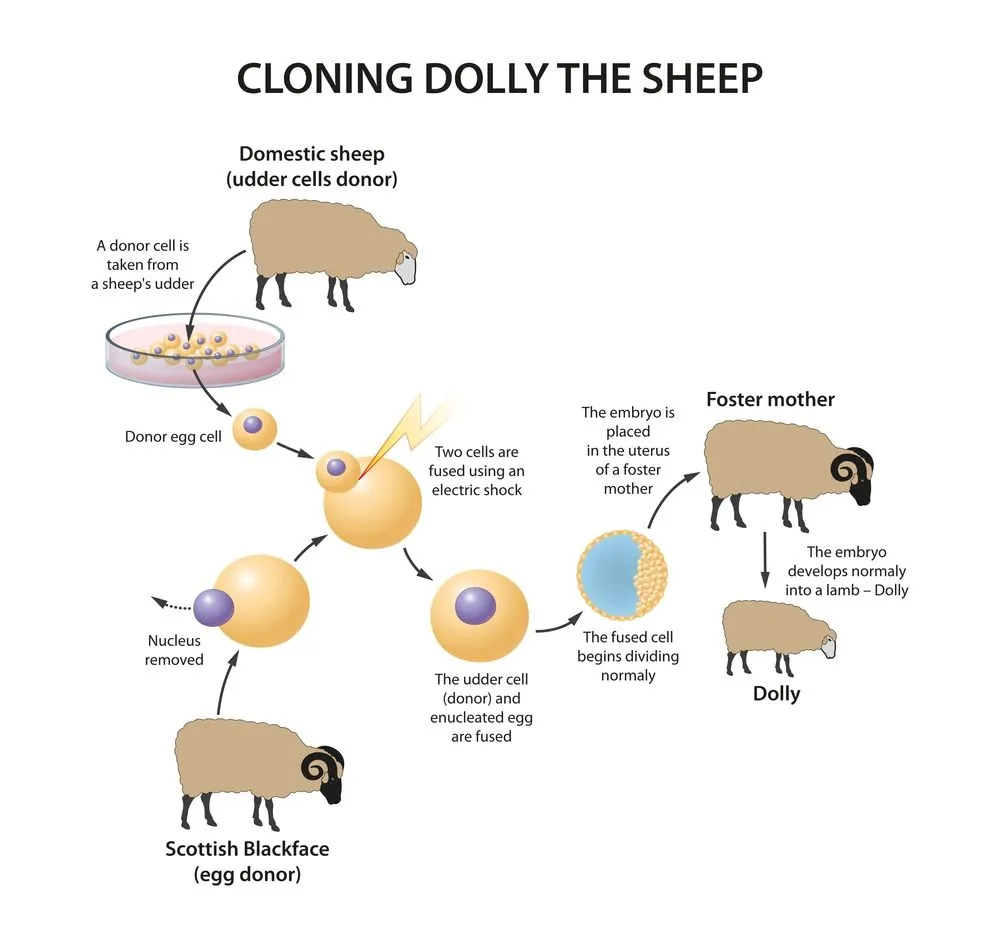
However, a dinosaur is a long-lost beast, which is way different than cloning Dolly the Sheep. Bringing an extinct species back from the dead could be a big deal—literally.
Has Dinosaur DNA Been Found?
No, we have not yet found dinosaur DNA that would be necessary to make a successful dinosaur clone.
To clone a dinosaur, it’s not just about finding DNA, but also about finding a complete set or sufficient fragments of a dinosaur’s DNA. This is because we need to assemble the tiny pieces to recreate the whole jigsaw puzzle—the genome. Every genome consists of millions of DNA strands. If we can identify the order or sequence of the bases within the DNA, we can put them back together.
Without being able to fully sequence a genome, we don’t have the whole picture of how to recreate a dinosaur.
But Wait… We’ve Found Dinosaur Eggs And Bones. Can We Not Extract DNA From Them?
Not likely. A landmark 2012 study by Allentoft and colleagues, based on 158 radiocarbon-dated moa bones, found that DNA has a half-life of around 521 years — every 521 years, half the remaining DNA bonds break. Even under ideal preservation conditions, every readable letter of the genetic code would be gone after roughly 6.8 million years. Non-avian dinosaurs died out 66 million years ago — nearly ten DNA half-life ceilings beyond that limit. So even an exquisitely preserved bone or amber inclusion is not expected to contain anything resembling intact dinosaur DNA.
The hard parts of the body, like bones and teeth, are left behind even after millions of years, but DNA, the the fundamental material needed to give rise to a living being, is very delicate.
Even if some DNA survived, it may not have enough information to tell us the complete story of the biology of dinosaurs.
Paleontologists agree that the premise of the Jurassic World series is based on an inaccurate idea of how long and in what ways DNA can be preserved in nature. Therefore, it is doubtful that dinosaur DNA can be cloned by extracting pre-historic blood from a mosquito found in amber.
Thus, the idea of sequencing and manipulating dinosaur DNA from amber-trapped mosquitoes — the central premise of Jurassic Park — remains fiction. There are, however, two more plausible side-doors that researchers are actively exploring.
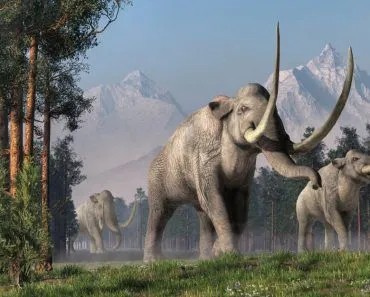
The first is de-extinction of much younger species. Companies like Colossal Biosciences, founded in 2021 by entrepreneur Ben Lamm and Harvard geneticist George Church, are using CRISPR gene editing on living relatives to recreate species that died out within the last few thousand years — the woolly mammoth (target: a hybrid calf by 2028), the thylacine, and the dodo. In April 2025, Colossal also announced gene-edited “dire wolf” pups, though scientists debate whether modified grey wolves with a few ancient gene variants truly count as the extinct species. None of these projects are aimed at dinosaurs — the DNA simply isn’t there.
The second is the so-called “Chickenosaurus” approach, championed by paleontologist Jack Horner and developmental biologists like Bhart-Anjan Bhullar at Yale. Birds are living dinosaurs (specifically, surviving theropods), and their DNA still carries silenced genes for ancestral traits like teeth, long bony tails, and snouts instead of beaks. By selectively switching those genes back on in chicken embryos, researchers have already coaxed dinosaur-like snouts and tooth-bud development out of modern birds. Building a fully grown chickenosaurus would not be a true dinosaur — but it would be the closest thing biology can deliver.
Some scientists do claim to have discovered fully sequenced dinosaur DNA in fossils, but the evidence is still uncertain. However, researchers and scientists continue to look for it around the world.
Even If We Find Dinosaur DNA, Can We Clone A Dinosaur?
So, the question remains… even if we manage to extract a complete DNA strand from well-preserved fossils, or if we manage to genetically engineer that DNA, does it mean we can bring back dinosaurs?
Highly unlikely. The challenges are too many and too great.
First, we have to insert the dinosaur DNA into a modern-day animal who is a close living link to dinosaurs, with a quite similar genome (like a bird or a reptile) in order to edit it into its egg. Finding a close relative of a species that has been lost for millions of years is not exactly easy.
This seems like a mammoth task, considering that we do have the fully sequenced genome of a woolly mammoth. Plus, we have identified one of its close relatives: the Asian elephant. Even so, we still haven’t been able to bring it back from the dead.
Even if this attempt is ever successful, the combination wouldn’t be a true dinosaur anyway. For example, who has the closest DNA to dinosaurs? Birds are thought to be direct descendants of dinosaurs. So, while trying to hatch a dinosaur from a chicken egg, against all odds, we would only be able to create a hybrid—like a chickosaurus!
A Final Word
Despite having the best technologies and advancements in genetic engineering and cloning, scientists currently cannot clone actual dinosaurs. This is primarily because their DNA is so old that it cannot be effectively recovered. Even if we do find one, thankfully, we’re still a long way from developing the ability to use ancient DNA to bring long-extinct species back to life.
Enjoying the spectacle of dinosaurs unleashing havoc and chaos from the comfort of the movie theater is one thing. Resurrecting a dinosaur for real is quite another. Messing with nature may have terrifying consequences, as shown in all of those dinosaur-filled films.
So, for now, let’s take it with a great big pinch of salt, because the Jurassic Park movies are worth watching for exactly what they are—good science fiction!
References (click to expand)
- What are genes? What is a genome? Does everybody have .... The National Institute of General Medical Sciences
- Cloning - MedlinePlus. MedlinePlus
- The Life of Dolly - Dolly the Sheep. The University of Edinburgh
- Kaplan, M. (2012, October 10). DNA has a 521-year half-life. Nature. Springer Science and Business Media LLC.
- Zheng, X., Bailleul, A. M., Li, Z., Wang, X., & Zhou, Z. (2021, September 24). Nuclear preservation in the cartilage of the Jehol dinosaur Caudipteryx. Communications Biology. Springer Science and Business Media LLC.
- Woolly Mammoth Project Update - Revive & Restore. Revive & Restore
- James, F. C. (2021, May 29). How Many Dinosaurs Are Birds?. BioScience. Oxford University Press (OUP).