Table of Contents (click to expand)
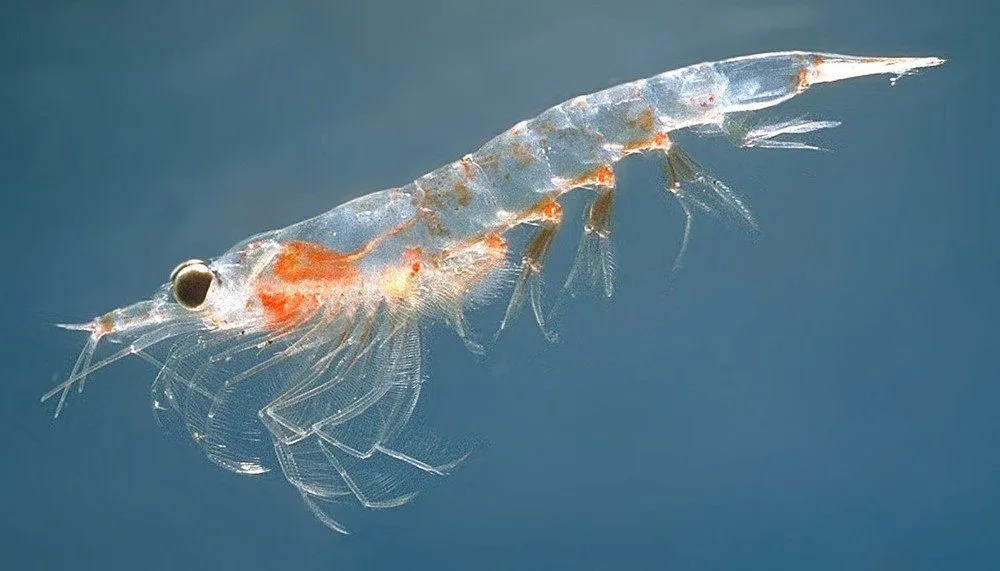
Whales primarily eat krill, which are tiny shrimp-like crustaceans. They are able to eat so many of them because they exist in such large numbers in the ocean.
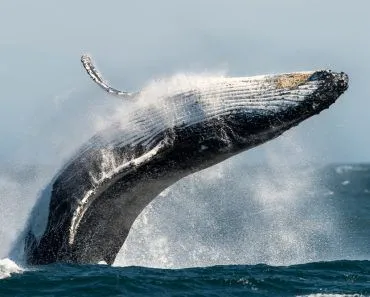
The name ‘whale’ almost immediately conjures up the image of a mammoth sea creature splashing in the waters of the ocean. To other people, who are more like me, the same image would be subtitled “whale: the largest mammal on Earth.”
Indeed, whales are some of the largest creatures on the planet. Blue whales, in fact, are the largest animals ever known to have existed. They can grow to nearly 100 feet long and weigh up to about 200 tons. Their heart is roughly the size of a small car (around 180 kg / 400 lbs), and their tongue alone can weigh as much as a small elephant. Think about that for a moment!
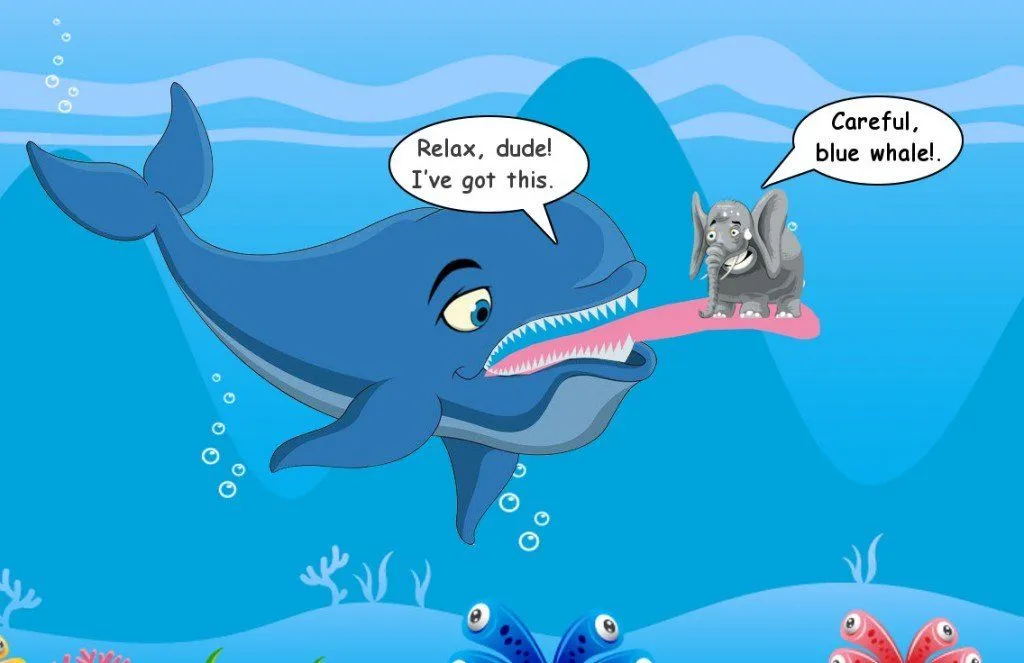
One might wonder what in the world must such huge creatures eat every day to sustain themselves! One might logically guess that blue whales must eat big fish and other large sea creatures; it does make sense, after all, to think that only big aquatic creatures could adequately quench the appetite of the biggest mammal on Earth.
If you’ve ever considered this subject, but don’t know the facts, you may be surprised to know that baleen whales – the group that includes blue, fin, humpback, bowhead, right and minke whales – primarily feed on krill, a family of extremely tiny shrimp-like crustaceans. (Toothed whales like orcas, sperm whales and dolphins eat fish, squid and other prey instead.) So, despite how big whales themselves are, their diet consists of incredibly small aquatic creatures. The question is, how does that work? How do whales, some of the biggest creatures on the planet, survive by feeding on krill, some of the smallest?
Recommended Video for you:
Krill
Krill are found in every ocean of the world and are small crustaceans that sit near the bottom of the marine food chain. They belong to the arthropod subphylum Crustacea, class Malacostraca, and order Euphausiacea — a sister order to Decapoda (the group containing shrimp, lobsters, crabs and prawns) within the superorder Eucarida. About 86 species of krill have been described, with Euphausia superba, the Antarctic krill, being by far the most abundant. A typical adult krill is only 1–2 centimeters long, yet the global biomass of Antarctic krill alone is estimated at around 400 million tonnes, making it one of the most abundant animal species on Earth.
How Do Whales Survive By Eating Krill?
First off, while it’s true that whales eat krill, that’s not the only thing they eat. Furthermore, whales actually gorge on tons of krill every day in order to satisfy their hunger and cater to their nutritional requirements. Allow me to elaborate on that second point…
You see, practically all the food in the ocean originally comes from plants; while plants only need water and sunlight to survive, animals have to actually eat stuff. Thus, plants grow using water and sunlight, and then certain animals eat those plants. Subsequently, certain other animals eat the animals that eat plants, and then certain animals eat those animals. In this way, the cycle goes on and on.
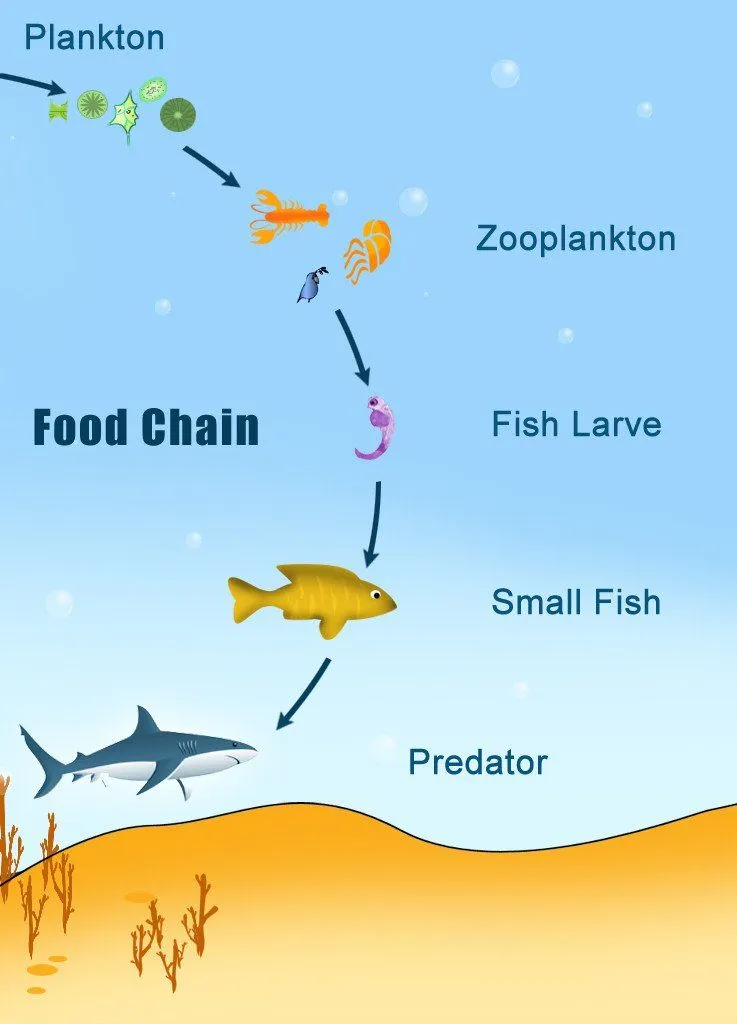
Note that not all food that is eaten gets turned into new food that another animal can eat. Some part of the eaten food is used up while providing energy to move around and some part is just excreted as waste. Therefore, if an animal eats, say, 100 grams of food, it may only produce 10 grams of food that another animal could eat. What this means is that if you’re a big animal, then you have to eat a LOT of food. It also means that you have more food to eat if you eat plants, rather than surviving on a diet of other animals.

Finally, it means that you have more food if you eat an animal that eats plants, rather than an animal that eats other animals.
Now, let’s see how this reasoning applies to the whale-and-krill example:
Krill eat plants, specifically algae (although algae are not highly differentiated in the way that plants are, so technically, they are not exactly ‘plants’), and the thing about algae is that it grows unbelievably fast. Therefore, krill have it pretty easy – they eat as much as they want and make tons of babies, as there is no dearth of food. This is also quite favorable for whales, because whales often find incredibly huge numbers of krill huddled up in swarms.
As big as whales are, when they see a giant swarm of food floating in the water, all they have to do is swim through the swarm with their mouths open and get as many krill into their mouth as possible in a single pass.
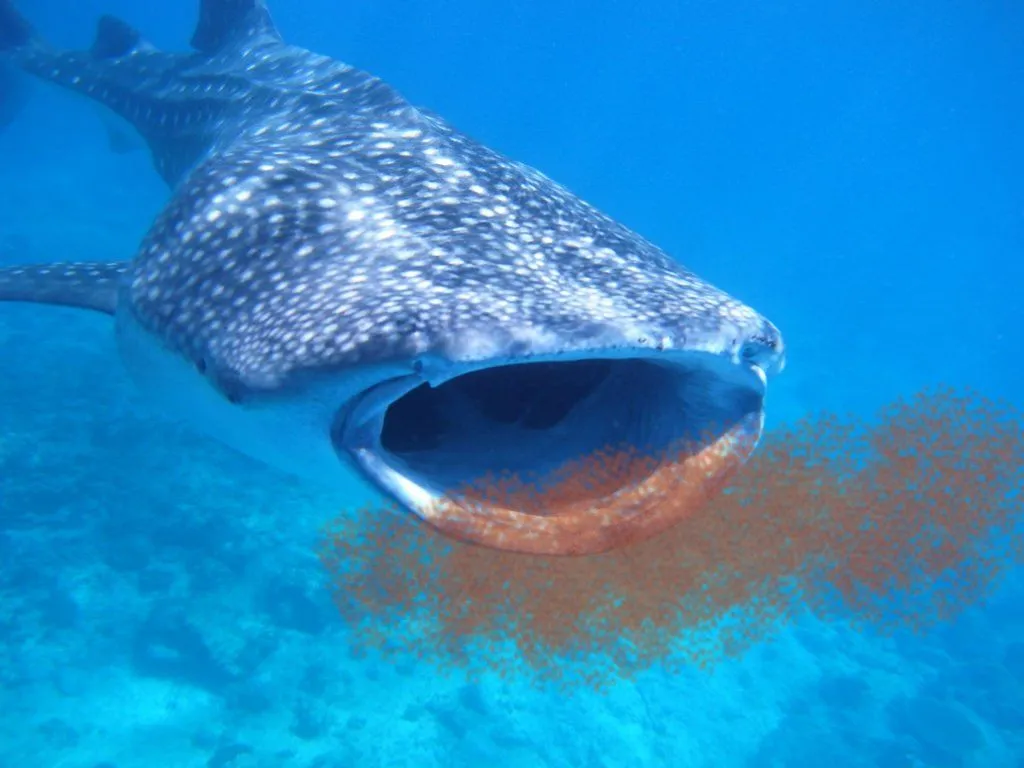
This is how whales can easily eat several tons of krill every day. A landmark 2021 study published in Nature by Matthew Savoca and colleagues at Stanford fitted electronic tags to seven species of baleen whale and combined them with sonar measurements of prey density. The researchers found that an average adult blue whale eats about 16 tonnes of krill per day during the feeding season — roughly three times more than scientists had previously estimated. Over a year, the largest whales can each ingest a couple of million tonnes of prey. In a nutshell, baleen whales, some of the largest creatures on the planet, can survive by eating krill because they eat so many of them. To put this in perspective, consider a single grain of rice, which is positively puny in comparison to a human. Still, a person can survive by eating thousands of rice grains when they’re served in a bowl!
How Baleen Whales Actually Catch The Krill
Whales never chew krill. Baleen whales lack teeth altogether — instead, hundreds of comb-like plates of baleen hang from the roof of the mouth. Baleen is made of keratin, the same protein that builds our fingernails and hair, and the inner edges of each plate fray into a dense fibrous mat that works like a giant sieve.
Rorquals (the family that includes blue, fin, humpback and minke whales) feed using a dramatic technique called lunge feeding. The whale accelerates toward a krill swarm at roughly 4 metres per second, opens its jaw to a gape of nearly 80°, and engulfs a volume of seawater that can exceed its own body mass. Pleated grooves running along the throat balloon outward to hold the gulp. The whale then closes its mouth, contracts those grooves, and pushes the water out through the baleen — trapping the krill inside to be swallowed.
Bowhead and right whales use a gentler strategy called continuous ram filtration: they swim slowly through dense patches with their mouths open, letting water flow continuously over their long, fine baleen. Gray whales are the odd ones out — they roll on their sides on the seafloor and suck up sediment, filtering out tiny crustaceans like amphipods through shorter baleen plates.
Why Krill And Whales Matter Beyond Themselves
Krill are not just whale food — they are a keystone species. Penguins, seals, seabirds, fish and squid all depend on krill, so whatever happens to krill ripples through the entire Southern Ocean ecosystem. Antarctic krill populations are sensitive to sea-ice loss, because their larvae feed on algae that grow on the underside of winter ice, which makes climate change a serious concern for both krill and the whales that rely on them.
Whales, in turn, fertilise the oceans they feed in. When a whale dives deep to feed and returns to the surface to breathe and defecate, it transports iron and other nutrients from depth into sunlit surface waters — a process scientists call the “whale pump.” Those nutrients fuel blooms of phytoplankton, which feed more krill and lock atmospheric carbon into the ocean. The 2021 Stanford-led study estimated that the recovery of pre-whaling whale populations could move tens of millions of tonnes of nutrients each year, boosting ocean productivity and helping to draw down carbon dioxide.
References (click to expand)
- Stanford researchers reveal details about the unique feeding .... Stanford University
- ASK Archive 2001: Do whales eat plankton or krill?? - whale.wheelock.edu
- How do whales eat? Summary Objectives Materials (one per .... The University of Hawaiʻi at Hilo
- Whales swallow a bus-full of krill. The Australian Broadcasting Corporation
- Meals on the Go: The Physics of Whales' Eating Habits – Saint Louis University.
- Savoca, M.S. et al. (2021). Baleen whale prey consumption based on high-resolution foraging measurements. Nature.
- Baleen whales: filter feeding explained – Natural History Museum, London.
- Blue Whale species profile – NOAA Fisheries.