Table of Contents (click to expand)
The dodo (Raphus cucullatus) went extinct around 1690 — about a century after Dutch sailors first described it on Mauritius in 1598. Modern research points to invasive species (especially pigs and crab-eating macaques that raided its ground-laid nests), along with rats, cats and dogs, as the dominant cause, supported by habitat destruction and direct hunting. The flightless bird had evolved without mammalian predators and simply could not adapt fast enough.
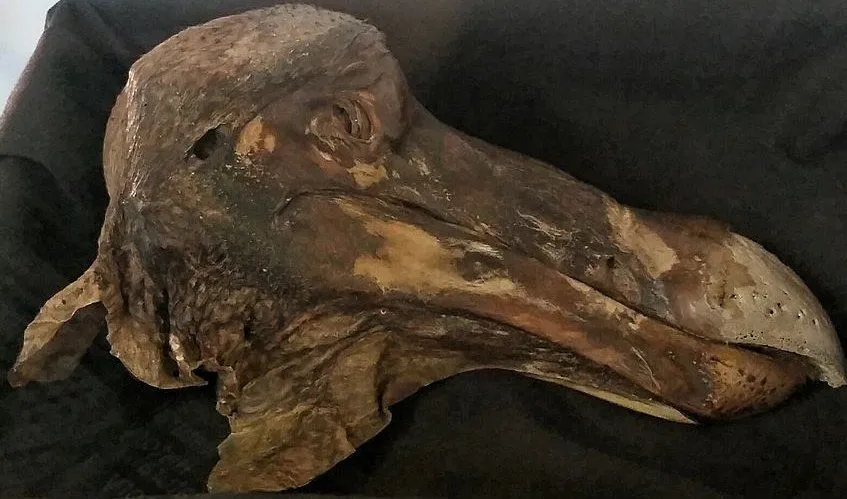
You have almost certainly heard about the dodo bird in your biology class—a fat, gormless bird that died at the hands of callous sailors. Since these innocuous birds went extinct a few centuries ago, we now only have their historical descriptions, illustrations, and a few skeleton specimens preserved in museums. In this article, we will learn what dodos were, what they looked like, where they lived, and why they went extinct!
Recommended Video for you:
Dodos (Raphus cucullatus)
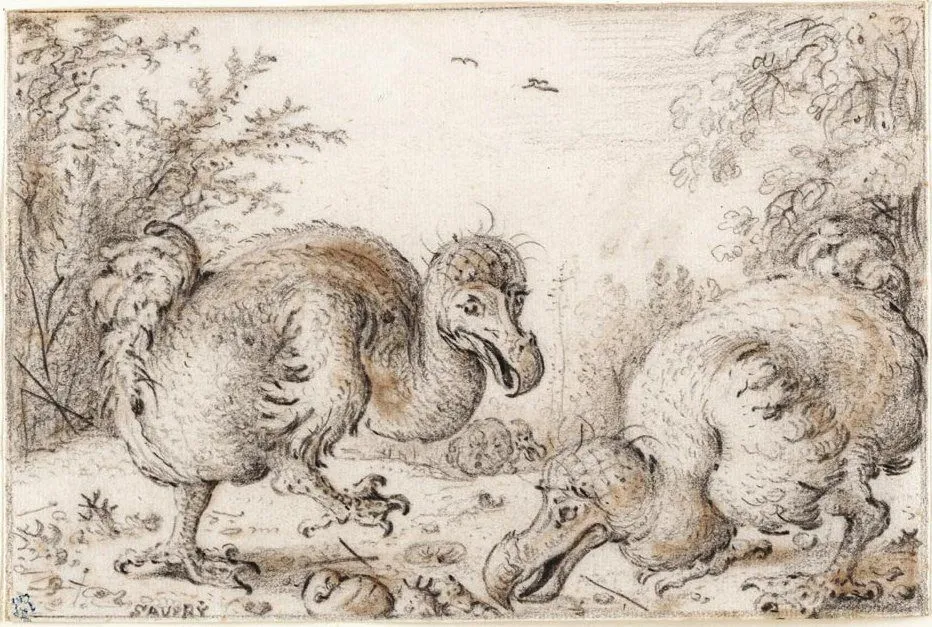
The dodo (scientific name: Raphus cucullatus) was a flightless bird that lived on the serene island of Mauritius. The origin of the name “dodo” is debatable. Some believe it came from the Dutch “dodaars” — literally “fat-arse” or “knot-arse”, a reference to the tuft of curly feathers on the bird’s rear — while others claim it is derived from the Portuguese “doudo”, which means “fool” or “simpleton”.
What Did Dodos Eat?
Dodos were endemic and exclusive to the island of Mauritius. Based on the habitat and ecosystem of the island, their bodies were adapted perfectly to survive there. Their diet was linked to the tambalacoque tree (Sideroxylon grandiflorum), which in the local lexicon is sometimes called the dodo tree. Biologists believe that dodos fed on the tambalacoque’s fruit, as well as on nuts, fruits, roots and small insects. (A famous 1977 hypothesis by Stanley Temple, that the tree’s seeds could only germinate after passing through a dodo’s gut, has since been largely discredited — the seeds germinate fine on their own, and Mauritian giant tortoises were probably the more important seed dispersers.)

Fortunately, dodos had no natural predators. Some biologists opine that they lost the ability to fly due to the absence of such predators. Adapting to life without flight led to a series of anatomical changes—their wings became smaller and their tail became stumpy. Moreover, dodos laid their eggs directly on the ground, which later posed a threat to the unborn when humans and their pet animals arrived on this island.
What Did The Dodo Look Like?
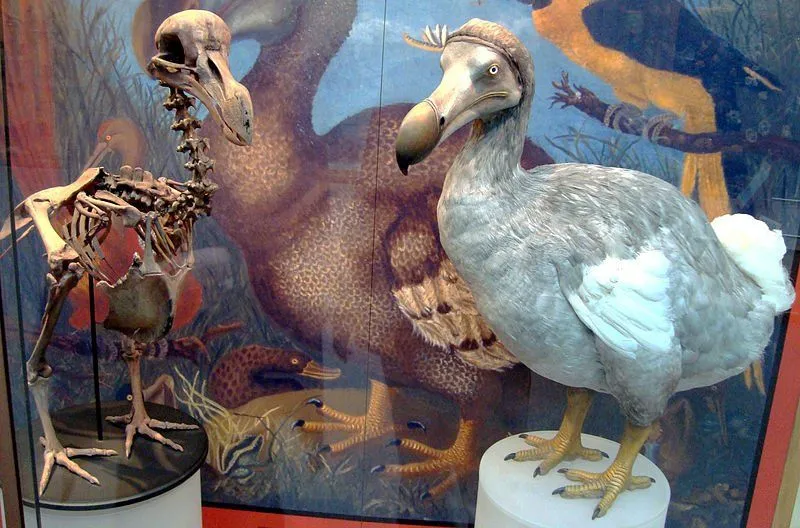
Evolutionary biologists place pigeons and doves as the closest relatives of dodos — DNA work has narrowed the dodo’s closest living relative to the strikingly iridescent Nicobar pigeon (Caloenas nicobarica) — but the size and weight of dodos is unlike these other species. Dodos stood about 3 feet (~1 m) tall and, according to recent peer-reviewed estimates from femoral bone samples (Angst et al. 2017; Claessens et al. 2022), weighed roughly 10.5 to 17.5 kg, with most studies converging around 12–14 kg. The earlier “fat-and-lazy” figure of 20+ kg likely came from over-fed captive specimens and exaggerated illustrations. Many historical illustrations depicted dodos with brownish-grey feathers, but there is no consensus amongst scientists on the actual color. Dodos also had a long, hook-tipped beak around 23 cm (9 inches) long that fit their eating patterns — though the popular claim that they could crack open coconuts is folklore, with no peer-reviewed support.
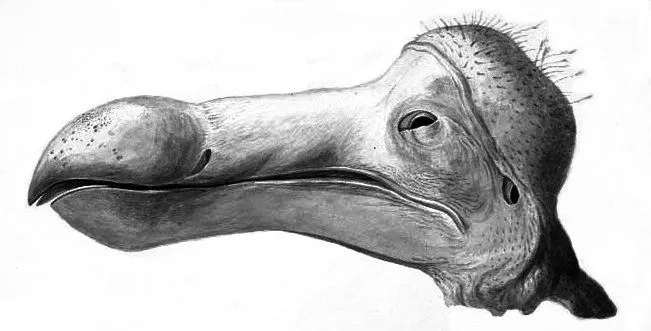
While dodos are often described as fat and lazy, with an immense appetite, it’s possible that this depiction was distorted by the explorers’ unfair perspective. Historically, dodos were not used to the presence of humans, which is probably why they acted docile and gormless when they encountered humans on a quest to explore new places. Some experts also hypothesize that the sailors and explorers captured the poor creatures and overfed them, making them fatter and slower than they originally were. If this is true, then the typical image of the dodo we have is probably incorrect.
How Were Dodo Birds Discovered?
Many historical texts suggest that Arab explorers visited the island of Mauritius before the 16th century, but they didn’t take note of the dodo. The first documented account of the dodo came from Vice Admiral Wybrand van Warwijck’s Dutch expedition to Mauritius in 1598 — four years before the Dutch East India Company (VOC) was even founded. The first illustration of a dodo bird appeared a few years later.
How And When Did The Dodo Go Extinct?
Debated hotly by biologists, the dodo went extinct at the end of the seventeenth century — the last widely accepted sighting was by shipwrecked Dutch sailor Volkert Evertsz in 1662, and a 2003 statistical analysis in Nature placed the true extinction date around 1690 — for three possible reasons, or some combination of them.
Arrival Of Humans
First, before the arrival of humans on Mauritius—an island where the dodos had lived and evolved for centuries—the species had no natural predators. Due to their inability to adapt to the imminent threats and tactfully escape, they became an easy target for explorers on excursions to the island. Hunting by sailors clearly contributed, though sailors actually nicknamed the bird walghvogel (“disgusting bird”) because the meat was tough — so direct hunting was probably less decisive than older accounts suggest.
Arrival Of Invasive Species
Second—the western explorers and sailors didn’t come to the island of Mauritius alone. They also brought foreign animals like rats, cats, dogs, pigs and crab-eating macaques. In the new habitat of Mauritius, these animals became invasive for the poor dodos, who had zero experience dealing with them. As mentioned earlier, dodos laid their eggs directly on the ground, so pigs and macaques in particular raided the dodos’ nests and fed on their young and unborn. Modern researchers — including the Natural History Museum (London) — now consider these introduced mammals, more than direct hunting, the single biggest driver of the extinction.
Shrinking Of Natural Habitat
Finally, as the explorers explored deeper into the island, the natural resources were exploited and harvested, which harmed not only the dodos, but other endemic species and plants—ultimately paving the way for the extinction of this eccentric bird. Human invasion, loss of habitat, and the threat from foreign animals are the three main reasons why dodos went extinct.
Could We Have Prevented The Dodo’s Extinction?
As we already covered, there were multiple reasons behind the extinction of the dodo bird. The arrival of human invaders was the death knell for this species, but could we have averted their untimely extinction in any way?
Well, had dodos lived in other places beyond the island of Mauritius, or had they been more accustomed to natural predators, they might have found a way to fend off the predators and eke out survival.
Also, if humans were more compassionate towards preserving this eccentric bird, rather than just feeding on them, they could have introduced them to other parts of the world where they could adapt and survive. If any of that had occurred, perhaps this fascinating species would not just be confined to the history books!
That said, the dodo may not be confined to history forever. In 2022, Beth Shapiro’s lab announced the first complete sequencing of the dodo genome from a Copenhagen specimen, and in 2023 Dallas-based Colossal Biosciences launched a high-profile dodo de-extinction project — partnering with the Mauritian Wildlife Foundation and using the Nicobar pigeon as the genetic template. By September 2025 the company reported the first successful cultivation of pigeon primordial germ cells, a critical milestone for any avian de-extinction effort. Whether or not we ever see a living dodo again, the bird has become a kind of mascot for what reckless biological optimism can take from us — and what science is now testing whether it can give back.