Table of Contents (click to expand)
SLR stands for Single-Lens Reflex; DSLR stands for Digital Single-Lens Reflex. The two cameras share the same mirror-and-prism viewfinder design, but an SLR records images on 35 mm film, while a DSLR captures them with a digital image sensor and stores them on a memory card. DSLRs are typically faster and can store thousands of images per card.
A friend of mine wanted to buy a camera before going on a long-awaited trip about a month ago. Being a person who’s not much of a tech enthusiast, he sought my help in buying the right one. Interestingly enough, the title of this post was the first question that he posed to me.
Although there may be many people who already know the basic differences between an SLR and a DSLR camera, there still are plenty of folks, like my friend, who wouldn’t know which is which if they were sitting side by side on a table. So, for the sake of those people, let’s clear up some of the confusion!
Recommended Video for you:
SLR Camera
The full form of SLR is Single-Lens Reflex. An SLR camera is built around a mirror-and-prism viewfinder system that lets you see through the same lens that takes the photo, then flips the mirror out of the way when you press the shutter to expose the film behind it. Let’s take a quick look at how SLR cameras work.
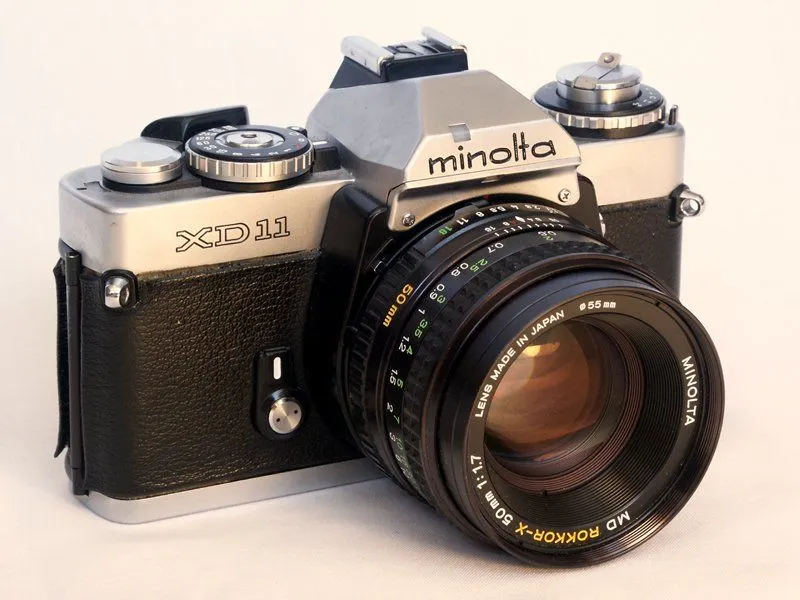
Working
An SLR camera has a mirror installed in an angled position between the lens and the shutter. Above it are two other important components: a translucent screen and a prism. When you’re looking through the lens, the real image bounces off the slanted mirror onto the translucent screen, which then reflects it to the prism. Note that the image that reaches the prism is inverted; therefore, the prism flips or inverts the image that it received from the screen before projecting it through the viewfinder window for you to look at.
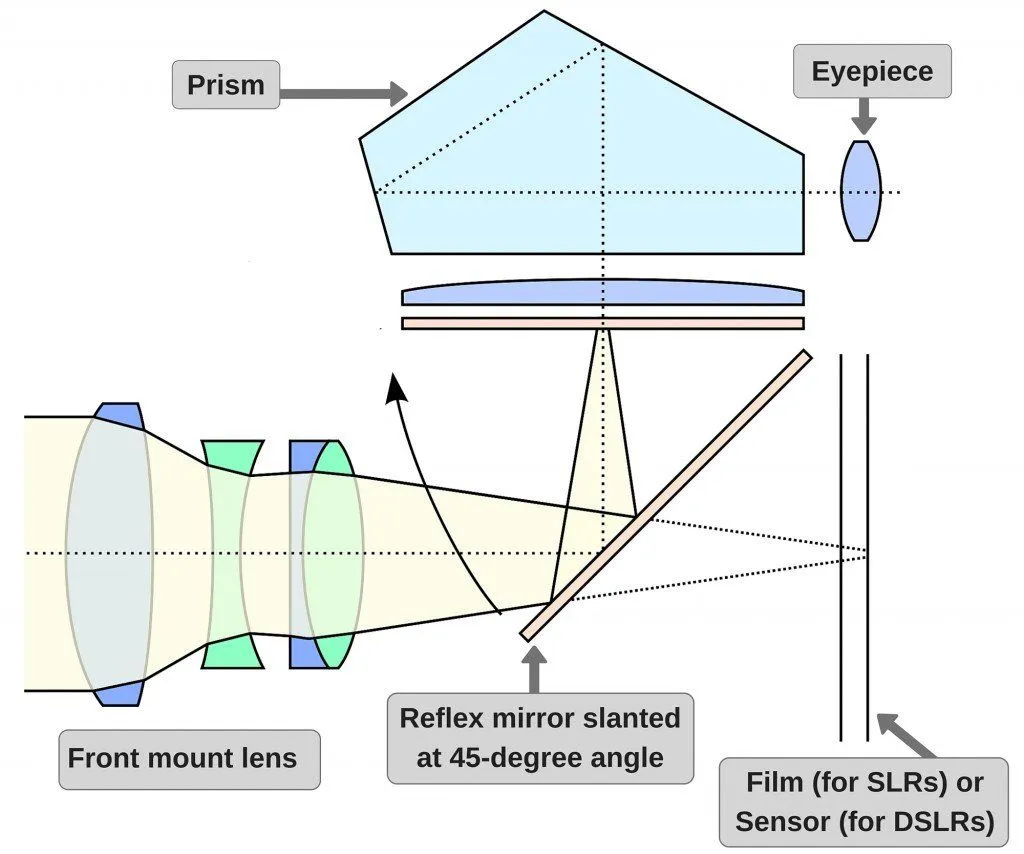 The moment you press the shutter button, things are instantly set in motion. First, the camera snaps the slanted mirror out of the way, so that the image is now directly projected on the exposed film. This is why the viewfinder suddenly goes dark for an instant when you press the shutter button. The film is where the image is formed, which is later retrieved from the camera and processed to develop crisp, colorful photographs.
DSLR Camera
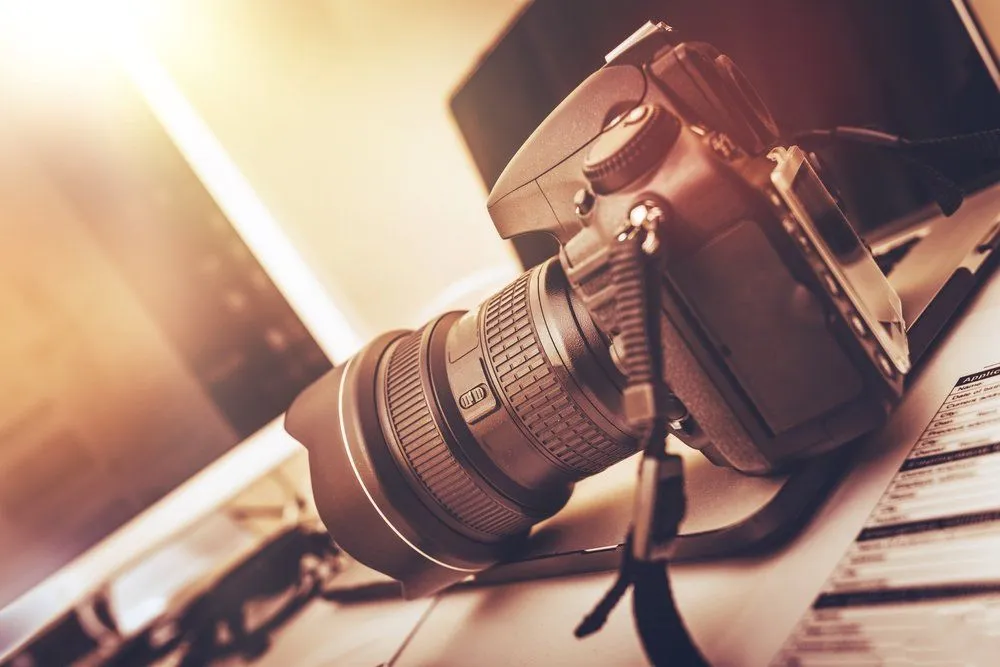
A DSLR (Digital Single-Lens Reflex) camera works on the same mirror-and-prism principle as an SLR, but instead of film it has an electronic image sensor (CCD or, more commonly today, CMOS) that records the picture as a digital file on a memory card. The optical path through the viewfinder is identical to an SLR; the difference is purely in how the captured image is recorded.
A note on the DSLR’s status today: by the mid-2020s, mirrorless cameras (which drop the moving mirror and the optical viewfinder altogether) have largely overtaken DSLRs in new releases. Canon and Nikon have stopped or sharply slowed development of new DSLR bodies, but DSLRs still have a huge installed base and are very much usable as photographic tools.
SLR Vs DSLR
Recording Pictures
As mentioned earlier, the working of an SLR camera is more or less same as that of a DSLR camera. The difference, however, lies in the way these two cameras record pictures.
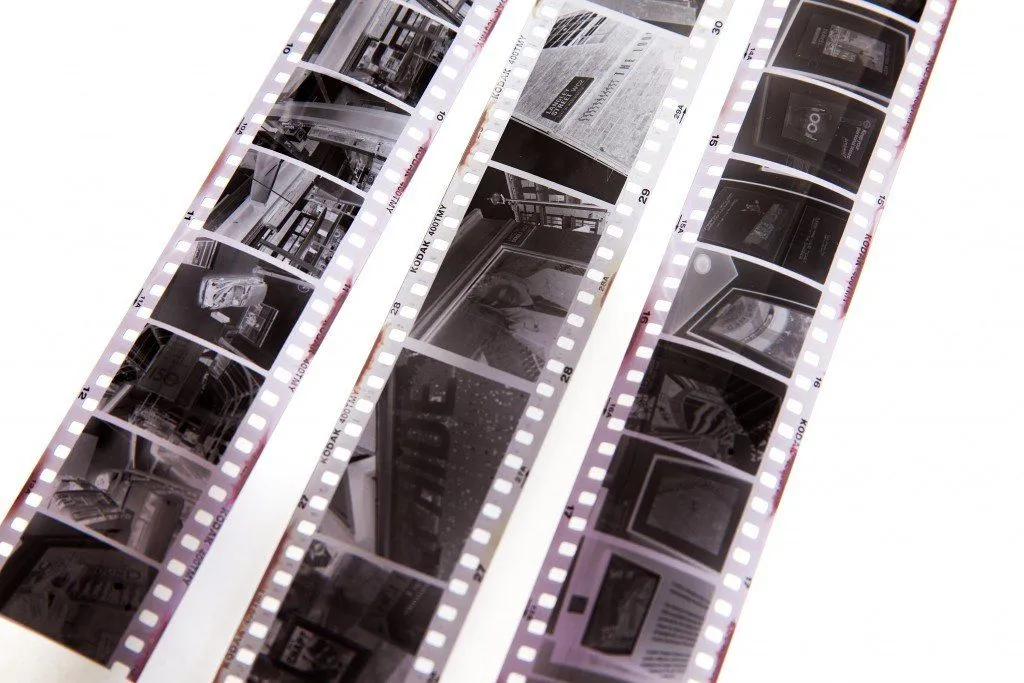
An SLR camera contains film (typically a ’35 mm’ one) where the image is recorded, which is later retrieved to be developed, i.e., creating real, crisp photographs that the film recorded. A DSLR camera, on the other hand, contains a digital sensor, instead of film, that records the captured images or videos onto a memory card.
Shutter Speed
Shutter speed is the total time that the camera’s shutter is open; a lower shutter speed is more desirable for snapping pictures. Entry-level SLRs’ shutter speed can range from 1 second to one-thousandth of a second, whereas DSLRs have much shorter shutter speeds, sometimes in the range of 1/4000th to 1/8000th of a second!
Image Storage Capacity
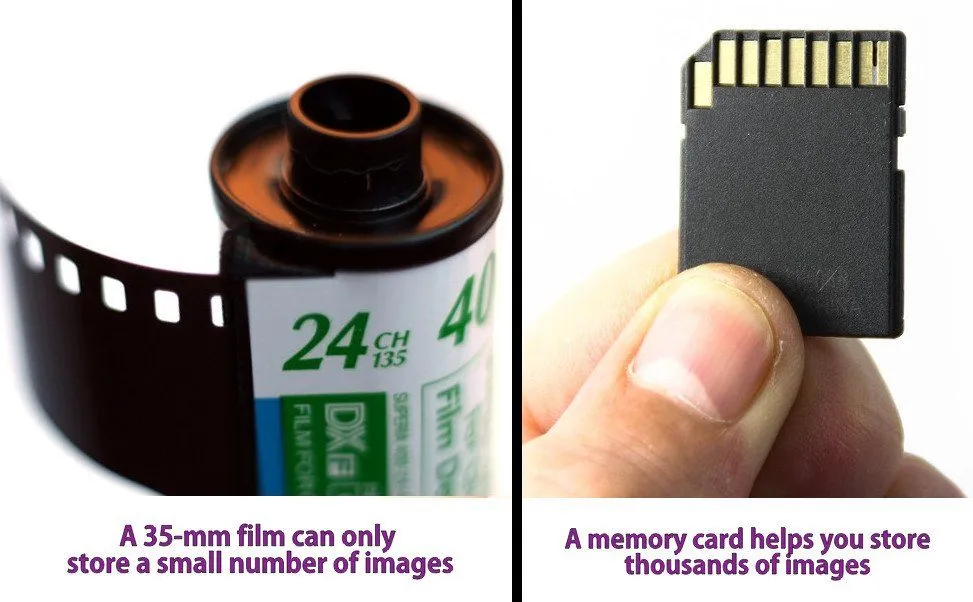
On a regular roll of film for an SLR camera, you can store a maximum of 36 images before you have to replace it with a new one, whereas in a DSLR camera, you can store thousands of images on a memory card, depending on its capacity.
Functional Differences
Since DSLRs are based on newer technology, they obviously offer a range of functions that you can’t expect from SLRs. To mention just a few, you can preview a picture after clicking it, and then erase/delete it in case you don’t like it. This helps you select the best shot from a pool of pictures and trash the rest. At that point, you can also make some basic edits on the camera, or simply transfer the images onto a computer for pro-level editing of the stored images.
All in all, DSLRs have some obvious advantages over SLRs in terms of speed, flexibility and storage capacity. However, there’s no dearth of professional photographers that prefer SLRs due to their ‘old-school’ appearance, the less saturated colors of certain films, and the fact that photographers are in absolute control of the entire process, from the time the shutter button is clicked until an image is finally developed in a darkroom.
For that reason, you can’t really choose a ‘better’ camera between the two, because the distinction is not objective. It all depends on which method and technology style fit best with your photographing needs.