Table of Contents (click to expand)
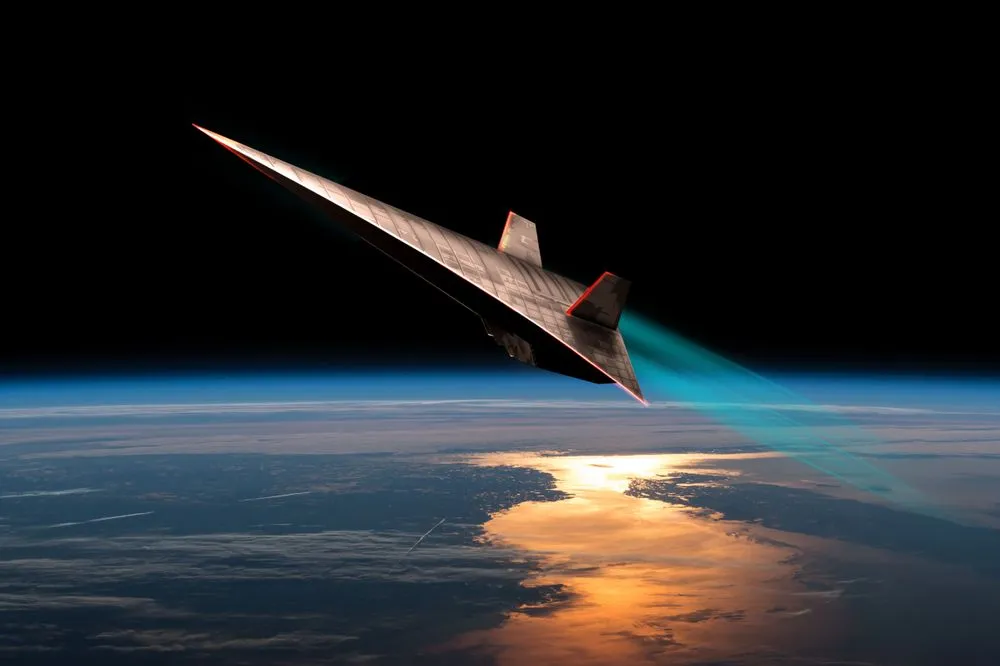
A scramjet (supersonic-combustion ramjet) is an air-breathing jet engine that ditches the rotating compressor and turbine of a normal jet engine and instead uses its own forward speed to ram supersonic air into the combustor. Scramjets only work above roughly Mach 5, so they need a booster to get started, but once running they can push vehicles to Mach 6, Mach 10 and beyond — the speed regime now used by hypersonic missiles like Russia’s Tsirkon and demonstrators like NASA’s X-43A and X-51A Waverider.
In 2019, India’s DRDO (Defence Research and Development Organisation) ran the maiden flight test of its unmanned scramjet demonstration aircraft for hypersonic flight. The demonstration aircraft is officially called the ‘Hypersonic Technology Demonstrator Vehicle (HSTDV)’ — yes, that’s a mouthful. The June 12, 2019 attempt validated the booster but did not fully demonstrate the scramjet; it took a follow-up flight on September 7, 2020 for DRDO to confirm sustained hypersonic combustion at Mach 6. To put that into perspective, a typical passenger aircraft cruises at high subsonic speeds — around Mach 0.78–0.85.
Speeds of Mach 6 or higher are achieved by using scramjet technology. Scramjet technology is extremely difficult to develop. Before India, the United States, Russia, and China had each flight-tested scramjet engines, and Australia (jointly with the US and UK through the HyShot and HIFiRE programs) had also demonstrated supersonic combustion in flight.
Recommended Video for you:
What Are Jet Engines?
Before we take a closer look at scramjet engines, let’s touch upon jet engines in general. Jet engines are combustion engines that generate thrust (or movement) through jet propulsion. These engines find application in high-speed situations, such as jet airplanes, fighter jets, missiles and drones. Jet engines are also modified for use in high-speed cars and power plants. A basic jet engine works on the same principle as a traditional gas turbine.
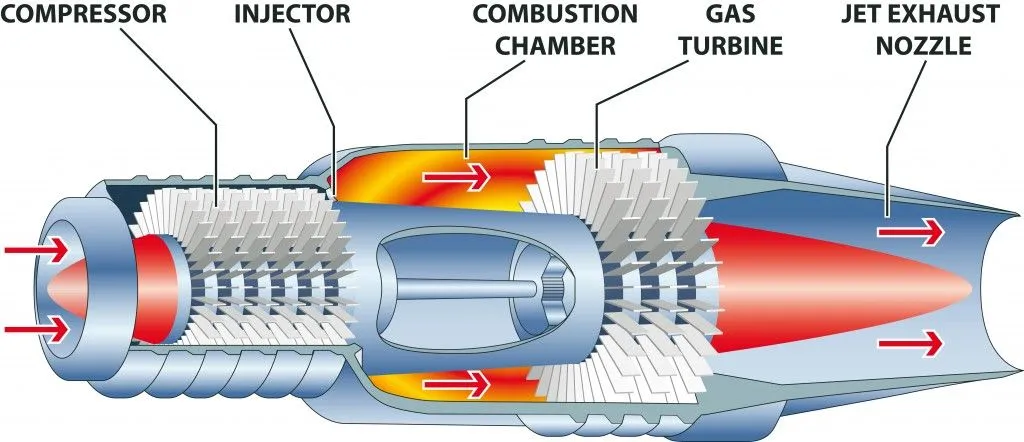
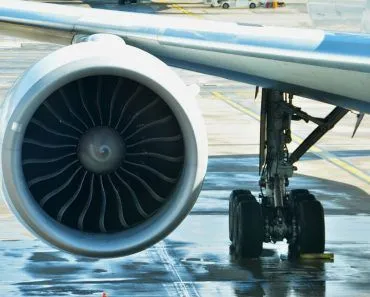
A jet engine consists of a compressor at the front followed by a combustion chamber and a turbine. The compressor and turbine are mounted on the same shaft. A fan at the front of the compressor sucks in air from the atmosphere.
The compressor, composed of multiple blades rotating at high speeds on a shaft, then compresses the incoming air. The pressure and temperature of the air increases and the speed drops as a result of this compression. Whereas in the combustion chamber, fuel is sprayed on the compressed air and a spark from the spark plug ignites the mixture.
The mixture then expands spontaneously, creating a jet. The reaction force generated from the jet trying to blast out of the nozzle provides the necessary thrust to move the plane/vehicle forward. The amount of thrust that is generated depends on the speed of the exiting jet in comparison to the speed of the inlet air. The greater the speed of the exiting jet, the greater the amount of thrust produced.
Before exiting the engine, the jet passes through the turbine blades. The movement imparted by the exiting jet on the turbine blades is transferred to the compressor by a shaft.
Shortcomings Of The Traditional Jet Engine
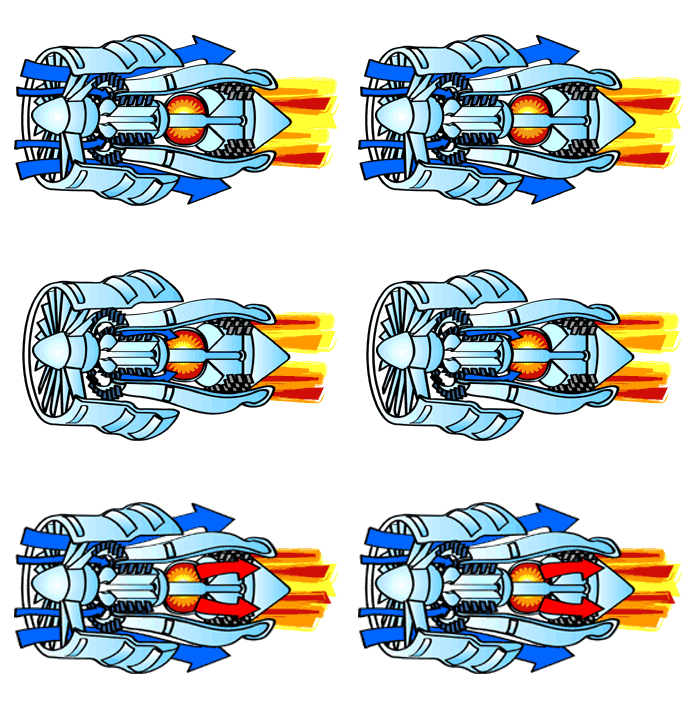
A major drawback of the traditional jet engine is the number of moving parts it incorporates. The list includes the multi-stage compressor and turbine rotors, as well as other mechanical components, such as spark plugs, cooling systems, afterburners, a fuel control unit, prime mover, etc. These components add a lot of weight to the overall engine, making the entire vehicle heavier. The engineering complexity and the number of elements that could fail and lead to an engine failure or shutdown also increase dramatically with so many parts.
The compressor reduces the incoming air to subsonic speeds in a conventional jet engine. Thus, a limited amount of thrust can be generated as the exit jet velocity also remains under subsonic levels.
Moreover, the dream of traveling from one place to another on Earth at supersonic speeds isn’t attainable with a regular jet engine. Most jet engines can only accomplish subsonic speeds, i.e, speeds below Mach 1, although a very small number can fly at speeds of around Mach 3.
This is where ramjets and scramjet engines come into play.
What Are Ramjet And Scramjet Engines?
Ramjet and scramjet engines are jet engine variants that ditch the rotary compressor and turbine from a regular jet engine. The two models rely on the natural ramming of air to produce thrust. The basic operating principle in ramjets and scramjets involves converting the significant kinetic energy of the incoming hypersonic (speed greater than Mach 5) or supersonic air into pressure energy.
Air flowing at hypersonic speeds has very high dynamic pressure. Dynamic pressure is also called velocity pressure and is formally defined as the kinetic energy per unit of volume. You might remember it as a term in Bernoulli’s equation (P + ½ ρ v2 +ρ g h = constant, where the term ‘½ ρ v2‘ is dynamic pressure).
However, the dynamic pressure of air flowing at subsonic speeds is insufficient to produce any usable thrust. Furthermore, when an aircraft is at a standstill, the dynamic pressure of the air surrounding it is even lower and cannot be used to produce thrust.
Thus, ramjets and scramjets require assistance for their initial take-off until the plane attains a specific speed. Both types operate efficiently only when the surrounding air is flowing at no less than supersonic speeds, starting from Mach 3.
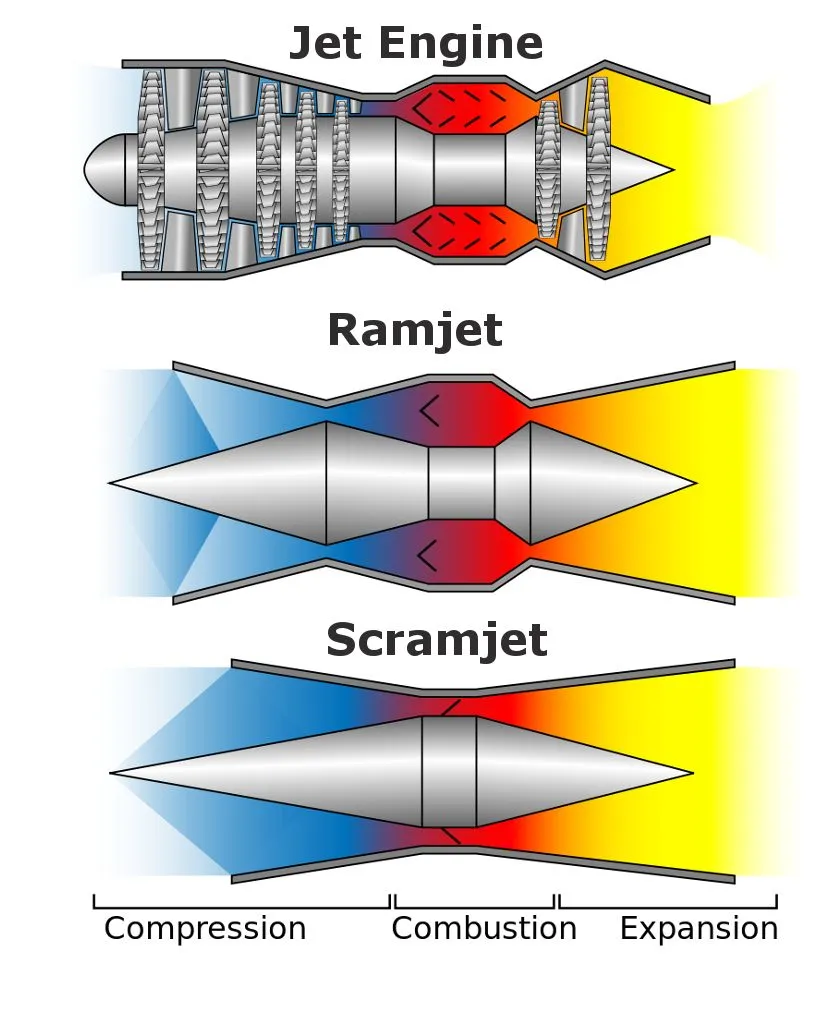
Now, regarding the construction of the two jet engines, the compressor of the regular jet engine at the front is replaced by a diffuser, while the other end of the engine is occupied by a propelling (convergent-divergent) nozzle.
Diffusers are devices used to reduce the velocity of a fluid (incoming air, in our case) and increase its pressure and temperature. Nozzles, on the other hand, are utilized to decrease the pressure and increase the velocity of a fluid (exhaust jet). Since there is no compressor in ramjet and scramjet engines, the need for a turbine is also eliminated.
When air moving at hypersonic speeds is forced to pass through the diffuser, its dynamic pressure is converted into static pressure. The speed of the airflow decreases, while the pressure and temperature increase. This increased temperature and pressure aid in the combustion of the mixture.
The rest of the working procedure remains the same as in a regular jet engine. Inside the combustion chamber, the air is mixed with fuel and spark plugs help ignite the mixture, while the propelling nozzle accelerates the exhaust stream to generate thrust.
Ramjets Vs Scramjets
In a ramjet, the supersonic incoming air is slowed down to subsonic speeds by the diffuser. It uses oblique shock waves to compress the flow, followed by a final normal shock wave that brings the air below Mach 1 before it reaches the combustor. Since the amount of thrust generated depends on the speed of the exhaust jet, in ramjets, similar to jet engines, the amount of generated thrust is limited by the subsonic flow of air in the combustion chamber.
To increase thrust production, the incoming air must not be slowed down below subsonic speeds; scramjet engines do just that. Scramjet engines are nothing but an upgrade to ramjet engines; in fact, scramjet stands for ‘supersonic combustion ramjet engines’.
In scramjets, the incoming airflow is not slowed down to subsonic levels and maintains supersonic speeds. This is accomplished by a more gradually diverging diffuser. The combustion chamber in scramjets is also modified to operate at supersonic speeds, while the combustion chamber in ramjets only operates at subsonic speeds.
The propelling nozzle is also modified to accelerate the exhaust jet to higher Mach numbers. Thus, the thrust generated by scramjets is more than that of ramjets. Scramjets, therefore, can fly at greater speeds than ramjets.
Scramjets carry fuel and use the ingested atmospheric oxygen as the oxidizer, whereas rockets carry both fuel and an oxidizing agent on board. As scramjets don’t carry an oxidizing agent, they are restricted to atmospheric flights and can’t be used for space travel… yet.
Conclusion
The use of scramjet technology might let us fly at speeds of more than 10 times the speed of sound, but it’s still very much a work in progress. The very first scramjet-powered vehicle flew on November 28, 1991 — the Soviet GLL-Kholod, launched atop a modified SA-5 missile by Russia’s Central Institute of Aviation Motors. It has been roughly 35 years since that first demonstration, but large-scale operational use is only now beginning to arrive.
The primary problem is the need for an additional launching vehicle to initiate the flight, as scramjets only produce useful thrust at speeds of Mach 5 or higher. The amount of heat generated by air friction and shock waves is another concern. A poor thrust-to-weight ratio limits acceleration, and the plane also needs to be considerably large to carry a certain payload. To top it all off, scramjet technology is extremely expensive to manufacture and test. Most tests end with the complete annihilation of the test vehicle.
The picture has changed quickly since this article was first written. Russia’s Tsirkon (3M22) scramjet-powered anti-ship cruise missile has been declared operational on Navy frigates. The United States’ DARPA/USAF HAWC programme completed successful Mach 5+ scramjet flights through 2023, and Raytheon’s derived HACM is on track for fielding. India followed up its 2020 HSTDV success with a 1,000-second-plus scramjet engine ground test in January 2025. Reusable hypersonic testbeds — Stratolaunch’s Talon-A2 and Hermeus’s Quarterhorse — have also begun flying. So while passenger hypersonic travel is still years away, scramjet-powered weapons and reusable testbeds are no longer hypothetical.