Table of Contents (click to expand)
Magnetic tape works by using electromagnetic induction to align the ferromagnetic domains in a thin coating on the tape. A write-head turns an audio signal into a varying magnetic field that imprints the pattern; a read-head later senses the same pattern and turns it back into sound. Decades after the cassette era, the same principle now backs hyperscaler cold storage, with LTO-10 cartridges holding 30 TB native.
When one has to create video content or music, camcorders and smartphones immediately come to mind. What doesn’t come to mind is using magnetism to create and share that valuable data! However, not long ago, magnetic tapes were the dominant medium for creating and storing audio-visual data, and have actually been around for over a century!
Before you conjure up a stereotypical image of magnetic tapes in vintage devices like cassettes, you might be surprised to learn that magnetic tapes are still a convenient and durable medium for long-term storage, and keep improving every passing year!
Before we get into all that, let’s rewind the tape to the 1900s.
Recommended Video for you:
A Revolution In Audio Recording And Storage
Danish engineer Valdemar Poulsen patented the Telegraphone, the first magnetic recorder, in 1898. He used a steel wire (not tape) and famously demonstrated the device at the 1900 Paris Exposition Universelle, where it won the Grand Prix. Magnetic tape came three decades later: in 1928, German-Austrian engineer Fritz Pfleumer patented a paper strip coated with iron oxide powder, and AEG built the first practical tape recorder, the Magnetophon K1, in 1935.
Soon enough, engineers all over the world picked up on the invention and improved upon the designs with each successive iteration.
The basic principle behind the working mechanism remains the same for all magnetic tapes, irrespective of the year of manufacture. As materials science has advanced, tapes with suitable physical and chemical properties such as thin width, high flexibility, high data density, and resistance to humidity, were developed in the latter half of the twentieth century.
Even as they improved, the principle of operation remains the same to this day. Their construction and operation is discussed below.
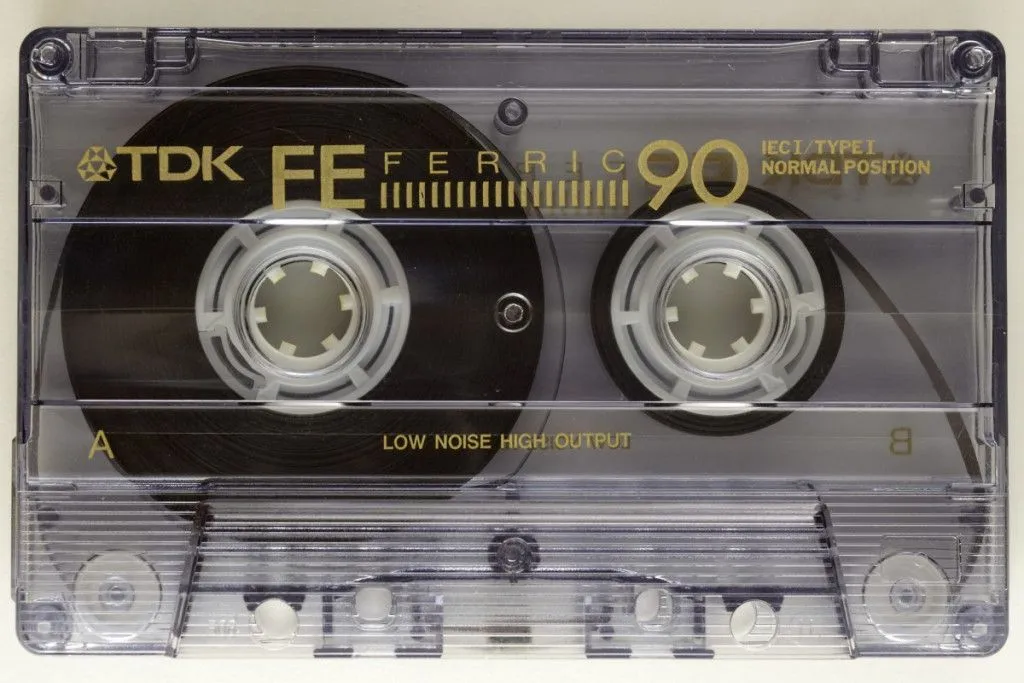
Construction Of Magnetic Tapes
Magnetic tape consists of the following parts:
1) Tape
The tape consists of three layers: a top coat, a substrate in the middle, and a bottom coat.
- The top coat consists of a magnetic pigment held together by a binder to form an emulsion. The pigment is a ferromagnetic substance — historically gamma ferric oxide (γ-Fe2O3) or chromium dioxide (CrO2), then metal-particle iron alloys, and in modern data tapes barium ferrite (BaFe) or strontium ferrite (SrFe). The pigment provides small magnetic domains that can be manipulated to create and store signals. The binder is a thermoplastic polymer like cellulose acetate or polyurethane, which holds the pigment particles in place. The top coat is quite thin — older audio tapes ran 2–13 µm, while modern metal-evaporated and particulate data tapes are an order of magnitude thinner.
- The substrate is a thermoplastic polymer that gives the tape its structural backbone. Polyethylene terephthalate (PET, marketed as Mylar) is the dominant choice; polyvinyl chloride was used in early German tapes through the 1970s, and modern high-density data tapes increasingly use polyethylene naphthalate (PEN) for better dimensional stability. The substrate is the thickest layer, typically 6–30 µm.

- The bottom coat is optional. If it is present, black matting is used to prevent the build-up of electrostatic charges due to constant relative motion between the tape and tape-head. This layer is the thinnest of all and is not more than 7um in cross-section.
2) Tape-Head
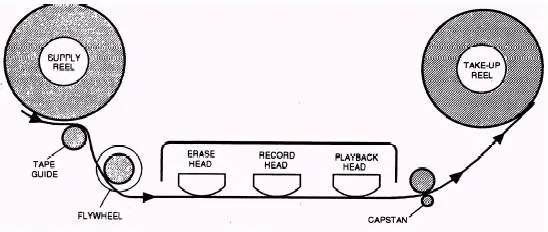
The tape-head consists of three sub-heads: A read head, a write head, and an erase head, arranged linearly. All three heads are built around a ferromagnetic ring with a tiny slit (the “head gap”) at the bottom, where the tape passes by in physical contact with the head — unlike a hard drive’s read/write head, which flies above the platter on a thin air bearing, tape heads must touch the medium to couple efficiently, which is also why they wear out. Coils of wire are wound around all three heads.
3) Tape-Guide
A pair of tape-guides is present on both sides of the tape head and touch the tape, providing mechanical tension to the tape. The guides rotate in sync at identical angular velocities. One guide feeds the tape to the tape-head, while the other guide retrieves the tape from the tape-head. The rotation is synchronized to allow the required manipulation of the magnetic pigment.
Working Of Magnetic Tapes
A few concepts of electromagnetism and solid state physics must be introduced as a pre-requisite to understand the working of magnetic tapes.
1) Principle Of Operation
- Faraday’s First Law of Electromagnetic Induction: A change in magnetic flux passing through a coil induces a voltage in the coil. In layman’s terms, if a coil of wire is placed inside a magnetic field (the field of a bar magnet, for example), then a change in the strength of a magnetic field passing through the coil induces a voltage (and hence a current) in the coil.
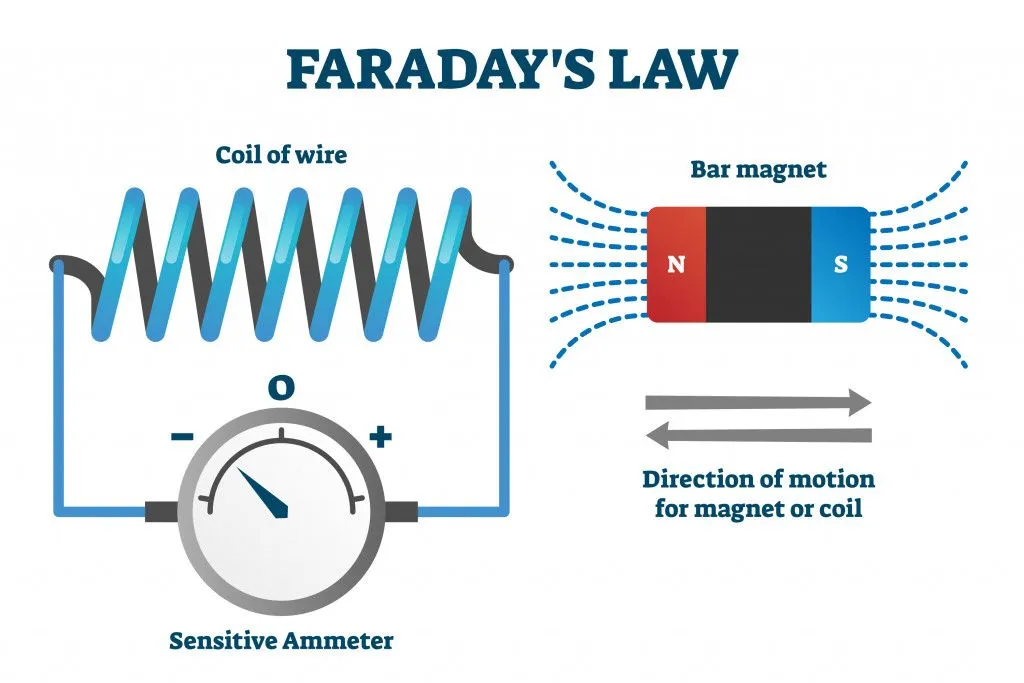
- A current-carrying wire produces a magnetic field around itself, with the field lines being closed circles.
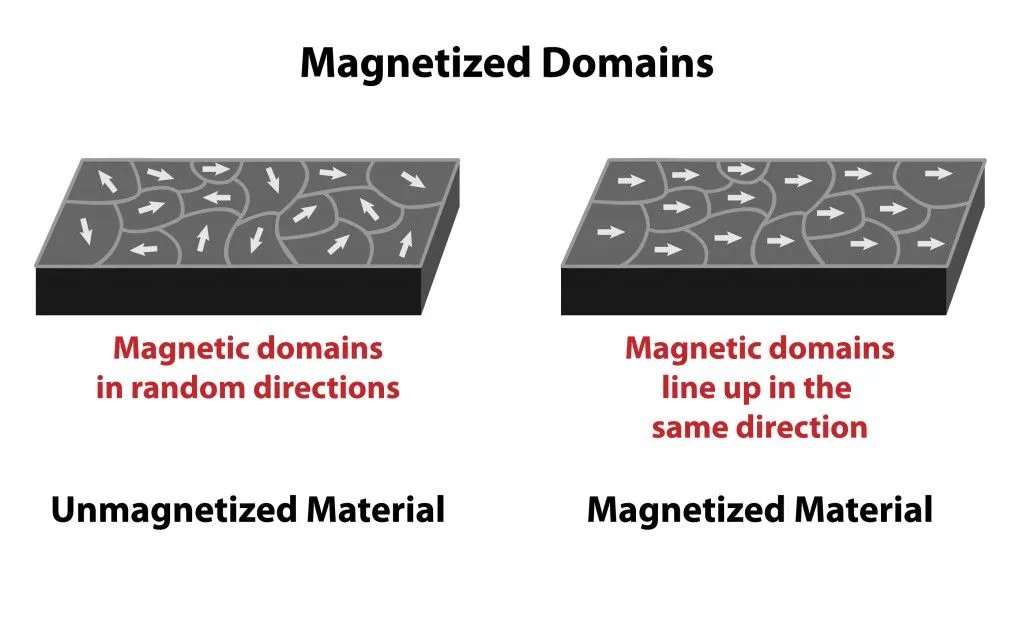
- Ferromagnetism: Some elements are strongly attracted to external magnetic fields and get permanently magnetized when exposed to external magnetic fields. Such elements are called ferromagnets, and this phenomenon is called ferromagnetism. Ferromagnets consist of thousands of microscopic regions of uniform magnetic fields called domains. Each domain’s field has a net magnitude and direction. If a sufficiently strong external magnetic field is applied, all the domains align themselves along the direction of the external magnetic field to reach the lowest energy state.
Applications Of Magnetic Tapes
1) Audio Recording
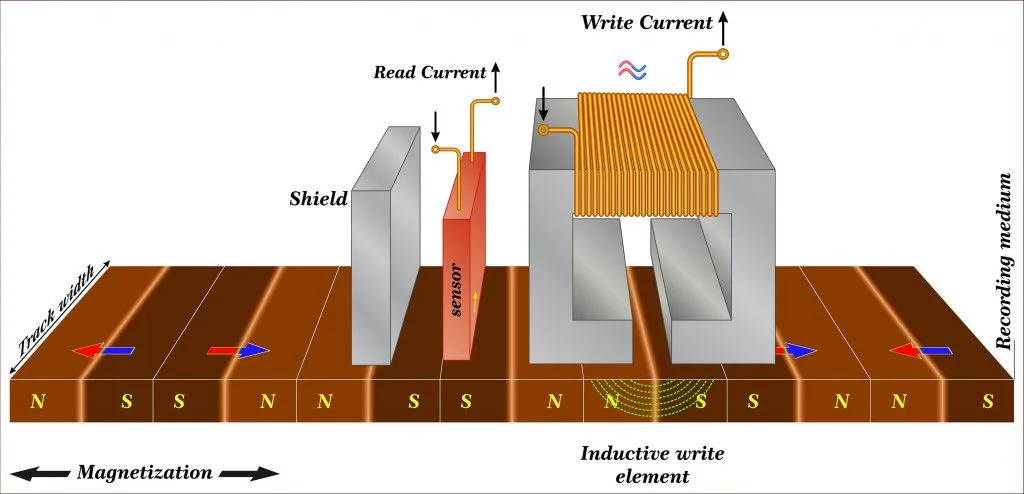
- The top coat (magnetic emulsion) of the tape is fed to the write-head. The wire wound around the write-head carries the electrical signature (current) of the sound to be recorded. The current-carrying wire induces a proportional magnetic field M.
- The ferromagnetic ring ensures that the field M permeates the region without attenuation. The slit at the bottom of the ring (facing the tape) ensures that the magnetic field lines fringe out into the tape and completely magnetize the tape below it.
- As the tape keeps moving, the tape guide on left side feeds the un-magnetized tape into the write-head and the magnetized part is received by the tape-guide on the right side.
The tape is now magnetized. The magnetization of the pigments is proportional to the external field M, which itself is a signature of the input current, which is a signature of the original input audio.
| Audio -> Electrical Signal (Current) -> Induced Magnetic Field M -> Magnetization of Tape |
2) Audio Playback
Playback is the reverse of the recording process.
- The magnetized tape is fed into the read-head. The magnetic field of the tape pigments permeates the region and the ferromagnetic ring with a slit helps permeate the field without attenuation.
- A current is induced in the wire wound around the ring, which is proportional to the magnetization of tape.
- The wire is fed into a transducer, which converts the electrical signal into an audio signal.
- The tape keeps moving and the successive patterns of magnetization produce a corresponding audio output.
| Magnetized Tape -> Induced Current On Read-Head -> Audio Output |
3) Audio Deletion
The magnetized tape is fed into the erase-head, which applies a high-frequency, high-amplitude alternating current and induces a proportional magnetic field in the head. The field permeates the ferromagnetic ring and floods the tape below, erasing the previous magnetization of the pigments.
The key word is changing. A changing current produces a changing magnetic field, which randomizes the previous magnetization of tape.
| Strong Changing Current -> Induced Magnetic Field -> Randomize Tape Magnetism |
All tape recorders follow this same basic principle. Having three heads is optional; the write-head can also function as the erase-head, but this removes the functionality of erasing and writing simultaneously (feed the tape into erase-head and then into the write-head)
A Final Word
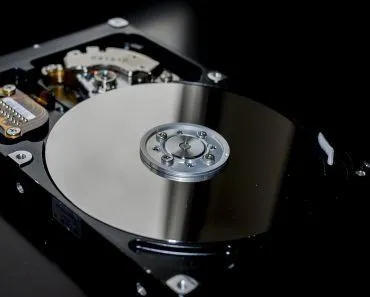
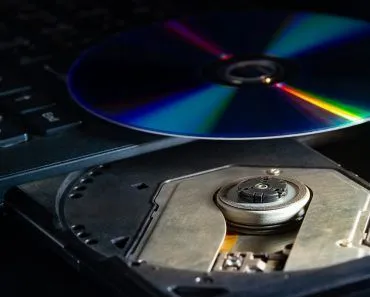
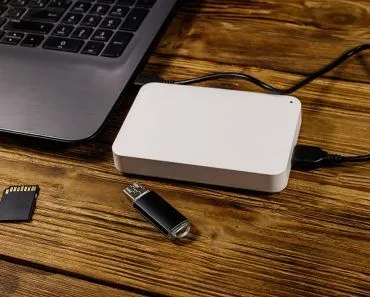
Although CDs, DVDs, hard drives, flash memory and streaming have largely retired tape from consumer audio and video, the medium has quietly staged a renaissance in the data center. The current LTO-10 standard ships 30 TB of native capacity per cartridge (with a 40 TB variant rolling out in 2026), and an IBM/Fujifilm research prototype using strontium ferrite has packed 580 TB onto a single tape. The LTO consortium reported a record 176.5 exabytes of tape capacity shipped in 2024, driven by hyperscalers like AWS, Microsoft and Google using tape for cold storage of AI training corpora and as an air-gapped defense against ransomware. Tape uses roughly 90% less energy per petabyte than always-on hard drives, which is why this hundred-year-old technology is, improbably, one of the green answers to the AI era’s storage crunch.
References (click to expand)
- Biskeborn, R. G., Czarnecki, W. S., Decad, G. M., Fontana, R. E., Iben, I. E., Liang, J., … Topuria, T. (2013, March 15). (Invited) Linear Magnetic Tape Heads and Contact Recording. ECS Transactions. The Electrochemical Society.
- 2.2.1.1.1 Components of magnetic tapes and their stability. The International Association of Sound and Audiovisual Archives
- Why the Future of Data Storage is (Still) Magnetic Tape. IEEE Spectrum
- ParaSampling - New Interfaces for Musical Expression. New Interfaces for Musical Expression
- Dwivedi, N., Yeo, R. J., Dhand, C., Risan, J., Nay, R., Tripathy, S., … Bhatia, C. S. (2019, January 4). Boosting contact sliding and wear protection via atomic intermixing and tailoring of nanoscale interfaces. Science Advances. American Association for the Advancement of Science (AAAS).
- Magnetic Tape Recording - Hyperphysics. Georgia State University
- 13: Electromagnetic Induction - Physics LibreTexts - phys.libretexts.org
- 36 Ferromagnetism - The Feynman Lectures - Caltech. The Feynman Lectures on Physics