Table of Contents (click to expand)
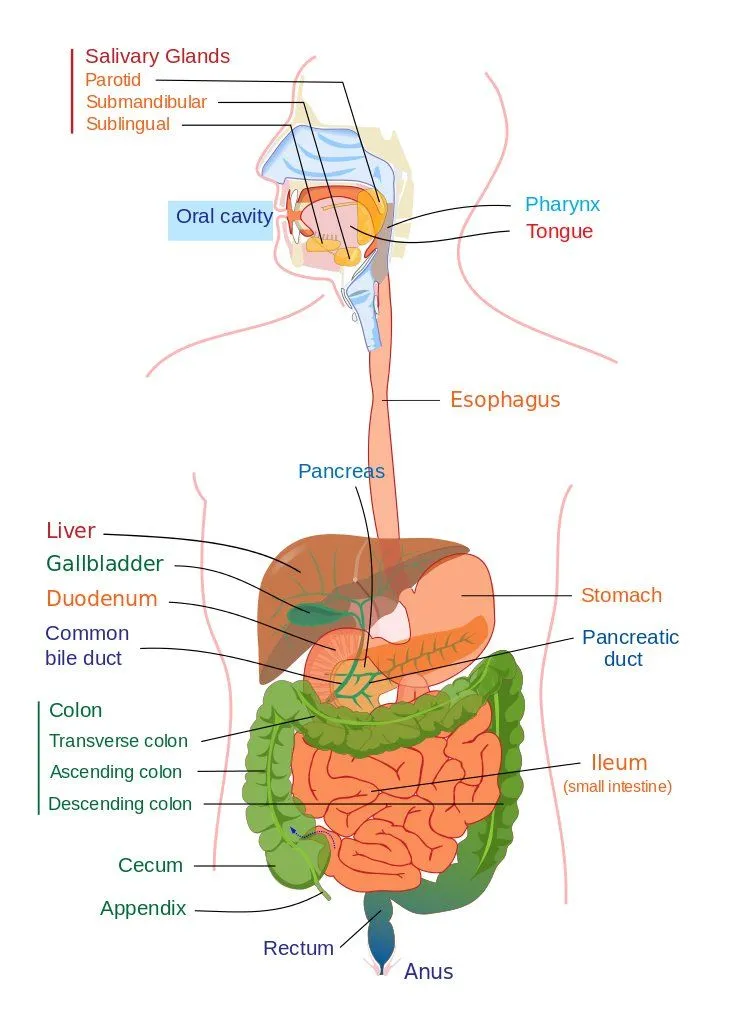
Food doesn’t get digested strictly in the order you ate it. After being chewed in the mouth, food travels through the esophagus to the stomach, then enters the small intestine first (duodenum → jejunum → ileum) where most nutrients are absorbed, before passing into the large intestine, which absorbs water and electrolytes. Different parts of the digestive system handle food differently rather than purely first-in, first-out.
If you eat a donut and then eat a pizza, will your stomach digest the donut first and then move onto the pizza?
To answer the question, let’s look at the process of breaking down food into its smallest components and seeing how the digestive system actually works.
Recommended Video for you:
Digestion Begins With The Mouth
The process of digestion starts from the very first bite that a person takes. The teeth grind larger food particles into smaller bits.
The saliva produced in the mouth, along with the mechanical act of chewing, begins the process of digestion. Saliva contains the enzyme amylase, which starts breaking starch down into smaller sugars; a small amount of lingual lipase is also secreted, though in adults it plays only a minor role in fat digestion. After chewing the food, this mass of incompletely broken-down food is called a bolus.
The bolus then moves into the stomach via the esophagus.
The Stomach Digests Anything That’s Inside It
A lot more digestion occurs in the stomach. Several enzymes are secreted in the stomach that further break down the constituents of food, such as pepsinogen, which when converted to pepsin, its active form, breaks down proteins into smaller peptides. The stomach also produces hormones like gastrin, which primarily stimulates HCl secretion from parietal cells and pepsinogen secretion from chief cells, and also increases gastric motility.
The hydrochloric acid secreted by parietal/oxyntic cells in the stomach plays several digestive roles. First, it kills most of the pathogens that hitched a ride with your food. Second, the low pH (about 2 in a fasted stomach) denatures dietary proteins — unfolding them so enzymes can attack the peptide bonds. And third, that same acid bath converts inactive pepsinogen into active pepsin, the workhorse enzyme of stomach protein digestion.
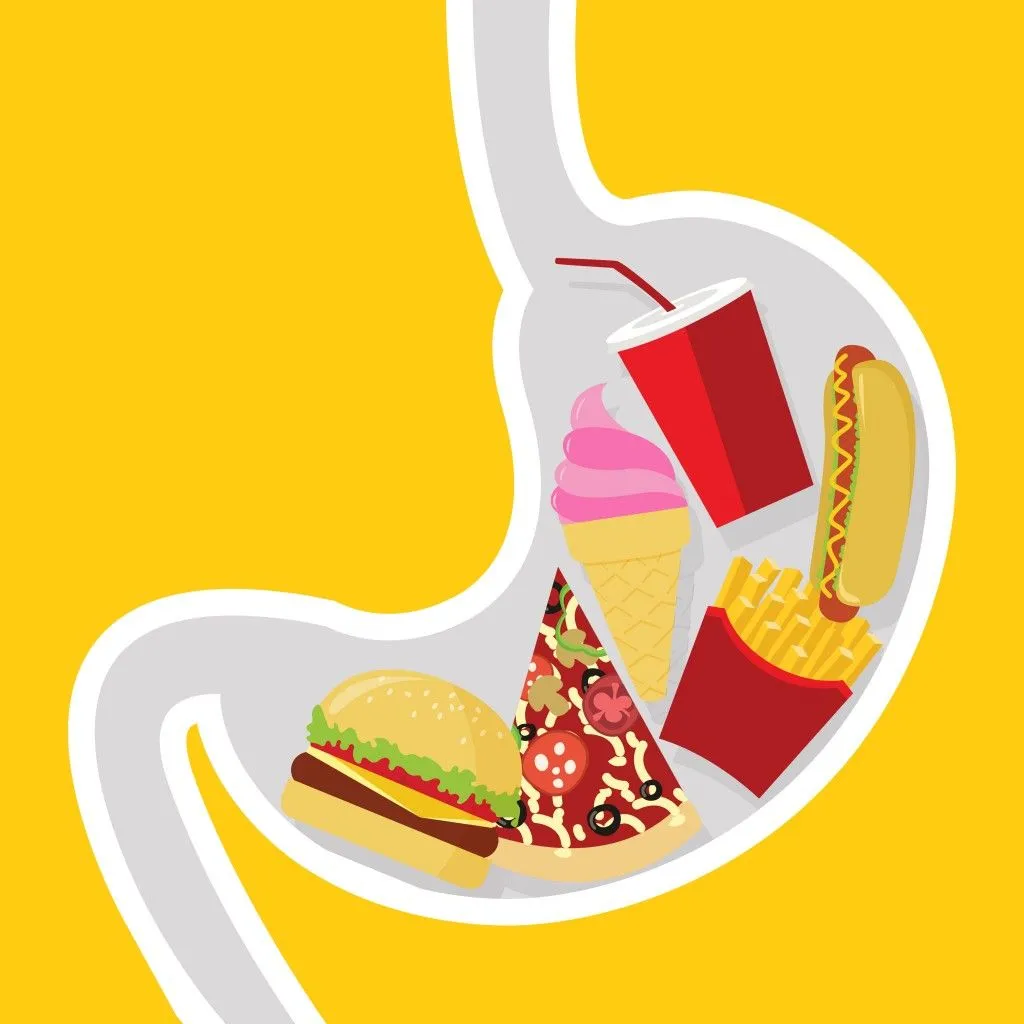
The stomach’s main job is to mix everything up. If you had a donut immediately followed by a pizza, the stomach would mix everything up until the pizza was indistinguishable from the donut. The muscles of the stomach are strong and produce powerful contractions that churn the food into chyme.
But here, it is important to consider timing. If you ate a pizza mere moments after you ate the donut, then everything will get converted to chyme. But if you ate the pizza an hour or two after the donut, the stomach has already started digesting the donut by then. The pizza would now simply be folded into the stomach’s ongoing digestion.
The Small Intestine
The small intestine is where most nutrients are absorbed and just like the stomach, the small intestine doesn’t distinguish between when a food was eaten.
As the chyme enters the small intestine, several things happen.
Briefly, the liver secretes bile salts via the gallbladder, while the pancreas secretes bicarbonate and various digestive enzymes into the duodenum. The bicarbonate ions neutralize the acidic chyme and make it more basic. The bile salts serve to emulsify the fat so that lipases can effectively break down fat.
Most digestive enzymes are secreted by the pancreas, such as peptidases like trypsin, chymotrypsin and carboxypeptidases (which break down peptides into amino acids), lipases (which break triglycerides down into free fatty acids and monoglycerides), pancreatic amylases, and nucleases (which break down nucleic acids like DNA and RNA).
The small intestine also has its own digestive enzymes. These are called brush border enzymes, as they are present on the cells of the small intestine.
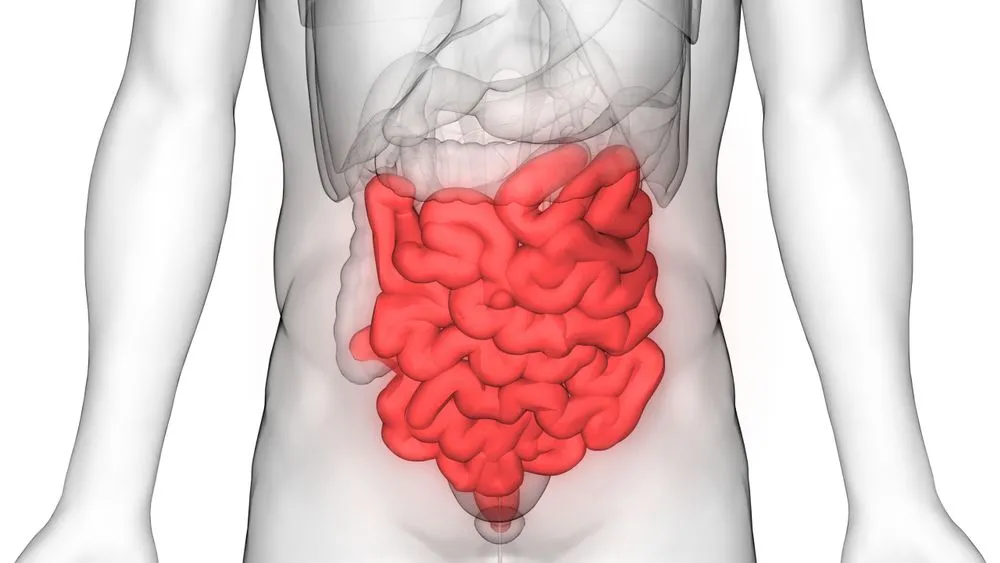
But the small intestine does prefer to absorb some nutrients first. The three parts of the small intestine—the duodenum, the jejunum and the ileum—absorb different nutrients and have different capacities. Most of the nutrient absorption occurs in the duodenum and jejunum of the small intestine, but the ileum is also important for the absorption of certain nutrients.
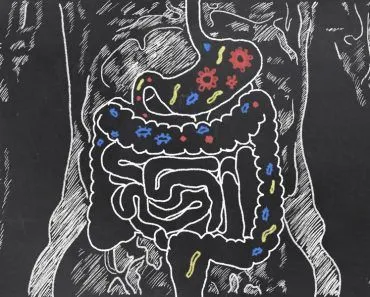
As the food enters the large intestine, most nutrients have already been absorbed. The large intestine now mops up the remaining water and electrolytes, and absorbs vitamins (like vitamin K and several B vitamins) produced by the resident gut bacteria. It then converts the leftover chyme into feces by secreting mucus, while the gut microflora (the bacteria present in the gut) ferments residual carbohydrates and changes it chemically. After all this, the end product is our fecal matter (poop) that remains to be excreted.
Conclusion
To answer the primary question in the title of the article, yes and no. The digestive system does not work in the order of the food you have eaten. That being said, if you eat a burger and then scarf down a donut an hour later, the digestive system will digest the burger first.
The digestive system does begin the break down of some nutrients before others. As we saw above, carbohydrates begin digestion in the mouth (salivary amylases), but enzymatic protein breakdown begins in the stomach.
So, the next time you have both a burger and a donut, remember that they’ll eventually both become one large pulp of nutrients and exit the body as brown nutrient-barren blobs.