Table of Contents (click to expand)
Too tired to read? Listen on Spotify:
One reason kids like to hand you things is because they are simply learning the skill of transporting/moving stuff in the space around them. When they hand things to you, your positive reaction (such as smiling, clapping) will reinforce that the act of giving things should be done more.
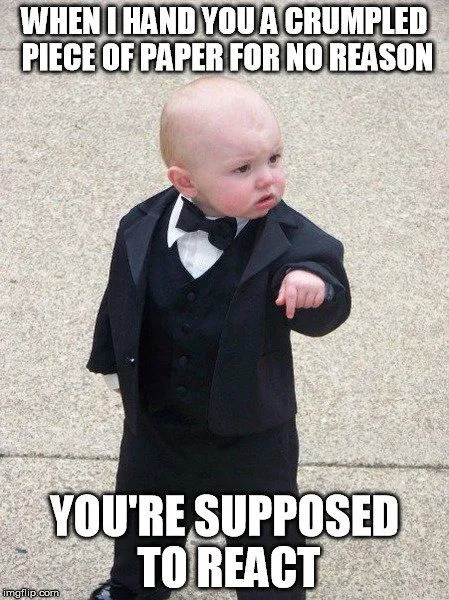
If you’ve ever spent a day or two with a toddler, you have certainly observed this rather interesting (and cute) habit they seem to have: they like to hand you things, for no reason whatsoever!
They’ll just pick up something in their tiny hands, look/play with it for a moment, and then without any reason at all, hand it to you. You’d just sit there, wondering – what in the world am I supposed to do with this?
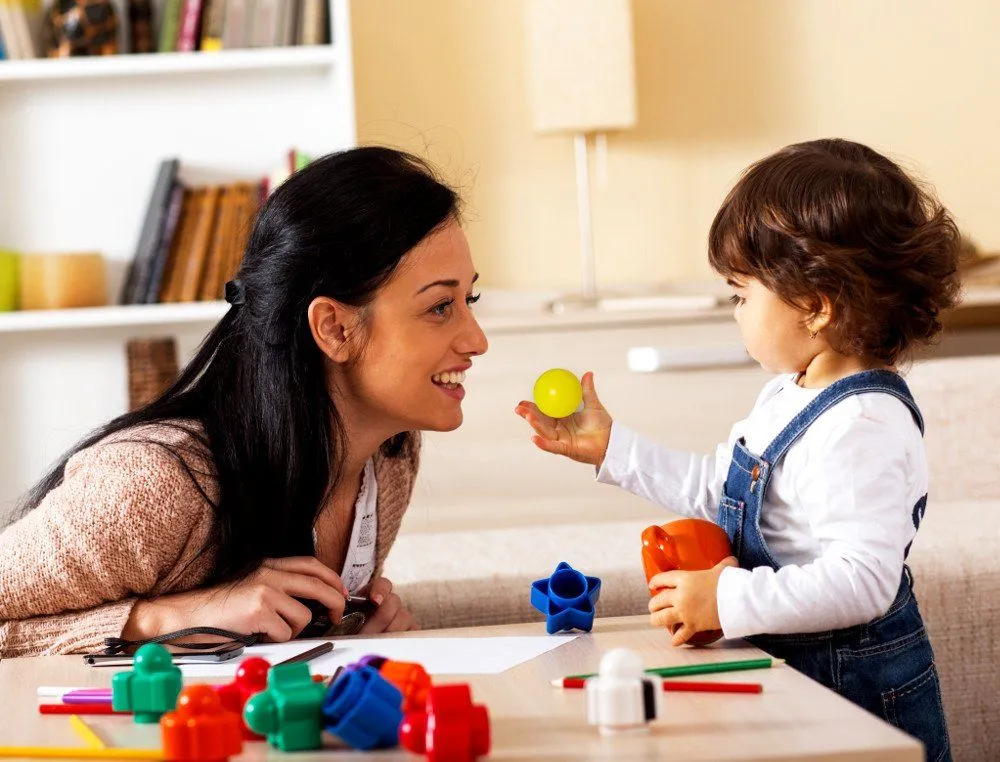
If you’ve ever been handed an object by a toddler, did you wonder why they did it? Or why, in general, kids like to hand things to adults?
As it turns out, there is no single universally accepted correct answer to this question, but developmental psychologists have converged on a few hypotheses that make a lot of sense. Let’s take a look at them.
Recommended Video for you:
Toddler’s Schema
Toddlers and young kids do what they do because, as one can imagine, their brain is developing at a fast pace, and all the seemingly meaningless activities they do are actually part of their essential brain development.
A pattern of repeated actions that children do is referred to as a schema. Clusters of schemas, later in children’s lives, develop into beliefs and ideas about themselves and the world around them.

Schemas are sometimes described as children’s fascinations. The concept was developed and popularised by educator Chris Athey, building on Piaget’s work, through the Froebel Early Education Project in the 1970s. There are a few types of schemas, which involve activities that may seem utterly strange or just plain stupid to adults; however, these activities are actually building blocks in helping children understand the world around them. Some of the schemas include trajectory, positioning, enveloping, rotating, enclosing, transporting, connecting etc.
The tendency of kids to hand you things falls under transportation, which involves the moving of items from one place to another. So, in simple words, one reason kids like to hand you things is because they are simply learning the skill of transporting/moving stuff in the space around them.
Positive Reinforcement
This is one of the most popular reasons why kids like to hand things to people; it’s believed that kids enjoy having you react to this strange gesture of theirs.

From a behavioral standpoint, you could say that this is probably operant conditioning—a learning process described by psychologist B. F. Skinner, in which a behavior becomes more frequent if it is followed by a rewarding outcome. They handed you a toy once by chance, and got a positive response (attention, praise, a smile, a clap, etc.). So, they tend to think that handing you stuff must be a good thing, as it reliably elicits a positive response from you.
Also, this hypothesis checks out with the fact that kids, just like us adults, are scared of a world that is unpredictable and constantly changing. So, they like to stick to activities that they know are going to bring a predictable, and preferably positive response.
Interaction With Others
Handing adults stuff is one of kids’ many ways of interacting with people around them. Just like adults, it’s kids’ inherent nature to want to interact with others; it might go something like this: “Oh! You have a little thing in your hand! But hey, you put it in my hand. Now, I’ll put it back in your hand. That’s so amazing, isn’t it?”
Such behavior is reinforced when you smile at them while giving/handing things to them, “Wow! You look so happy that I gave you this thing! Wait, I’ll get another thing and put it in your hands to make you even more happy.”
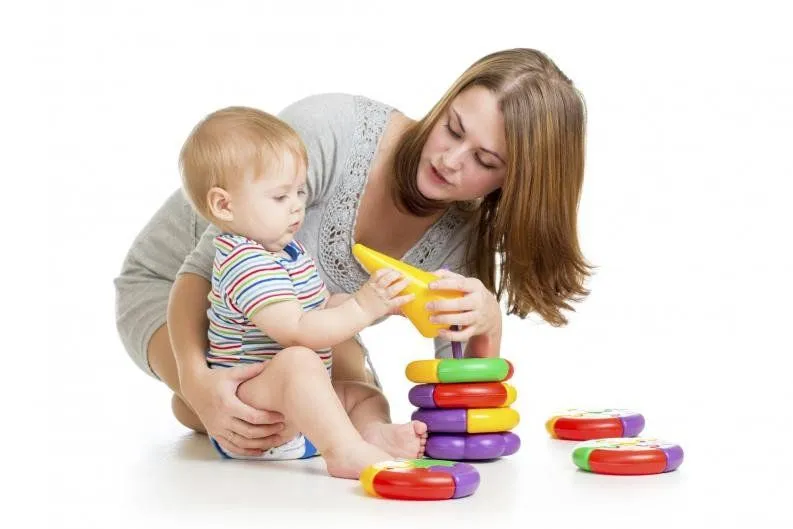
In short, kids love doing something that they think they understand (that’s why they like to watch the same TV show again and again), especially when its outcome is predictable and brings others obvious happiness. That’s (probably) why they keep handing you stuff all the time.
When Do Babies Start Handing You Things?
Most babies start handing or giving objects to other people somewhere between 9 and 12 months of age. The behavior depends on a chain of earlier motor milestones: babies generally develop a basic palmar grasp by around 4–6 months, transfer objects from one hand to the other by about 6 months, and develop the more refined pincer grasp at roughly 9–12 months. Once they can intentionally release an object, they start placing it into your hand—and they often do this on repeat right through the toddler years (typically up to about 2–3 years old).
If your baby isn’t handing you things yet, don’t panic. Every child develops at their own pace, and the timing varies. The CDC and the American Academy of Pediatrics list showing or handing objects to others as a typical milestone around the first birthday, but a lag of a few months is generally normal. Persistent concerns are best discussed with a pediatrician.
A Tiny Sign Of Prosocial Behavior
There’s another fascinating layer to this. Researchers Felix Warneken and Michael Tomasello, working at the Max Planck Institute for Evolutionary Anthropology, have shown that infants as young as 14 to 18 months spontaneously help adults—for example, by handing over a clothespin an adult is unsuccessfully reaching for. Notably, the babies do this without being asked or rewarded, suggesting that the urge to give and help is, at least in part, an early-emerging part of being human.
So when your toddler keeps placing crackers, pebbles, and unidentifiable lint balls into your palm, they aren’t just being random. They’re practicing a motor skill, testing your reaction, and rehearsing one of our species’ most prosocial habits—sharing.
References (click to expand)
- TOREN, C. (2014, December). What is a schema?. HAU: Journal of Ethnographic Theory. University of Chicago Press.
- Art309 - my.ilstu.edu
- Exploring children's learning - The Open University. The Open University
- (2010) Young's Schema Theory: Exploring the Direct and Indirect .... Utah State University
- Berenson, J. (1970). Social schemas in normal children. University of Massachusetts Amherst.
- Warneken, F., & Tomasello, M. (2007). Helping and Cooperation at 14 Months of Age. Infancy. Max Planck Institute for Evolutionary Anthropology.
- Important Milestones: Your Baby By One Year. Centers for Disease Control and Prevention (CDC).