Table of Contents (click to expand)
Yes, penguins do have knees — and kneecaps. A penguin leg contains a short femur, a true knee joint, a tibiotarsus (the bird version of the tibia, fused with some ankle bones), an unusually long fibula (a feature unique to penguins among birds), and a tarsometatarsus that forms the visible “lower leg.” Their knees just look absent because the upper leg is tucked tightly against the body and hidden by dense, insulating feathers — what we see as the leg is mostly the shin and ankle.
Other than their black-and-white feathers that uncannily resembles a tuxedo, what is the one characteristic that we typically associate with a penguin? Their gait, of course!
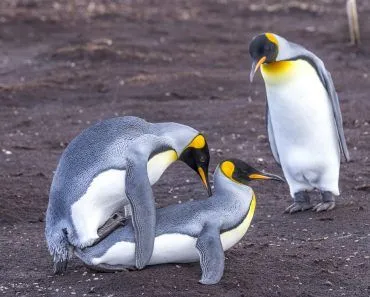
If you were to board a ship and set off on a trip to visit the deep Southern Hemisphere, you’d dock at the edges of freezing islands of white snow under the equally white sun and witness a plethora of stout birds waddling together, their flippers on both sides, pendulating up and down, marching towards the pearl-blue water.
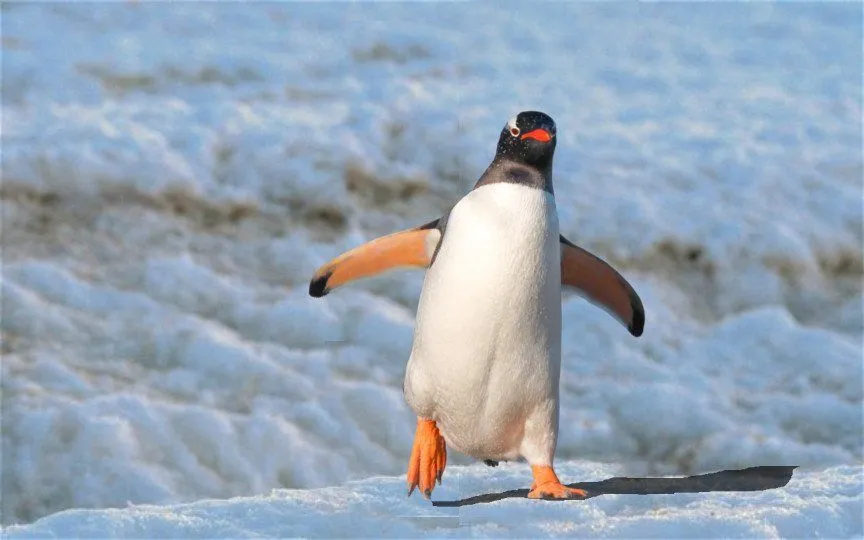
Looking at a waddling penguin, it is perfectly logical to assume that they don’t have knees. Their gait is analogous to a human walking with crutches, with his legs erect, locomoting by successively lifting and stomping ahead, one leg after another, without bending a knee. This provides the impression of an absence of knees. The gait is then perceived to be a sort of waddle.
However, this is far from the truth. Penguins do have knees — and the joint is anatomically very similar to a mammalian (human) knee, hinging between the femur above and the tibiotarsus (the avian equivalent of the tibia, fused with some ankle bones) below.
Recommended Video for you:
A Penguin’s Knees
A penguin’s leg has a short femur, a knee joint, a tibiotarsus (the avian version of the tibia, fused with some ankle bones), a fibula — uniquely full-length in penguins compared to other birds — and a tarsometatarsus that makes up the visible portion of the leg below the body. The reason why their legs appear short and sturdy is that the femur and knee sit high up, tucked tightly against the body and hidden by dense, insulating feathers and skin.
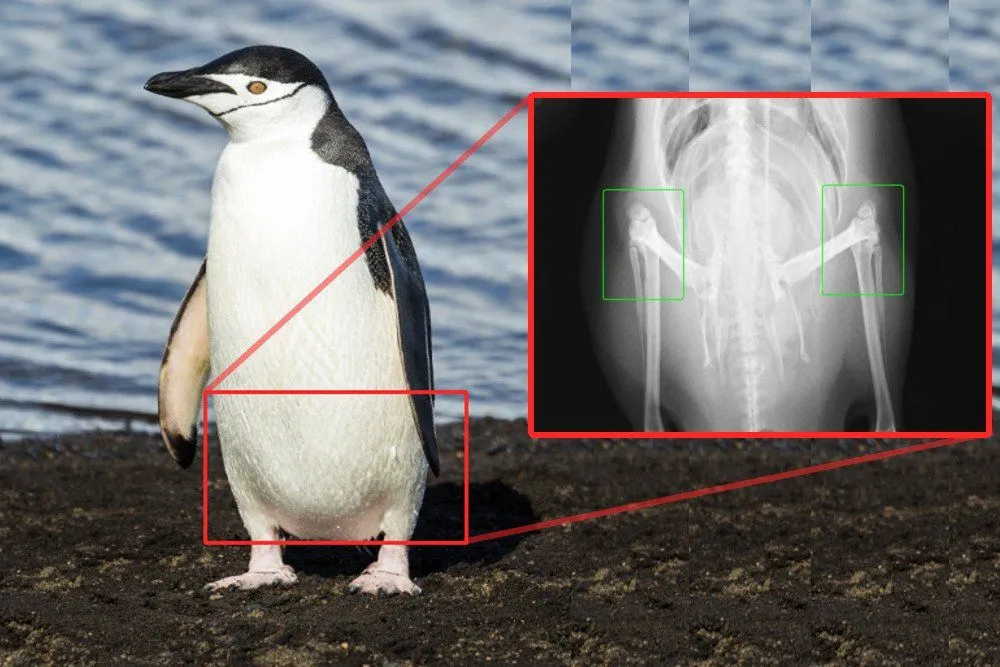
One can easily detect their bent knees in an X-ray scan of their lower body.
So, if they have a well-functioning pair of knees, the obvious question then arises — why do they persist to waddle?
Why Do Penguins Waddle?
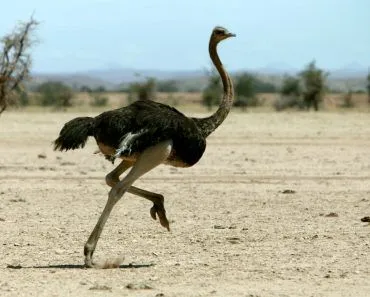
There are roughly 60 species of flightless birds in the world, and 18 of those species are penguins (the rest include ratites such as kiwis, emus, ostriches, cassowaries and rheas, plus a handful of flightless rails, grebes and cormorants). Penguins range from the tiny Little Blue Penguin (about 2.5 pounds and 10 inches tall) up to the Emperor Penguin (around 90 pounds and 45 inches tall). Penguins are known to spend 75% of their time in the water. The remaining 25% is spent on ice or land for procreation. They are highly adapted to water and their bone structure causes them to be exceptional swimmers.
Because of this preference for water, their morphology has assumed a structure that seems to represent a compromise between aquatic and terrestrial locomotion. Both energy utilization and velocity suffer when a penguin moves on land.
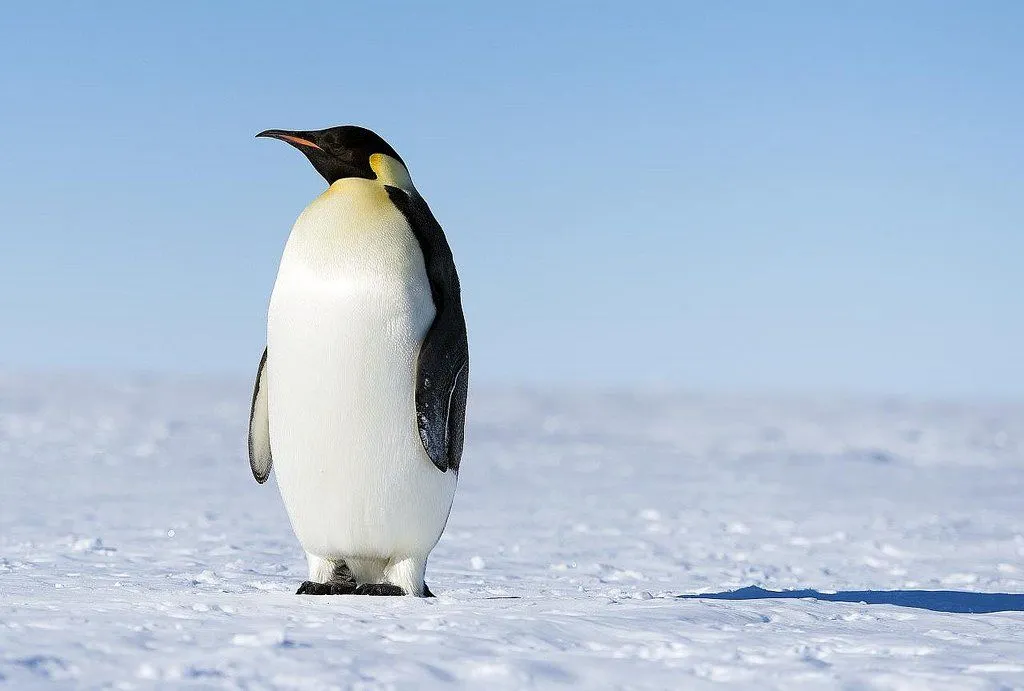
The expenditure of energy spent on walking is relatively higher for penguins than for other birds of equivalent body mass and stature. An estimate reveals that it is around two times more than other birds expend. Therefore, waddling is the most efficient way to walk on land or ice.
Their bone structure pattern renders them excellent swimmers who can effortlessly cleave water and swim swiftly, as if “flying” through it.
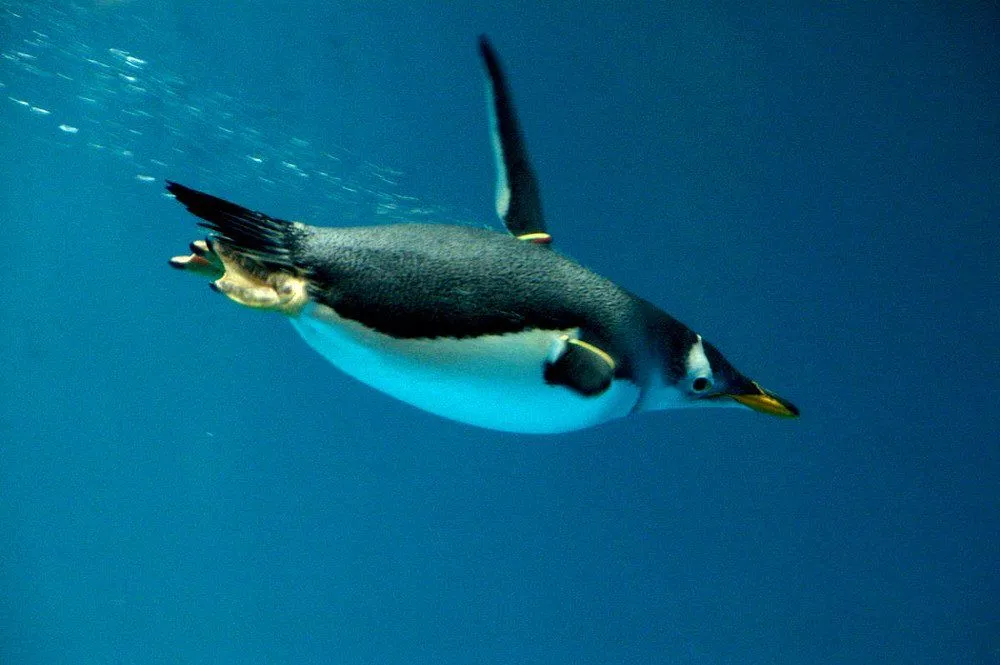
One theory also claims that their petite legs aid with incubation, because they greatly diminish the loss of heat. This is pivotal when we recall that they lay eggs in the freezing winters of Antarctica. This illustrates an ingenious evolutionary trade-off.
Other than placing them under an X-ray machine to detect their concealed knees, one can discern the presence of their knees by observing them sliding on ice. The force to accelerate further ahead can only be generated by bending their knee and pushing against the surface beneath.
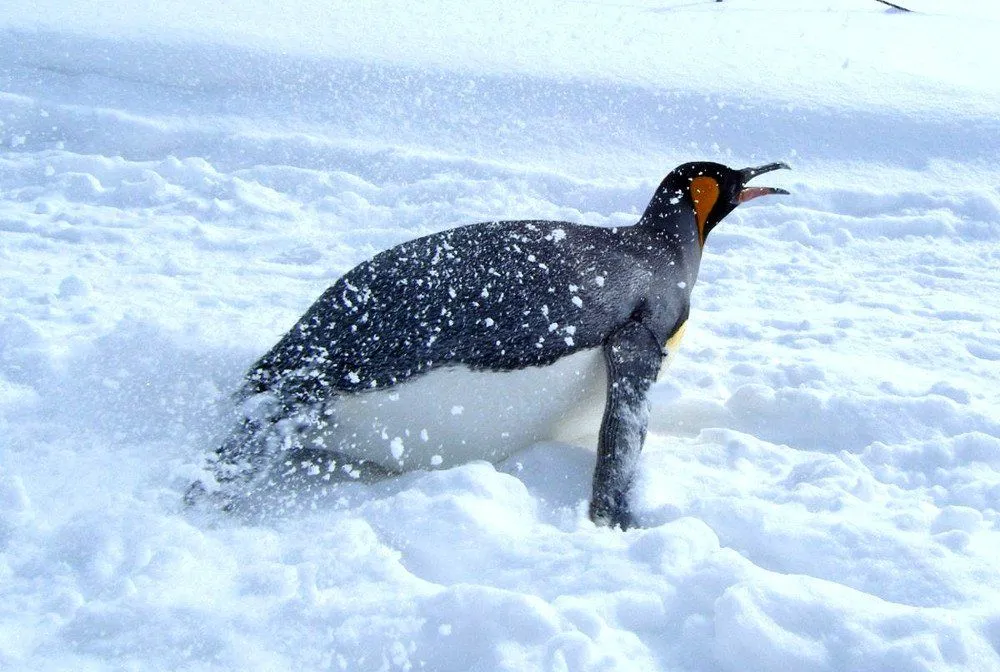
So, despite the relentless driving force of natural selection and the meticulousness that goes into giving form to these intricacies, despite the thoughtful preservation of favorable features and the gradual transmutation of the otherwise unfavorable features into favorable ones — a process that takes millions of years — we only admire and adore these exemplary creatures for their plump figure, goofy rocking movements and waddling gait.
But who wouldn’t? There’s no denying that they’re adorable!
References (click to expand)
- Pinshow, B., Fedak, M. A., & Schmidt-Nielsen, K. (1977, February 11). Terrestrial Locomotion in Penguins: It Costs More to Waddle. Science. American Association for the Advancement of Science (AAAS).
- FAQ: Do penguins have knees?. The New England Aquarium
- Do Penguins Have Knees? - New England Aquarium. The New England Aquarium