Did you hate chemistry in school? If yes, then you simply weren’t taught well enough. Chemistry is fun and can explain so many different phenomena happening all around you. Different chemical reactions form different products. While some of the chemical reactions can be witnessed in daily life, such as the formation of curd and mixing sugar and coffee, others require controlled environments and catalysts. Many of these are spectacular to watch, as they produce incredible visual results.
Some of the coolest chemical reactions to watch include the Briggs-Rauscher oscillating clock (which cycles between colorless, amber and deep blue), the Belousov-Zhabotinsky reaction, the Pharaoh’s serpent, elephant’s toothpaste, nitrogen triiodide (set off by a feather touch), thermite on ice, and floating tin-foil boats on invisible sulfur hexafluoride gas.
Here are 10 of these eye-catching reactions for you!
Recommended Video for you:
1. Oscillating Magic Reaction
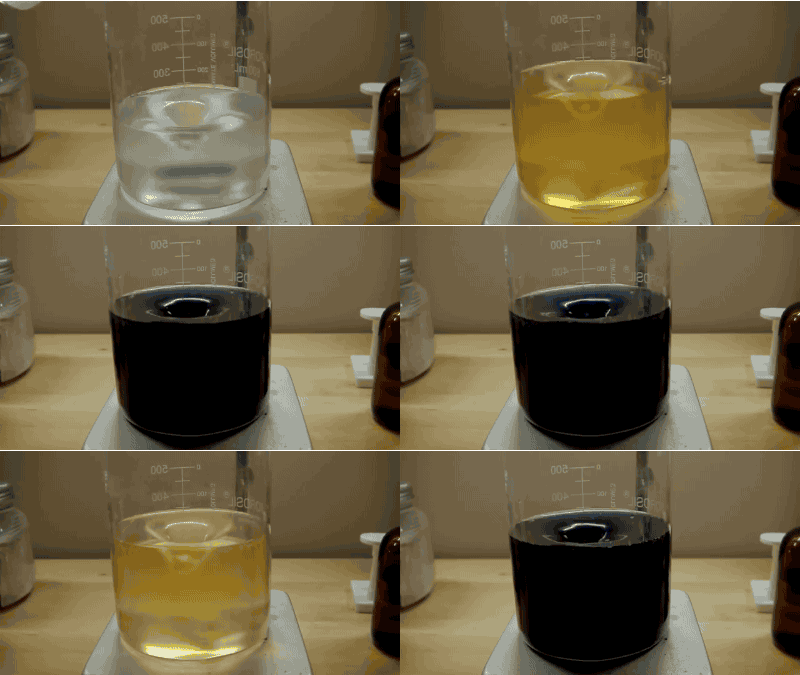
Also known as ‘the oscillating clock’, Briggs-Rauscher is one of the most common oscillating chemical reactions around. To kickstart this amazing reaction, three colorless chemicals—acidified potassium iodate (KIO3 + H2SO4), a solution of malonic acid and manganese sulphate monohydrate (HOOCCH2COOH + MnSO4. H2O) and dilute hydrogen peroxide (H2O2)—are mixed together.
The color of the resulting solution keeps oscillating between colorless, amber and deep blue for about 3-4 minutes and is really a feast for the eyes.
2. Pharaoh’s Serpent
If you want to recreate the magic of Egypt in a lab, this reaction is perfect for you. The hero of this process is Mercury(II) Thiocyanate or Hg(SCN)2. This white solid can be prepared in the lab by a precipitation reaction between mercury nitrate or mercury chloride with potassium thiocyanate. The chemical, when ignited, follows a sort of chain reaction releasing smoke and ash and growing into an olive column that looks like a snake, hence the name. The color of the serpent can be modified by adding appropriate chemicals or coloring agents. However, mercury is a very toxic chemical and should be handled carefully.

3. Kaleidoscope Reaction
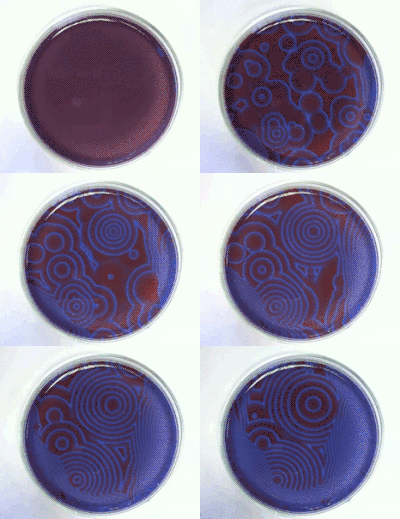
The beauty of this reaction lies in the fact that it was discovered by mistake. When Soviet chemist Boris P. Belousov was trying to build a simple chemical analog of the Krebs cycle (the citric acid cycle that oxidizes sugars in living cells), he noticed something strange: instead of running to completion, his mixture kept flipping between different colors, looking just like illustrations of a kaleidoscope.
To replicate the result, you combine an acidified bromate solution (potassium or sodium bromate in sulfuric acid) with an organic acid like malonic acid, plus a metal catalyst — cerium(IV) ions or ferroin (an iron-phenanthroline complex) are the classic choices. What you get is a hypnotic stream of ripples changing colors. This reaction is also called the Belousov-Zhabotinsky reaction.
4. Elephant’s Toothpaste Reaction
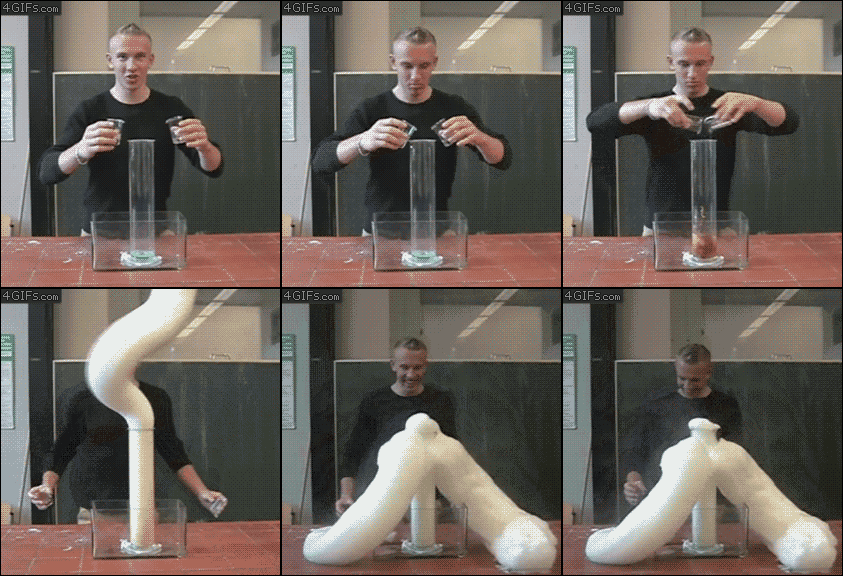
Yes, you read that correctly! If you ever plan to get an elephant as a pet, we have the dental hygiene covered for you. The reaction is a simple decomposition reaction between hydrogen peroxide and potassium or sodium iodide along with some soap added to the reactants. It results in the production of a large amount of foam and bubbles that come out like toothpaste exploding from a tube. You can also add dyes to the solution to produce more colourful toothpaste. However, whether it cleans an elephant’s tusks or not will have to be verified by you.
5. Instant Snow
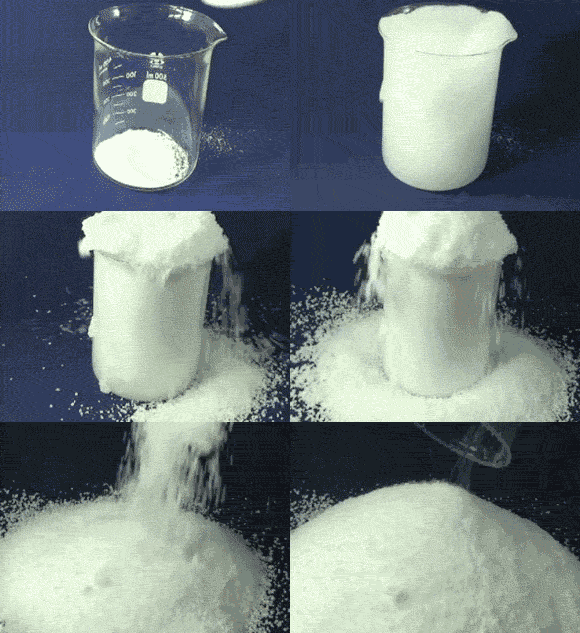
This one is one of the more straightforward reactions on the list. Sodium Polyacrylate is an interesting polymer. It has extreme water-absorbing and retaining capacity. Thereby, when water is added to the cross-linking polymer, it immediately hydrates and forms white fluffy clusters that don’t stick to each other and look just like snow. The powdered polymer can absorb as much as 500 times its mass in pure water within a few seconds. Add a little fluorescent dye and observe this in the dark: the visuals will be mesmerizing!
6. Ice Fire Reaction-Thermite And Ice
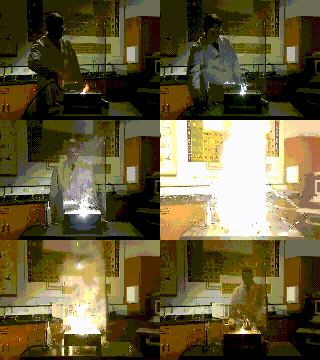
The chemical composition of thermite consists of metals such as aluminium, magnesium or zinc and oxidizers like bismuth(III) oxide or iron(II, III) oxide. This chemical compound, when ignited, can burn straight through metals and is used in railroad repairing. However, its reaction with a block of ice is far less useful — and far more dramatic. When thermite is ignited on top of ice, the searing heat of the reaction flash-vaporizes water into steam, and molten aluminum reacts with that water to liberate hydrogen — which then ignites. The combined result is a loud explosion and a dazzling light display.
7. Candy Blast
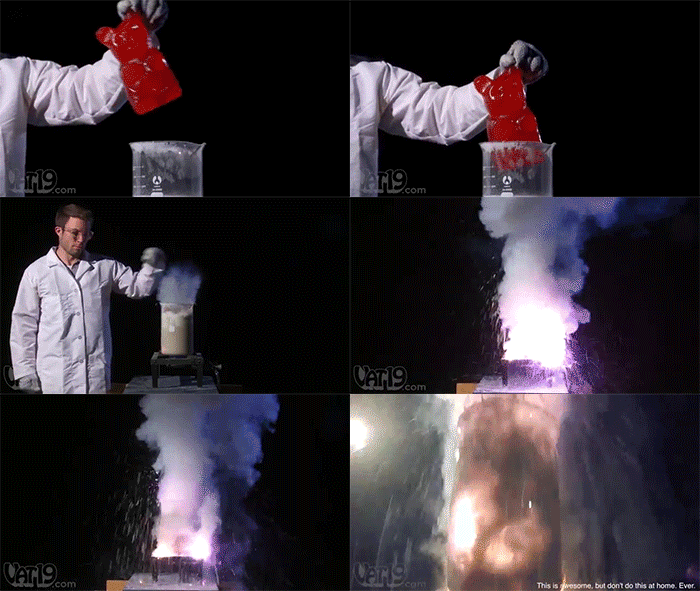
Potassium chlorate, when reacted with candy or any other source of sugar, produces violet fire and a large amount of heat. These reactions on different scales have been used in pyrotechnics for centuries. Sugar has a lot of energy stored in it, which we commonly think of as calories. Our body slowly releases this energy by breaking the bonds present in sugar one by one. However, when all the bonds are broken at once, an exuberant amount of energy is released in the form of heat and light.
8. The Black Magic Reaction
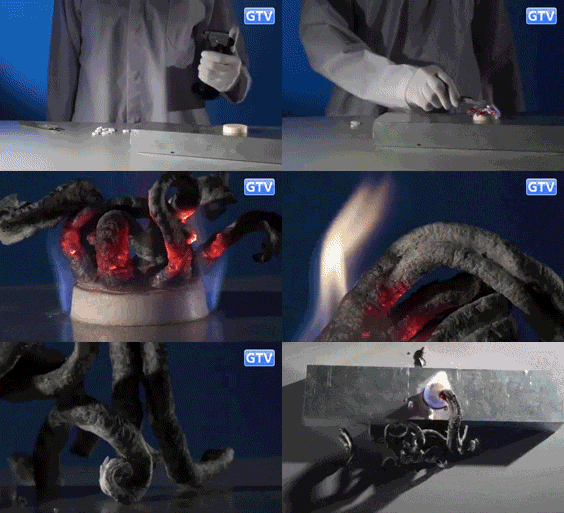
Calcium Gluconate is typically used to help with calcium deficiency in the body. However, when this stable-looking compound is set on fire along with some fuel, it produces some of the weirdest foam you’ve ever seen. The foam is greyish-black in color and contains mostly carbon. This is a relatively safe experiment, as the gases released usually consist of carbon dioxide and water vapour.
9. The Feather Explosive
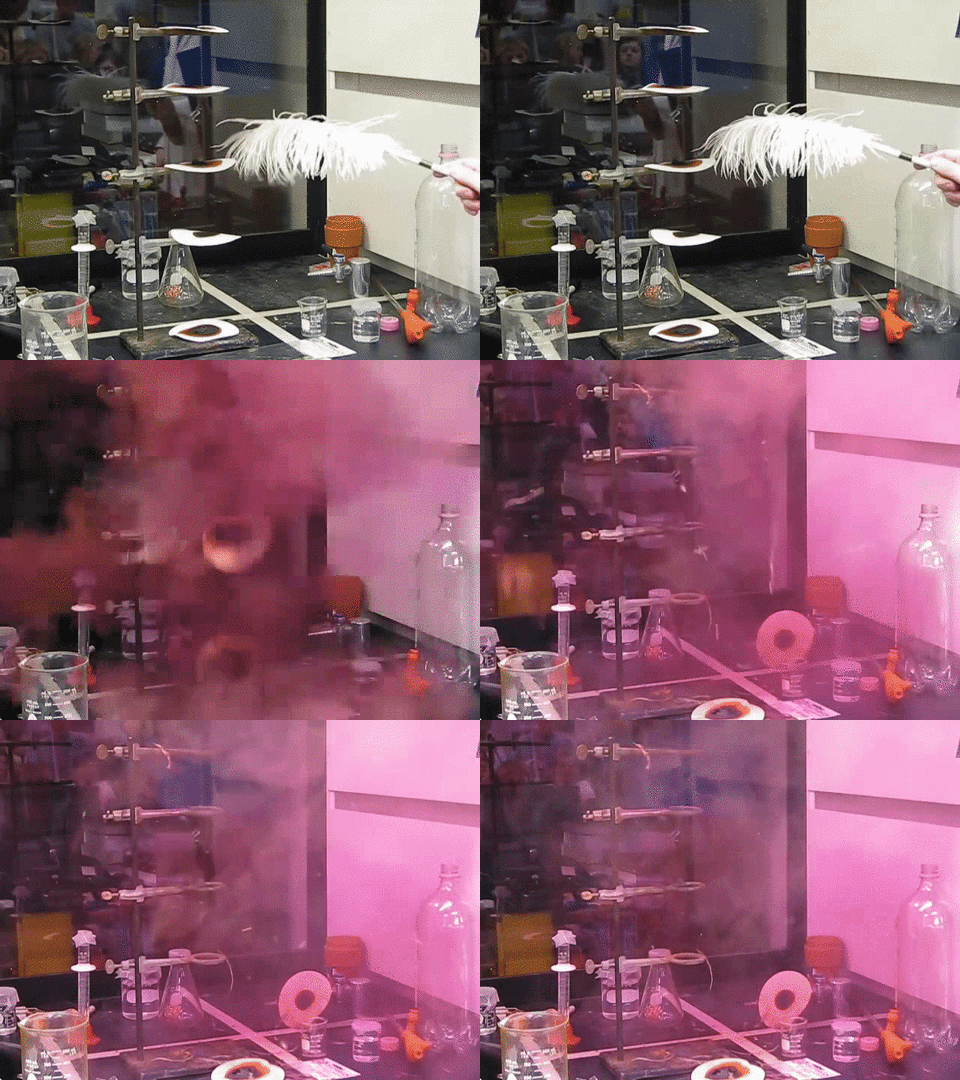
Nitrogen triiodide (NI3) is an extremely unstable compound and can be set off by the slightest movement — a feather touch or even a mosquito landing on it can trigger the blast. Iodine is a big, heavy atom, and cramming three of them around a single small nitrogen leaves the bonds under serious steric strain. That, combined with the weak N–I bonds and the huge thermodynamic payoff of forming N2 gas, means the molecule is sitting on a hair-trigger. The blast releases violet iodine smoke and is truly a magnificent sight to behold.
10. Invisible Water
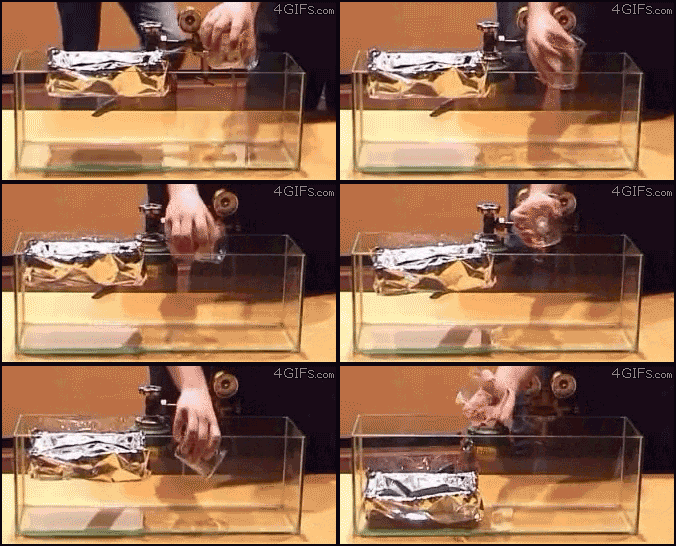
Trust me; I wasn’t able to see this chemical when I saw this clip for the first time. Often used in magic tricks, Sulfur hexafluoride (SF6) is one of the densest commonly available gases around — it’s not a liquid like water, yet it’s every bit as invisible — and it can comfortably support objects floating on top of it. Like most gases, SF6 doesn’t absorb light in the visible spectrum, which is exactly why your eyes can’t pick it out at all. What makes it special is its weight: roughly five times denser than air, so it pools at the bottom of a container and exerts enough buoyancy to float a tinfoil boat.
As can be seen in the video here, the boat made of tin foil is floating in the pool of this miraculous chemical. The reaction for producing SF6 is complicated and involves reacting fluorine with sulfur in a controlled and catalytic environment. Next time you see someone performing this trick, you can explain it to your friends, or just let them be amazed!